

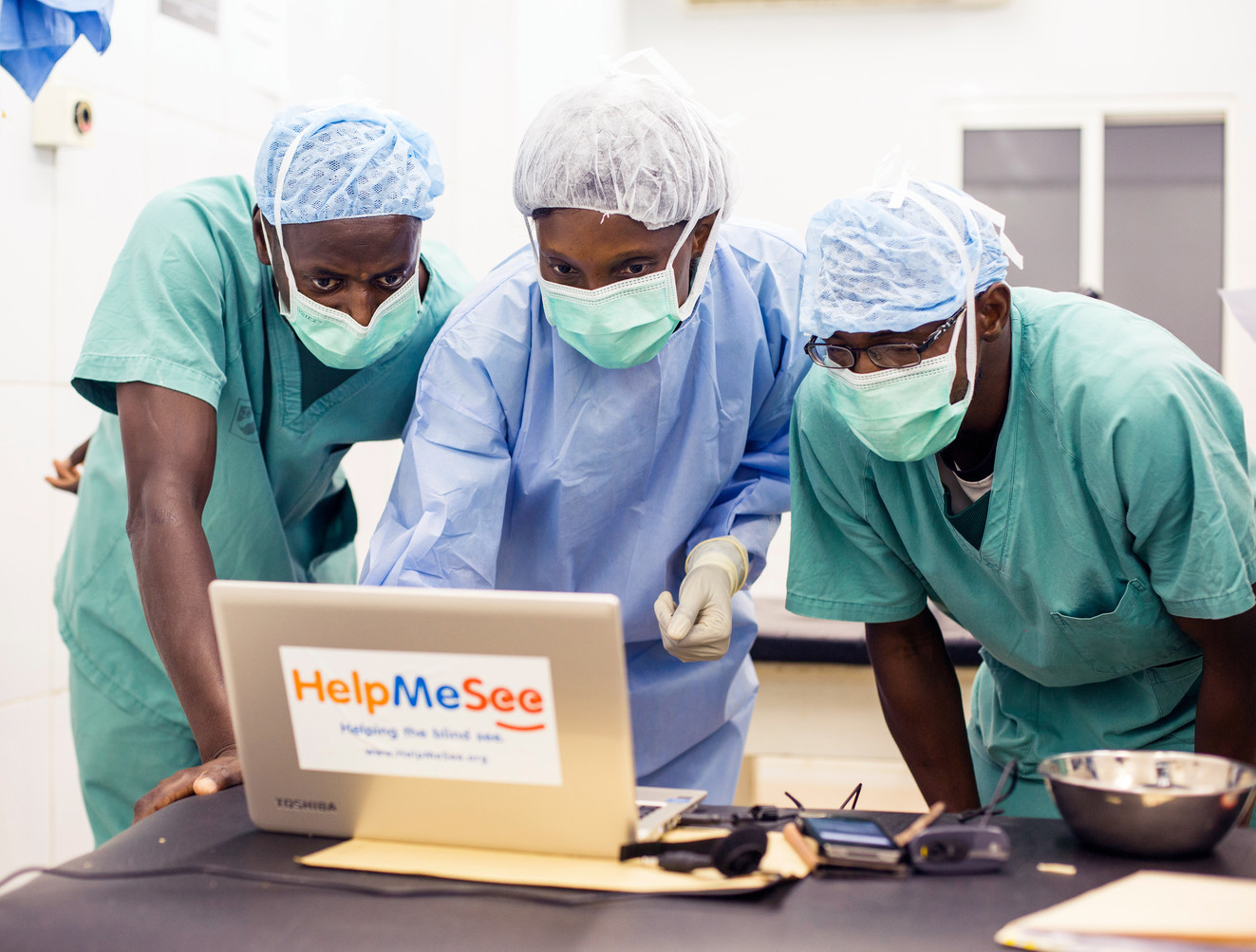
Corporate Social Responsibility (CSR) can do more than support a good cause. At its best, CSR can help solve a systems-level challenge by investing in solutions that continue producing impact long after the initial contribution is made.
Preventable cataract blindness is one such challenge. In many parts of the world, the barrier is that there are not enough appropriately trained cataract surgeons who are available to provide quality care. For companies seeking measurable global health impact, investing in the surgical workforce offers an opportunity to help build capacity that can serve communities for years to come.
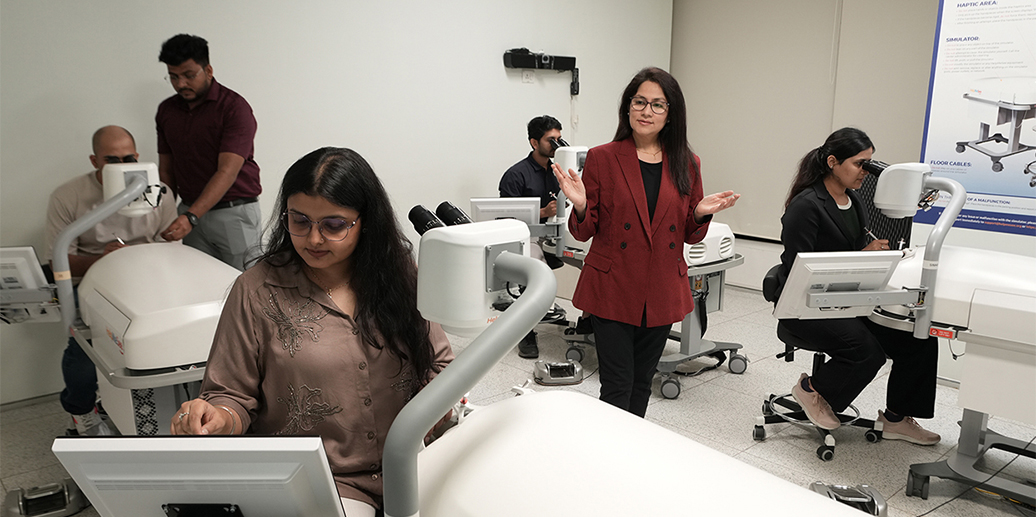
Why Simulation-Based Training Creates Lasting Impact
Simulation-based education is increasingly becoming an important part of ophthalmic surgical training because it allows learners to practice surgical skills repeatedly in a controlled, risk free environment before applying those skills directly to patient care. A 2026 review in Clinical Ophthalmology describes virtual reality as a structured environment for deliberate practice and skills development which reduces patient risk during the early stages of surgical learning.[1]
The evidence is also moving beyond the simulator itself. In a randomized controlled trial of novice surgeons learning Manual Small Incision Cataract Surgery (MSICS), participants who received courses in the HelpMeSee Simulation-based Training Program made 52% fewer major errors during their first 20 live scleral tunnel procedures than participants who received conventional training.[2]
More recent research has strengthened the evidence behind objective, competency-based assessment. A 2026 Acta Ophthalmologica study found that performance on the HelpMeSee Eye Surgery Simulator in MSICS increased with surgical experience and penalties decreased, supporting the simulator’s ability to differentiate levels of technical skill.[3]
This is important for corporate partners because the investment is not simply in equipment. It supports an educational system designed around structured practice, objective assessment, instructor feedback, and progression toward competency.
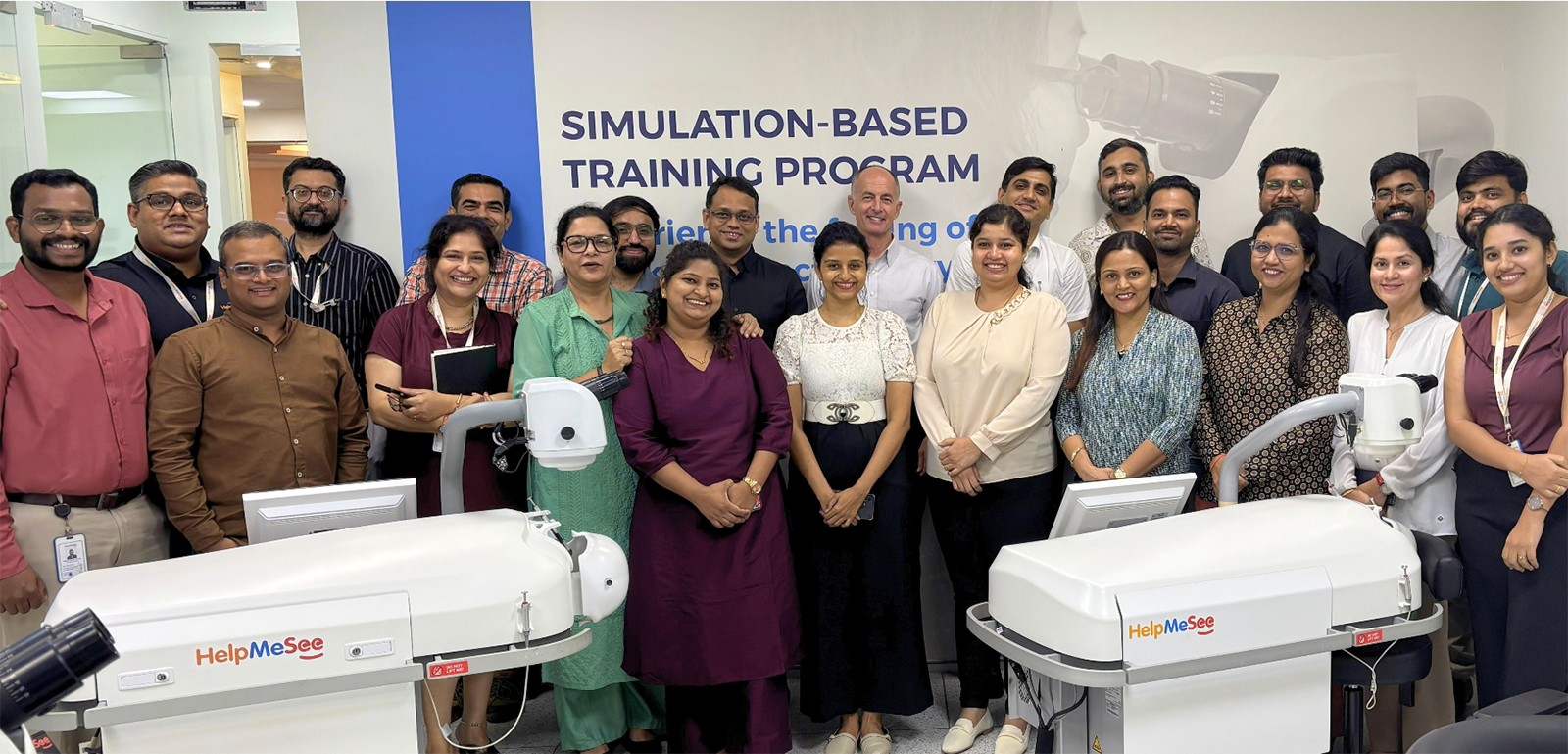
A Global Network Growing in 2026
HelpMeSee has expanded substantially in 2026, building partnerships that bring simulation-based cataract surgical training closer to the professionals and institutions that need it.
The growing network includes new and expanding locations in Guatemala, Colombia, Tanzania, Ghana, Nigeria and the Gambia, extending the HelpMeSee Simulation-based Training Program footprint across Latin America and Africa.
This expansion matters because access to simulation training remains unequal. A 2025 international study found that some ophthalmology trainees traveled an average of approximately 550 kilometers to access virtual reality simulation. The researchers concluded that broader implementation could help improve and maintain surgical education standards.[4]
For corporate partners, supporting a simulation center to reach its training capacity in an area where the need is greatest impacts both education and access objectives.
Four Ways Companies Can Partner
Corporate engagement can take several forms depending on a company’s CSR priorities, workforce and expertise:
- Sponsor simulation-based training centers or programs. Corporate support can help establish training capacity, support instructors, deliver courses and expand access for trainees in underserved regions.
- Create employee giving and matching campaigns. Companies can make global eye health part of employee engagement by matching contributions or building campaigns around World Sight Day and other health initiatives.
- Contribute technical expertise. Technology companies can become skills-based partners in the development of the training platform itself. NVIDIA, for example, has worked with HelpMeSee to improve rendering performance and visual realism. NVIDIA RTX technology supports the high-quality 3D environment used in the simulator, and the organizations have explored emerging AI applications for training.[5]
- Fund access to training. CSR support can underwrite participation for cataract specialists, helping institutions build a stronger local surgical workforce rather than relying solely on short-term interventions.
Turning Corporate Giving into Capacity
The strongest CSR partnerships connect a company’s resources with outcomes that can be demonstrated over time.
With simulation-based training, progress can be measured through trainees reached, courses completed, competencies developed, training centers supported, and the expansion of sustainable local training capacity. Research increasingly supports the role of virtual reality simulation in improving surgical performance and reducing complications, including systematic evidence showing benefits for cataract surgery training.[6]
For companies committed to global health, technology, education or workforce development, that creates a powerful proposition: invest in restoring sight today and developing the people and systems capable of restoring sight for years to come.
REFERENCES
- Ahuja, Abhimanyu S., et al. “Virtual Reality in Ophthalmic Surgical Education: Current Innovations and Future Perspectives.” Clinical Ophthalmology, vol. 20, 2026, article 593471. doi:10.2147/OPTH.S593471.
- Nair, Akshay Gopinathan, et al. “Effectiveness of Simulation-Based Training for Manual Small Incision Cataract Surgery among Novice Surgeons: A Randomized Controlled Trial.” Scientific Reports, vol. 11, 2021, article 10945. doi:10.1038/s41598-021-90410-4.
- Dormegny, Lea, et al. “Validity Assessment for Technical Skills and Stress Management of the HelpMeSee® Manual Small Incision Cataract Surgery Module.” Acta Ophthalmologica, vol. 104, no. 5, 2026, pp. e503-e515. doi:10.1111/aos.70083.
- Dormegny, Lea, et al. “Global Trends and Practice Patterns in Virtual Reality Simulation Training for Ophthalmic Surgery: An International Survey Use of Virtual Reality Simulation Training around the World.” Scientific Reports, vol. 15, 2025, article 30886. doi:10.1038/s41598-025-16227-7.
- Salian, Isha. “For the World to See: Nonprofit Deploys GPU-Powered Simulators to Train Providers in Sight-Saving Surgery.” NVIDIA Blog, 20 Oct. 2023.
- Rothschild, Philip, et al. “Effect of Virtual Reality Simulation Training on Real-Life Cataract Surgery Complications: Systematic Literature Review.” Journal of Cataract & Refractive Surgery, vol. 47, no. 3, 2021, pp. 400-406. doi:10.1097/j.jcrs.0000000000000323.


 Spanish
 English
 French