

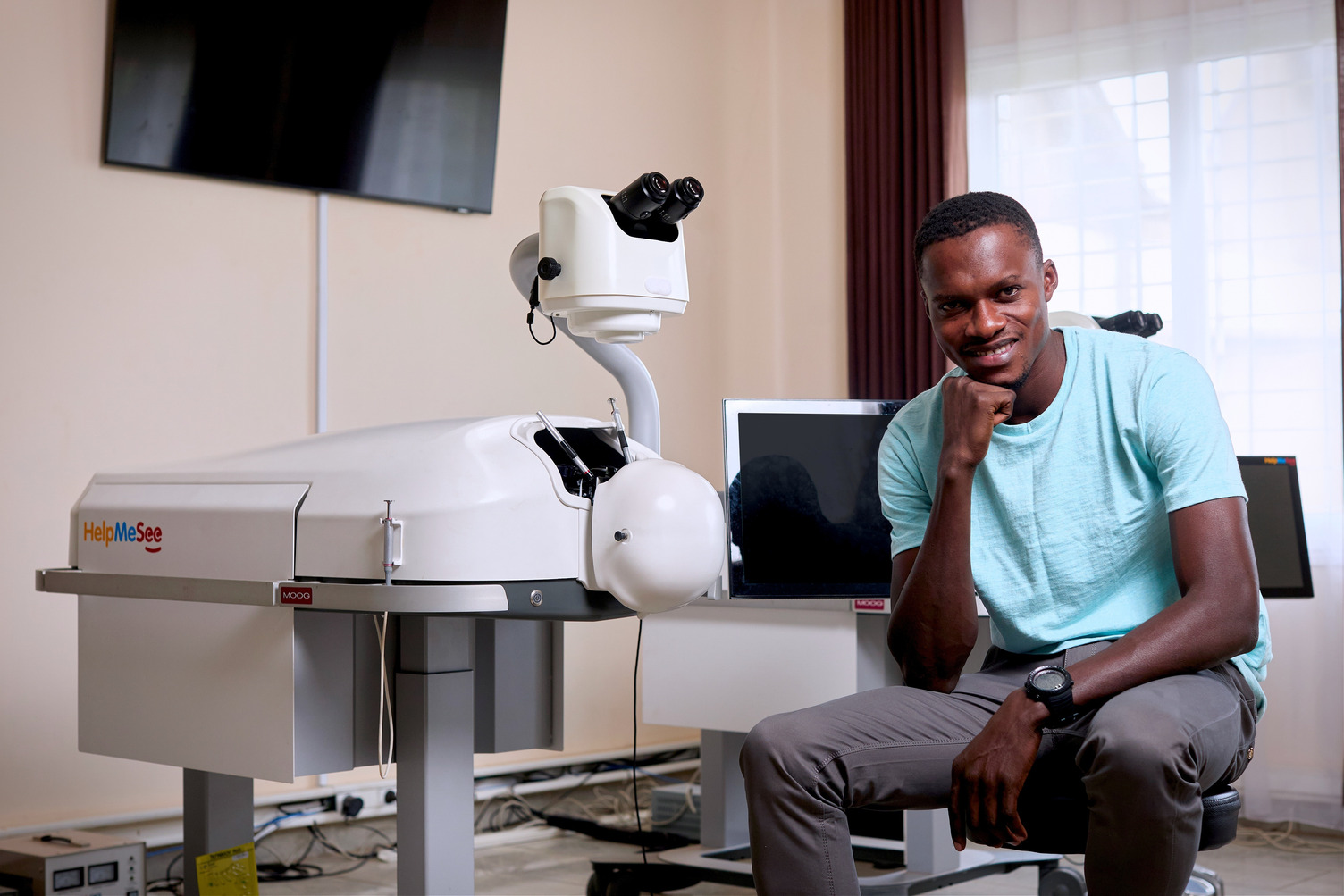
More than 100 million people worldwide are blind or visually impaired because of cataracts. (1) In underserved regions, the gap between need and cataract surgical capacity is overwhelming. Without enough trained cataract specialists, communities continue to suffer. But there is hope. The Programa de formación basado en simulación HelpMeSee, backed by a standardized, instructor-led curriculum, is transforming the way we fight cataract blindness.
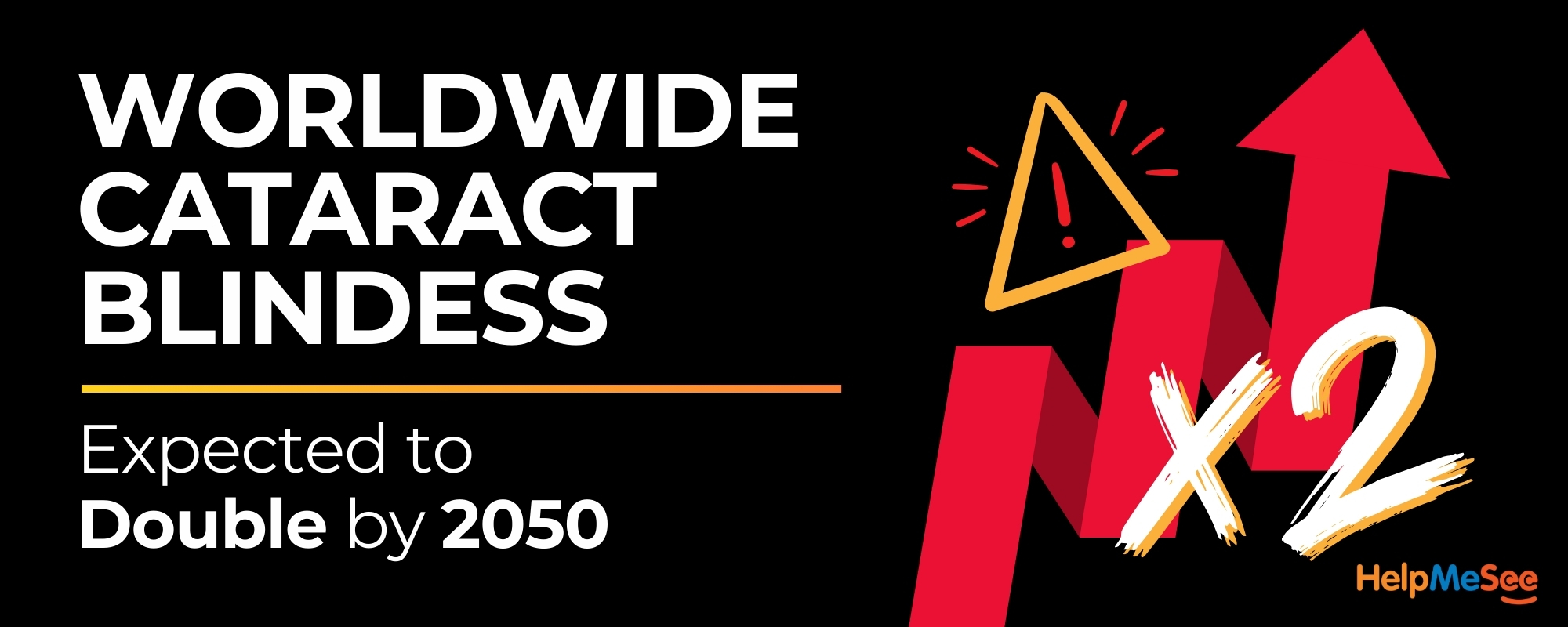
The Challenge: Cataract Blindness and Limited Training Access
Cataracts are responsible for about half of all global blindness. Most people affected live in low- and middle-income countries, where access to safe and affordable surgery is limited. Cirugía manual de catarata con incisión pequeña (MSICS) is a proven, low-cost, and effective surgical treatment in these regions. (2)
One of the main challenges is access to training in a safe learning environment without risk to patients. Traditional MSICS education depends on the availability of live surgeries, but these opportunities are scarce in resource-limited environments. Training on real patients also places them at unnecessary risk and is often very stressful for novice cataract specialists.
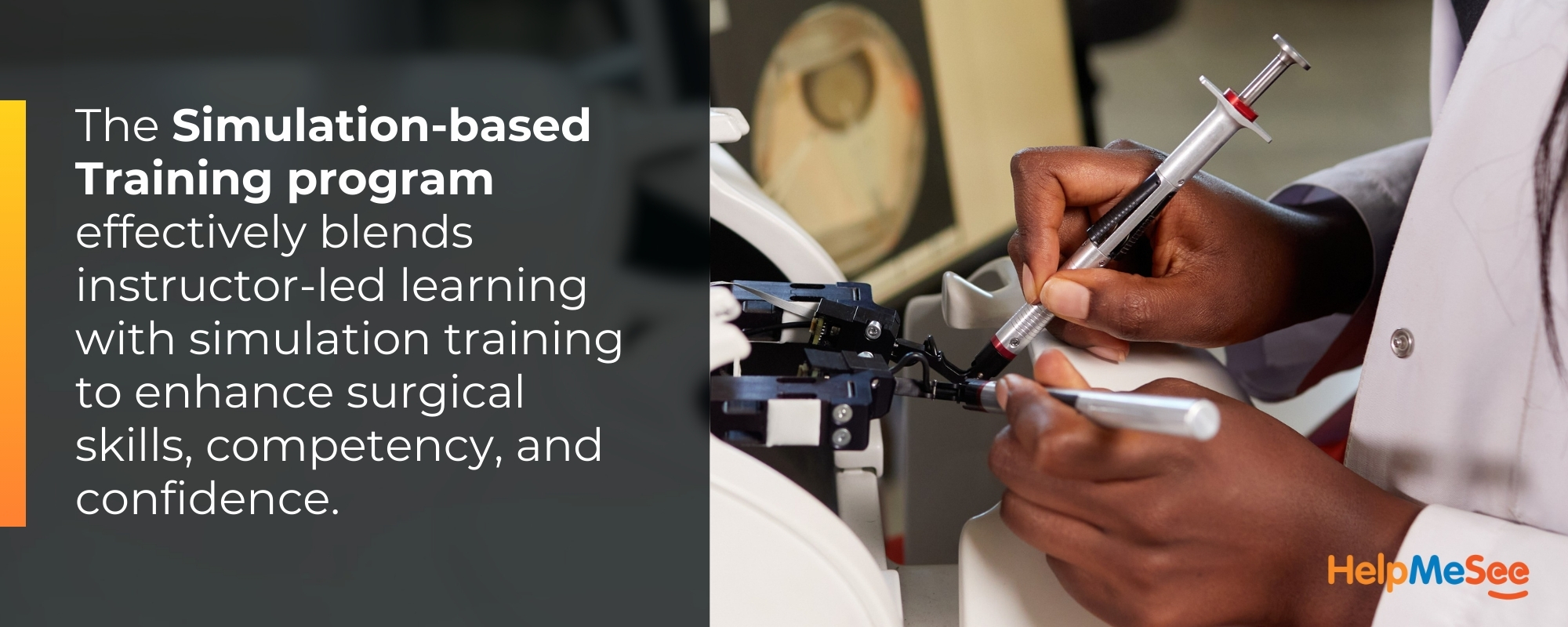
With the HelpMeSee Simulation-based Training Program, these barriers are significantly reduced. Using advanced virtual reality and haptic (touch-based) feedback, paired with structured e-learning and standardized instructor-led curriculum, cataract specialists can now practice MSICS repeatedly in a safe, controlled setting. (3) They gain confidence, sharpen their skills, and master each surgical step before ever entering the operating room.
A Proven, Cost-Effective Model
Simulation-based surgical training is effective and one of the most cost-efficient ways to close the gap in global cataract care. Traditional training requires a steady flow of live surgical cases and access to advanced operating facilities—resources that are often out of reach for underserved communities. Simulation bypasses these obstacles. Cataract specialists can complete hundreds of practice surgeries in a risk-free environment, developing the precision and judgment they need to perform actual surgeries safely.
A landmark RAND Corporation analysis projected that scaling simulation-based training worldwide could transform the fight against blindness. The study estimated that, if widely adopted, the HelpMeSee solution could reduce the global cataract backlog by over 100 million cases in the coming decades. (4) Millions of men, women, and children could regain their sight sooner—without waiting years for limited training opportunities to catch up.
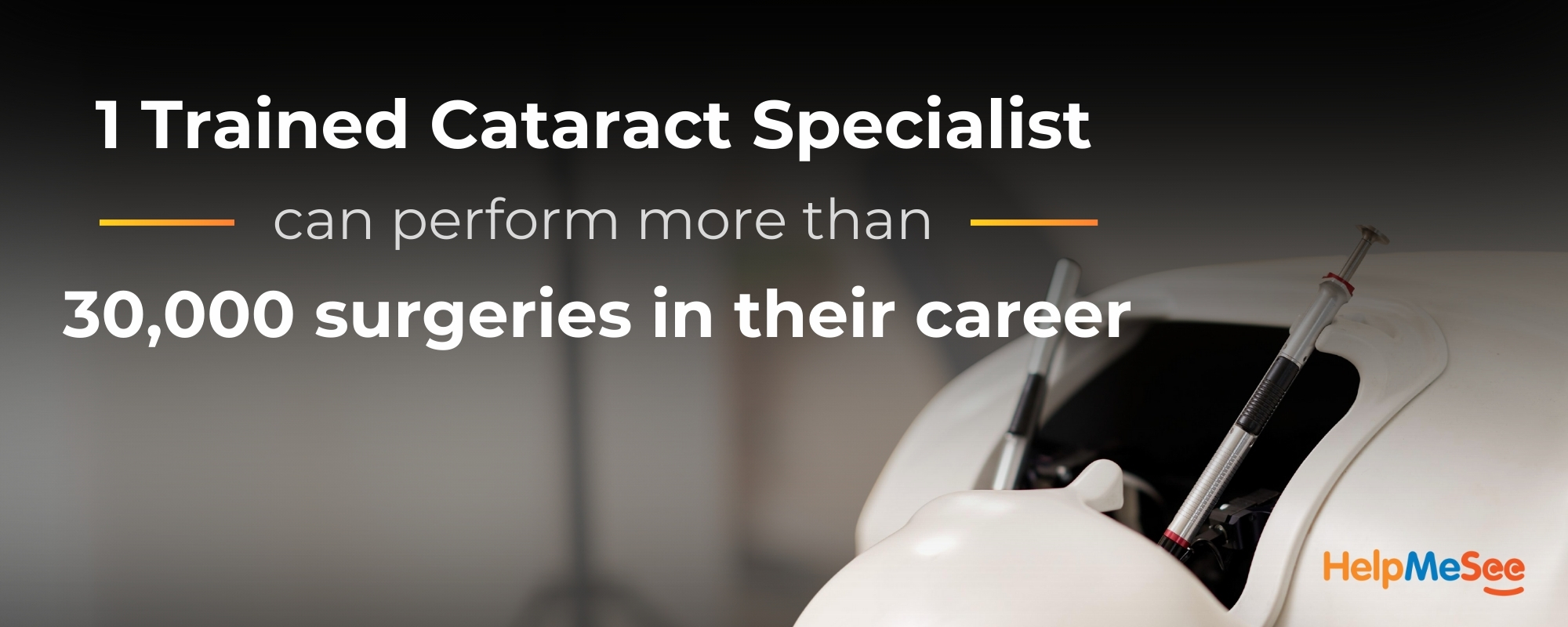
The return on investment is extraordinary. Every cataract specialist trained through HelpMeSee can restore sight to up to 30,000 patients over the course of their career. This multiplier effect means that a single donation today has a compounding impact for generations. When compared with the enormous economic and social costs of untreated blindness—lost income, caregiver strain, and reduced quality of life—simulation-based training is both affordable and essential.
Evidence That Simulation-based Training Works
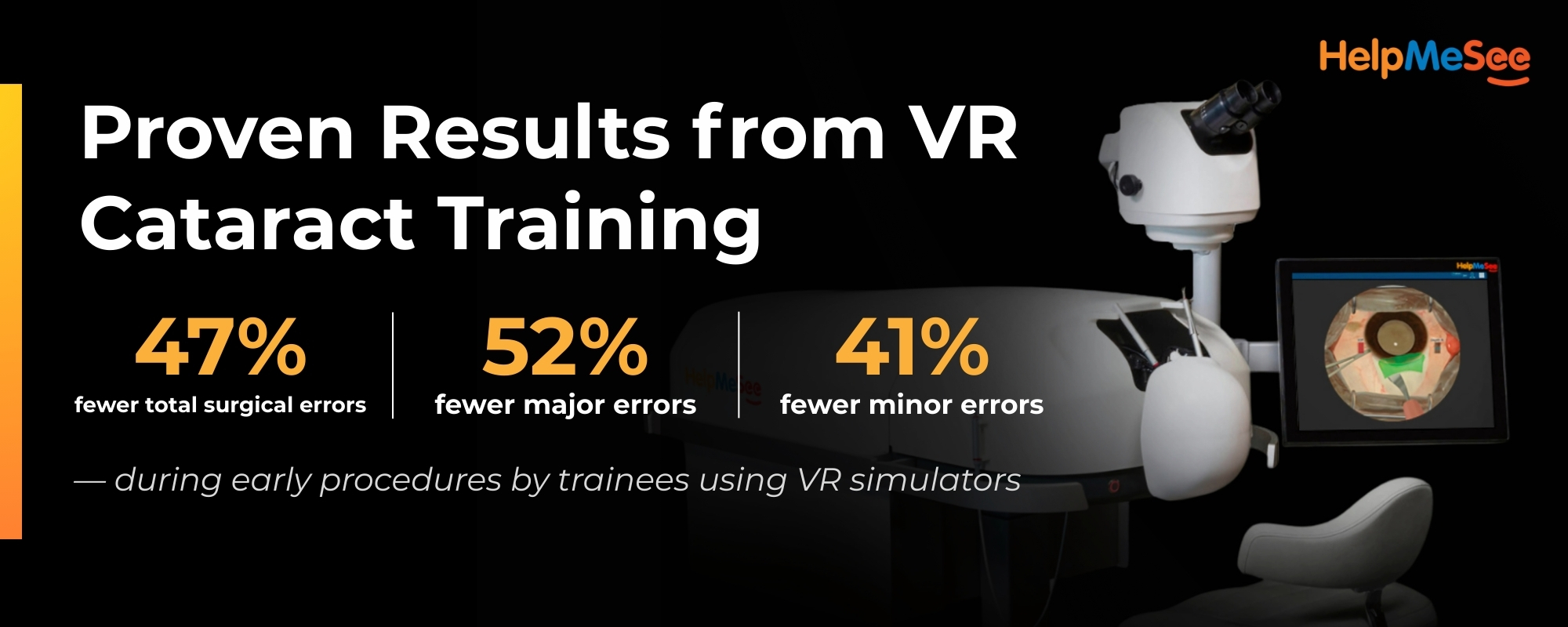
Rigorous research confirms what HelpMeSee sees every day: simulation-based training saves sight.
- A randomized controlled trial in Scientific Reports showed that cataract specialists trained with the HelpMeSee Eye Surgery Simulator made nearly 50% fewer surgical errors during their first 20 live MSICS procedures compared to those trained conventionally. That’s major for patient safety. (5)
- A 2021 pilot study confirmed the HelpMeSee Eye Surgery Simulator’s realism and its value as a learning tool. Cataract specialists found it lifelike and useful. (6)
- A 2024 scoping review in BMC Medical Education compared virtual reality simulation to live supervised training. It found that VR simulation (including HelpMeSee) generally leads to safer outcomes in the operating room than traditional on-the-job learning. (7)
The evidence is clear: simulation-based training doesn’t just bridge educational gaps—it improves patient safety and restores vision.
Empowering Local Communities—Sustainably
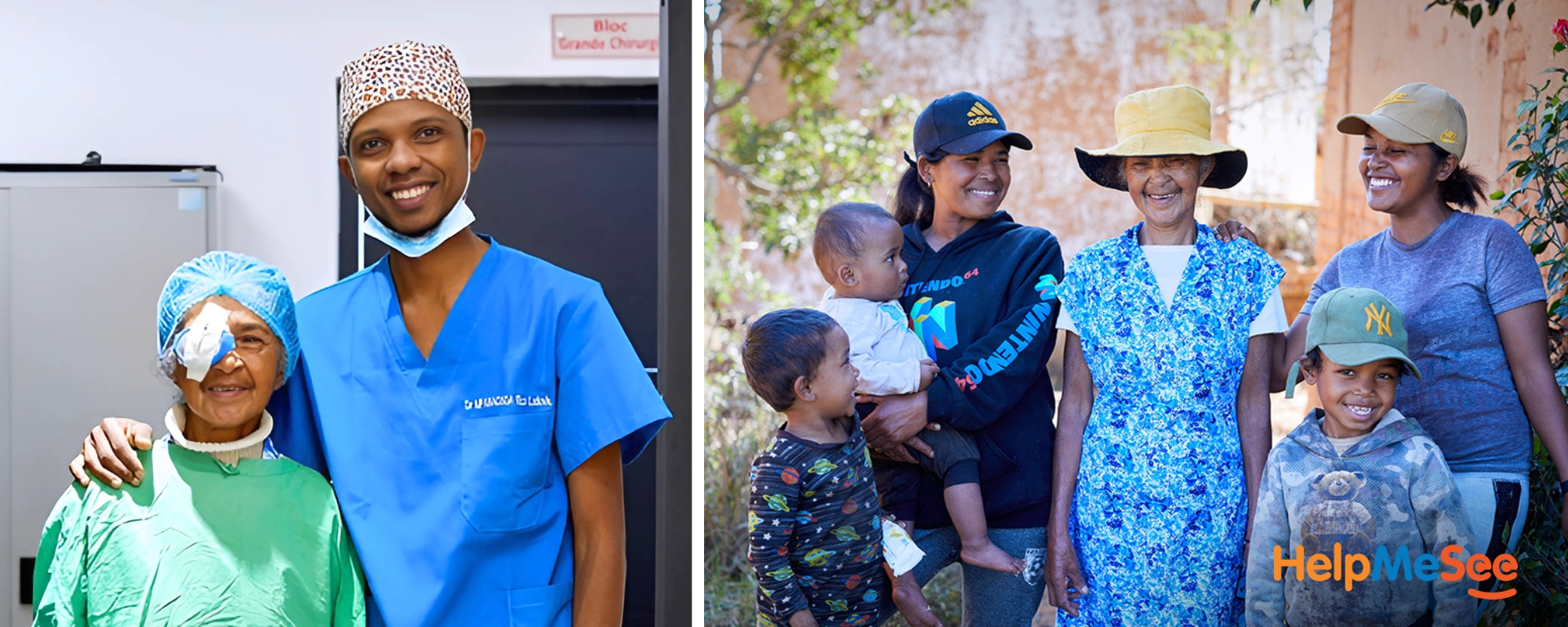
The HelpMeSee mission is not focused on sending foreign ophthalmologists and cataract specialists for short-term missions. Instead, the focus is on empowering local communities to build lasting, self-sufficient eye care systems.
- Training is delivered by skilled local instructors, making the HelpMeSee Simulation-based Training Program both scalable and sustainable. (8)
- Leading institutions such as the University of Illinois Chicago (UIC) have integrated the HelpMeSee Eye Surgery Simulator into their surgical programs. Dr. Peter MacIntosh, UIC’s program director, praised the HelpMeSee Eye Surgery Simulator for the combination of realistic haptics and expert feedback, noting how it develops the “hand-foot-eye coordination and problem-solving abilities” needed for complex cases. (9)
- By the end of 2024, HelpMeSee had trained over 3,000 cataract specialists globally, with many more scheduled for training. (10) This builds local expertise and ensures lasting capacity to fight cataract blindness.
Looking Ahead: World Sight Day
On Thursday, October 9th, 2025, the world will unite for World Sight Day, a global call to action to end avoidable blindness and vision loss. The theme for 2025 is “Eye Care for All,” highlighting the urgent need to bring equitable eye care to every community, no matter how remote.
The HelpMeSee mission directly aligns with this vision by training local cataract specialists who can provide lasting, sustainable care where it’s needed most.
As World Sight Day approaches, your support can help ensure that more people receive the gift of sight—not just for today, but for generations to come.
Your Gift Can Change Lives—Forever
Imagine the impact of restoring sight to just one child, one grandparent, one neighbor. Now imagine multiplying that impact thousands of times by training a single cataract specialist.
Your support goes beyond funding a surgery. It funds training. It funds independence. It funds hope.
Here’s why your gift matters:
- Multiply impact – One well-trained cataract specialist can restore sight to thousands of people over their entire career.
- Better safety, better outcomes – Simulator-trained cataract specialists make fewer errors, ensuring safer and more efficient surgeries due to the benefit of repetition to refine surgical skills.
- Sustainable change – Training is ongoing, building local capacity and lasting infrastructure for eye care.
- Cost-effective – Simulator-based training is highly scalable and proven to reduce the global economic burden of blindness. (11)
With your donation, you help bring simulation-based training centers where they are needed most. You help fund skilled instructors. You help local cataract specialists gain the skills they need—safely, quickly, and confidently.
Together, we can end preventable blindness. Together, we can bring millions from darkness to light.
Donate today. Restore sight—and hope—for tomorrow.
- Dormegny, Lea, et al. “Virtual reality simulation and real-life training programs for cataract surgery: a scoping review of the literature.” BMC Medical Education, vol. 24, 2024, article 1245. PMC+13BioMed Central+13HelpMeSee+13Aravind Eye Care System+1PMCHelpMeSee+1UI Health
- Broyles, James R., et al. “Cataract Blindness and Simulation-Based Training for Cataract Surgeons: An Assessment of the HelpMeSee Approach.” RAND Corporation, 2013. PMC
- Lansingh, Van Charles, et al. “The HelpMeSee approach to cataract surgical training.” PMC, 2023. arXiv+14PMC+14PMC+14
- Broyles, James R., et al. op. cit. (2013). PMC
- Nair, A.G., et al. “Effectiveness of simulation-based training for manual small incision cataract surgery among novice surgeons: a randomized controlled trial.” Scientific Reports, 2021. arXiv+14Nature+14HelpMeSee+14
- Nair, A.G., et al. “Assessment of a high-fidelity, virtual reality-based, manual small-incision cataract surgery simulator: A face and content validity study” Indian Journal of Ophthalmology, 2022. PMC+1
- Dormegny, Lea, et al. op. cit. (2024). BioMed Central+1
- Lansingh, Van Charles, et al. op. cit. (2023). HelpMeSee+4PMC+4BioMed Central+4
- “UIC One of Only Three Training Locations in the Nation Using … new Eye Surgery Simulator.” UI Health News, May 16, 2025. HelpMeSee+3UI Health+3HelpMeSee+3
- “Training to Target Global Cataract Blindness.” EuroTimes (ESCRS), Dec 2, 2024.
- Broyles, James R., et al. op. cit. (2013). PMC


 Spanish
  English
  French