

By Laura Straub
One in two people with a cataract, the leading cause of reversible blindness worldwide, lack access to cataract surgery. (1,) Although the answer to reducing the global cataract burden is scaling surgery efforts, it requires more than additional microscopes and operating rooms. It also requires increasing the number of well-trained, confident surgeons in the workforce who can serve their communities over the long term.
On International Women’s Day, HelpMeSee asked three leaders in ophthalmology, Lisa Brothers Arbisser, MD; Analisa Arosemena, MDy Sila Bal, MD, why gender equity in cataract surgery training matters. Their answers emphasize that equity is not only about fairness. It is about visibility, representation, access, and most importantly patient impact and outcomes.
Visibility and Representation
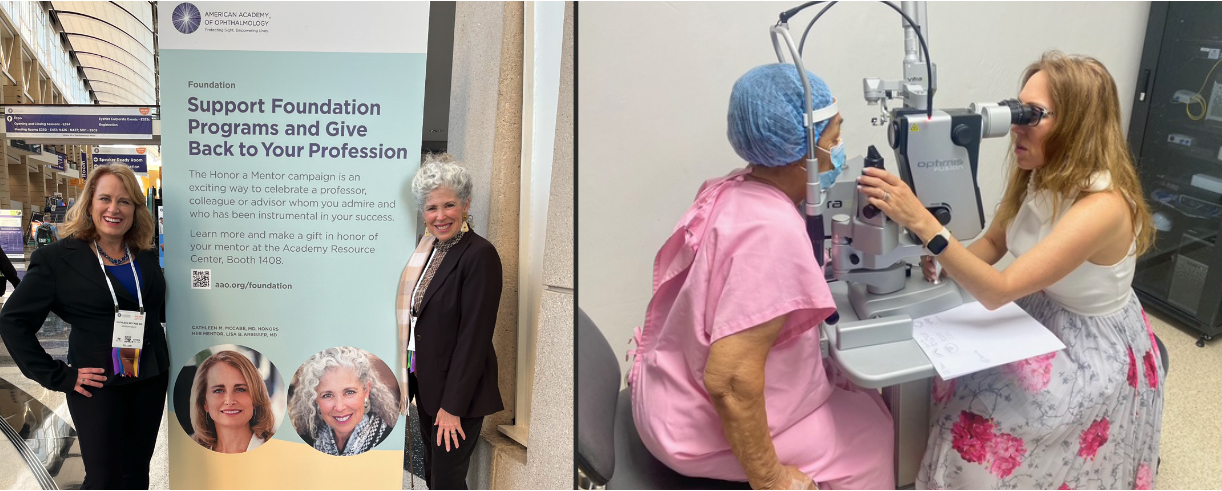
When women see other women leading, teaching, and operating, it lowers the psychological barrier to becoming a skilled surgeon and effective clinician. “It’s hard to become what you’ve never seen,” Dr. Bal, who practices at Hawaii Pacific Health in Honolulu, Hawaii, said. “For trainees, visibility changes what feels possible.”
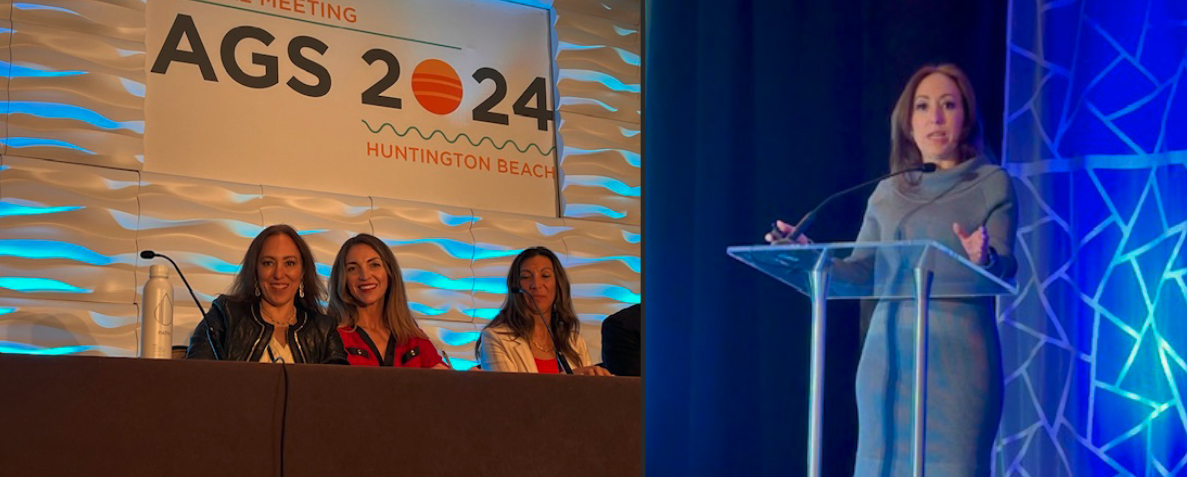
Visibility in the OR is complemented by visibility at ophthalmology meetings. Women’s presence on the podium has changed dramatically over the course of Dr. Arosemena’s career. “Early in my career, every single person teaching on the podium was a man in a suit,” she said. “Now, seeing yourself up there in any race and any gender has been extremely rewarding.” Dr. Arosemena is in private practice at Elite Eyecare Specialists in Miami. She is also a cofounder of Women in Eyecare, a nonprofit organization created to promote collaborative care among women in the eye care industry.
Access
Equity must extend beyond presence, Dr. Bal explained. It’s important “women enter cataract training at equal rates, get equal case exposure, and advance into leadership at equal rates—not just being present, but being promoted, funded, and trusted.”
Equal access to opportunity also depends on the structure of a training environment, including how bias is addressed. Creating systems that evaluate readiness based on skill rather than perception is essential to ensuring women receive the same surgical exposure and leadership pathways as their male peers. “It needs to be a meritocracy,” Dr. Arbisser said, underscoring the importance of training grounded in objective standards. Structured evaluation, she said, helps neutralize unconscious bias in surgical progression.
Dr. Arbisser was one of the first women residents at the University of Iowa Department of Ophthalmology. “There were many potential slights. I didn’t get invited to the poker games, the tennis games, some of the after-hours things,” she said, noting in her era of training it wasn’t always the people who did the best job who got the most experience. Sometimes, it was about who had the best relationships with attendings. “Most of the time, it wasn’t intentional or obvious to the person who was doing this,” she remembered.
One strategy to promote objective learning and build confidence in the OR is surgical simulation. A central tool in that effort is the HelpMeSee Eye Surgery Simulator, a system with standardized performance metrics designed to provide structured, measurable practice before cataract surgeons enter the OR. Studies show the platform’s use for objectively evaluating trainees, noting it leads to improved surgical scores and decreased complications. (3) It has also been shown to help trainees learn to anticipate complications earlier in the OR, a crucial element to building confident surgeons.
Surgical simulation is “a force multiplier,” Dr. Bal said. “It’s not a replacement for the OR… but simulation shortens the learning curve, improves confidence, and builds coordination and muscle memory before a trainee ever touches a patient.”
By allowing deliberate practice without patient risk, simulation reduces reliance on informal gatekeeping and personal preference in case assignment. It ensures readiness is measured by skill rather than perception.
While external feedback helps trainees develop technical skills, (4) becoming a good cataract surgeon also requires personal instruction and graduated autonomy. HelpMeSee pairs surgical simulation with instructor-led education and feedback to enhance skills acquisition and surgical proficiency.
The Tie Between Gender Equity, Cataract Surgery Access, and Patient Care
Social conditioning can influence how cataract surgeons step into surgical opportunities. “Women tend to still be more concerned about something bad happening during surgery,” Dr. Arosemena said, noting talent is not the issue. “Once a woman feels comfortable with their surgical skills, they fly.”
The implication is profound. If half the workforce finishes training without full confidence, surgical volume and long-term retention suffer. Gender equity in training is therefore directly tied to cataract access. Dr. Bal framed it as a systems issue. “More trained surgeons in general means shorter wait times and less preventable blindness,” she said. “When women are visible as surgeons and leaders, it normalizes the idea that surgery is for them, not in spite of them,” she said.
The benefits of equity extend beyond training to broader public health implications. “Cataract blindness disproportionately affects women in many settings,” Dr. Bal, who is active in global ophthalmology efforts, said. “Training and elevating women surgeons is part of closing that gap, not separate from it. … Increasing women in the workforce strengthens the system: It expands capacity, improves patient-centered communication, and builds teams that reflect the communities they serve.”
Dr. Arosemena echoed the workforce concern. Between an aging global population, an increased incidence of cataract worldwide, and a shrinking number of ophthalmologists, the demand for cataract surgery is higher than supply. (5) In fact, there is a projected workforce shortfall of 30% in the number of ophthalmologists in practice by 2035. (6) “The better we train women, the better the chance of having a workforce that can provide cataract care in the future,” she said.
While excellence in cataract surgery is not defined by gender, diverse perspectives strengthen the system. “There’s an empathy women bring to patient care,” Dr. Arbisser said. “That is important to patients.”
“Many patients respond better when they feel understood, and for some communities, gender dynamics influence whether a patient will even seek care or consent to surgery,” Dr. Bal added.
Mentorship, Mastery, and Middle Segment Surgery
Mentorship remains central to equity in cataract surgery training. Dr. Arosemena described how a female mentor created community during her training. “She would take the female residents to high tea to bond. … That was really special.”
Dr. Bal highlighted sponsorship as a structural solution. “Do the simplest, high-impact thing: Sponsor women aggressively,” she said. “Nominate them, fund them, invite them to operate, put them on panels … and back them publicly. The pipeline is not the biggest problem; the gatekeeping is.”
Dr. Arbisser, long known for her dedication to surgical education and mentorship, has spent decades in the ORs of other surgeons, teaching and coaching toward better technique. She’s also advocating for disciplined technique and comprehensive understanding of what she calls the “middle segment” of the eye. Her passion for teaching middle segment surgery reflects her belief that surgeons must master not only routine cataract steps but also complication management and long-term anatomical consequences.
Simulation programs such as the Programa de formación basado en simulación HelpMeSee align closely with that philosophy. By allowing surgeons to rehearse complex steps, refine hand movements, and manage complications in a structured environment, simulation builds the foundational mastery that supports long-term confidence across genders.
A Workforce Imperative
Eliminating cataract blindness requires scale, scale requires retention, and retention requires support, confidence, and opportunity. Equity in opportunity does not happen passively, however. “If you want equity, you have to design for it… Measure opportunity, not just performance. Track case distribution, mentorship access, and leadership roles,” Dr. Bal said.
With equal visibility and objective pathways to mastery through access and case exposure, mentorship, and simulation, the entire system strengthens. As Dr. Arosemena put it, “Once you get one woman secure about what they do, they shine.”
Laura Straub is a medical communications strategist and writer. Reach her at [email protected].
- World Health Organization. Blindness and vision impairment. February 10, 2026. Accessed February 23, 2026. https://www.who.int/news-room/fact-sheets/detail/blindness-and-visual-impairment
- McCormick I, Ouchtar Y, Macleod D. Effective cataract surgical coverage in adults aged 50 years and older: empirical estimates from population-based surveys in 68 countries and modelled estimates for 2000–30. Lancet Glob Health. 2026;14(3):367-377.
- Sankarananthan R, Prasad RS, Koshy TA, et al. An objective evaluation of simulated surgical outcomes among surgical trainees using manual small-incision cataract surgery virtual reality simulator. Indian J Ophthalmol. 2022;70:4018-25.
- Porte MC, e al. Verbal feedback from an expert is more effective than self-accessed feedback about motion efficiency in learning new surgical skills. Am J Surg. 2007;193(1):105-110.
- Pesudovs K, Lansingh VC, Kempen JH, et al. The Vision Loss Expert Group of the Global Burden of Disease Study, the GBD 2019 Blindness and Vision Impairment Collaborators. Global estimates on the number of people blind or visually impaired by cataract: a meta-analysis from 2000 to 2020. 2024; 38:2156-2172.
- Berkowitz ST, Finn AP, Parikh R, Kuriyan AE, Patel S. Ophthalmology workforce projections in the United States, 2020 to 2035. Ophthalmology. 2024;131(2):133-139.


 Spanish
  English
  French