

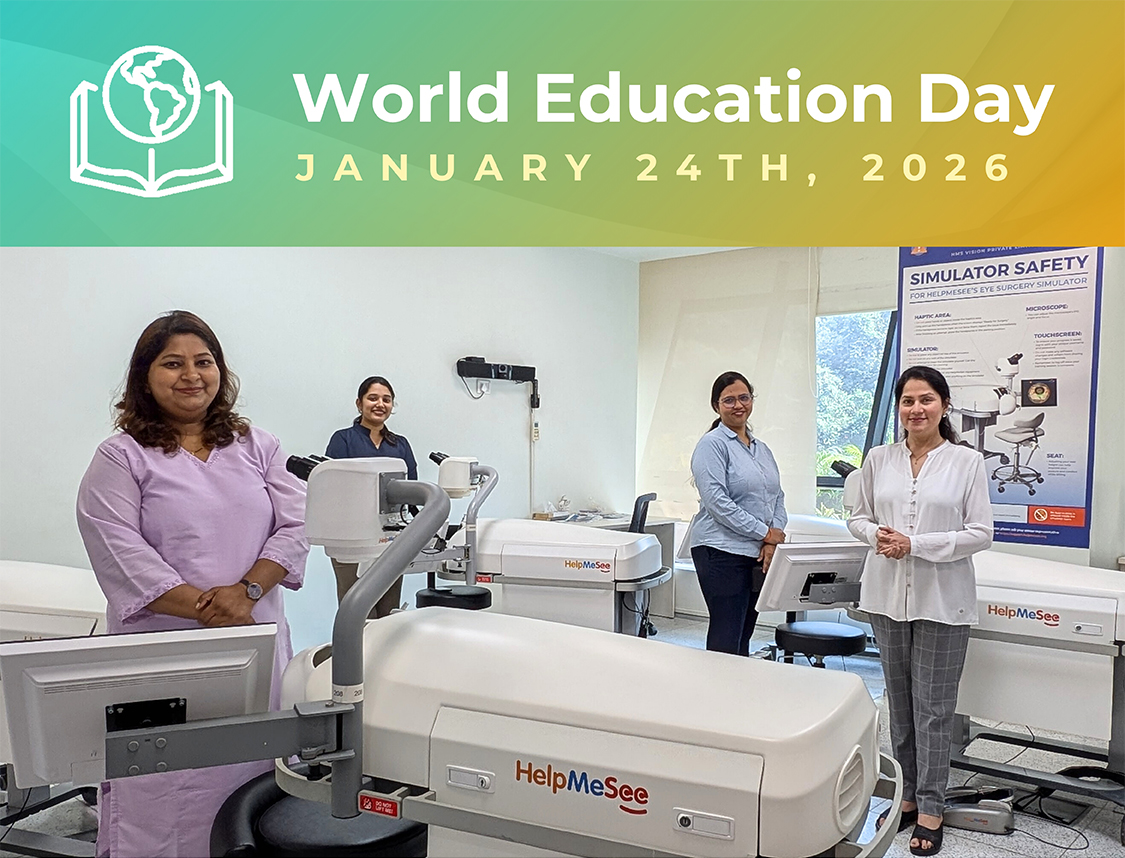
On January 24th, World Education Day, the spotlight often falls on classrooms, textbooks, and academic milestones. Education doesn’t only happen at desks. Sometimes, it takes place in a simulation lab—with a virtual scalpel in hand.
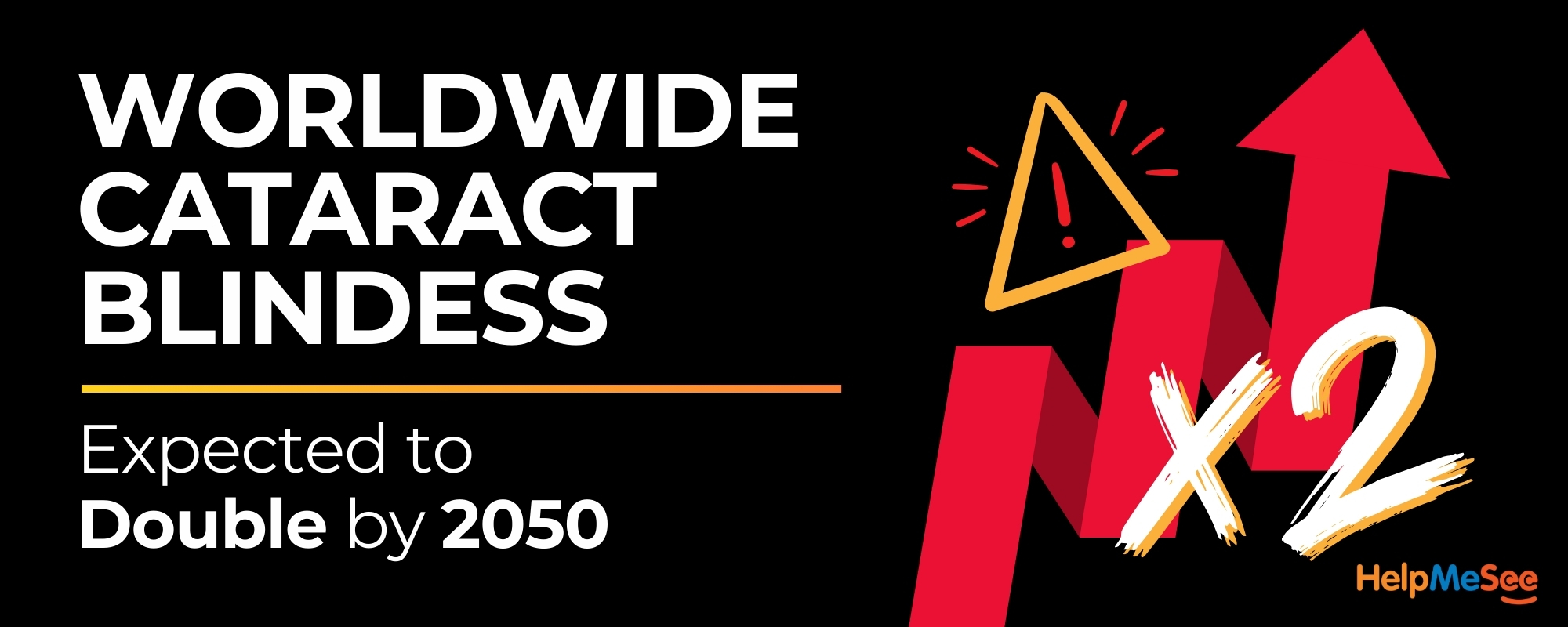
Worldwide, 100 million people live with curable cataract blindness or significant visual impairment because there aren’t enough trained cataract specialists to address the health crisis. That’s why HelpMeSee is focused on expanding simulation-based surgical education: a scalable, effective way to train more specialists in more places, faster than ever before.

Education That Restores Sight
Cataract surgery is one of the most common and essential procedures in ophthalmology. The Programa de formación basado en simulación HelpMeSee allows cataract surgeons to safely practice surgical skills in a controlled environment, free from the stress encountered in actual patient care.
Surgeons progress step-by-step through simulated procedures to gain transferrable surgical skills. Repetition helps build muscle memory and confidence. Instructor feedback further improves learning outcomes, helping cataract specialists become skilled and prepared before performing the cataract surgery on an actual patient in an operating room.
Structured simulation programs have been shown to reduce intraoperative complication rates and improve performance in live cataract surgeries among residents. (1)
Simulation-based learning also makes training more equitable. Virtual reality training environments allow consistent practice across locations, bridging the gap for trainees with limited access to surgical cases. It strengthens muscle memory and technical coordination before specialists ever touch a real patient. (2)
On World Education Day, it is important to highlight simulation-based training and its impact on both the ophthalmolology industry and residency training. The hands-on experience that allows for multiple attempts to refine surgical skills is essential to master procedures like manual small incision cataract surgery (MSICS). Simulation-based training allows ophthalmology residents to develop real surgical efficiency that can impact thousands of patients worldwide.
The Scale of the Problem and the Solution
Cataract blindness affects millions despite the known treatment because surgical training hasn’t scaled to meet global demand. As populations age, the need for cataract care continues to grow. Traditional apprenticeship models can limit how quickly cataract specialist trainees can gain the necessary experience.
Simulation-based training addresses these limits. Modern simulators help specialists build core skills such as instrument handling and stereoscopic depth perception, which are essential before performing real surgeries. (3)
Why Simulation-based Training Works
Simulation-based education opens doors to high-quality training for more cataract specialists:
- Hands-on practice – Cataract specialists can repeatably practice key surgical steps such as capsulorhexis and nucleus removal safely and as often as needed.
- Realistic environments – Advanced virtual reality replicates surgical visuals and tactile feedback to create life-like procedures.
- Measurable feedback – Learners receive data-driven performance insights to track progress and refine techniques.
A well-trained cataract specialist can restore sight to up to 30,000 people over their career and increasing the number of trained cataract specialists means potentially more sight restoring surgeries worldwide which helps to reduce the cataract blindness backlog.
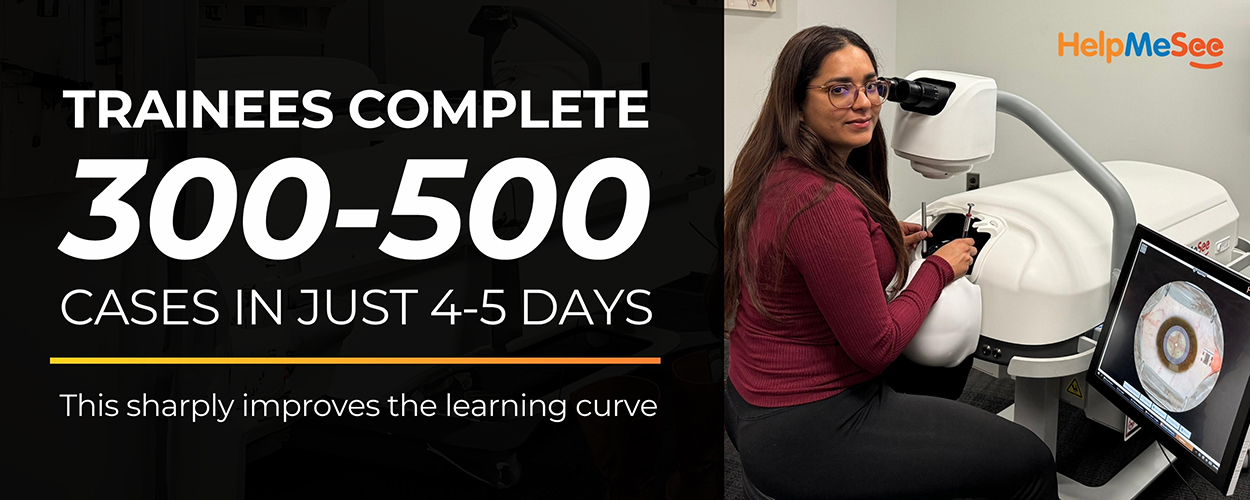
The effectiveness of simulation training in ophthalmology is evidence based:
Lower complication rates – Ophthalmic residents trained through simulation-based training experience fewer complications when performing real cataract surgeries.
Improved training outcomes – Educators increasingly recognize simulation-based learning as a key complement to residency programs. (2)
Enhanced technical skill – Simulated environments help build the precision and depth perception critical to safe and effective cataract surgery. (3)
Together, these studies highlight that incorporating comprehensive simulation-based education is a valid, central tool to improve surgical skills and patient safety.
Education Without Borders
World Education Day reminds us that education should be accessible, practical, and life-changing. Formación mediante simulación brings that vision to life and gives future cataract surgeons the opportunity to practice procedures, safely and repeatedly. It closes the gap between traditional training and patient care.
Support education that restores sight. Celebrate World Education Day by investing in simulation-based training for tomorrow’s cataract specialists.
- “Simulation in Resident Education.” American Academy of Ophthalmology, American Academy of Ophthalmology, https://www.aao.org/education/simulation-in-resident-education. Accessed January 15, 2026.
- “Virtual Simulation Training Offers Assist.” Ophthalmology Times, 28 Nov. 2023, https://www.ophthalmologytimes.com/view/virtual-simulation-training-offers-assist. Accessed January 15, 2026.
- “The Evolving Role of Vitreosurgical Simulators in Surgical Training.” Ophthalmology Times, 15 Apr. 2024, https://www.ophthalmologytimes.com/view/the-evolving-role-of-vitreosurgical-simulators-in-surgical-training. Accessed January 15, 2026.


 Spanish
  English
  French