

Why HelpMeSee is Addressing Cataract Blindness Through Surgical Training of Cataract Specialists

At HelpMeSee, we’re working to end preventable blindness caused by cataract by training cataract specialists in low-income countries in Manual Small Incision Cataract Surgery (MSICS).
Our Simulation-based Training Program equips cataract specialists avec le cataract chirurgicale skills they need to restore sight safely, affordably, and at scale—especially in regions where access to advanced technology is limited.
Why HelpMeSee is Addressing Cataract Blindness Through Surgical Training of Cataract Specialists
At HelpMeSee, we’re working to end preventable blindness caused by cataract by training cataract specialists in low-income countries in Manual Small Incision Cataract Surgery (MSICS).
Our Simulation-based Training Program equips cataract specialists avec le cataract chirurgicale skills they need to restore sight safely, affordably, and at scale—especially in regions where access to advanced technology is limited.
Questions fréquemment posées
Which cataract surgery technique does your training program emphasize, and is it commonly used in the United States?
We support simulation-based training for Manual Small Incision Cataract Surgery also known as MSICS. MSICS is an effective and cost-efficient procedure with similar outcomes to phacoemulsification, which is the cataract surgery usually performed in the United States and Europe.
MSICS doesn’t rely on costly machines or electricity. It’s performed with precision and skill by hand. MSICS is better suited for developing countries where cost and limited supplies of electricity and medical equipment need to be considered.
Why does HelpMeSee prioritize funding the training of cataract specialists instead of directly financing individual cataract surgeries
While that may seem like a quick fix, it doesn’t solve the root problem. We believe in empowering local professionals—training people in-country to become cataract specialists. That way, the community gains a permanent solution, not just a temporary visit.
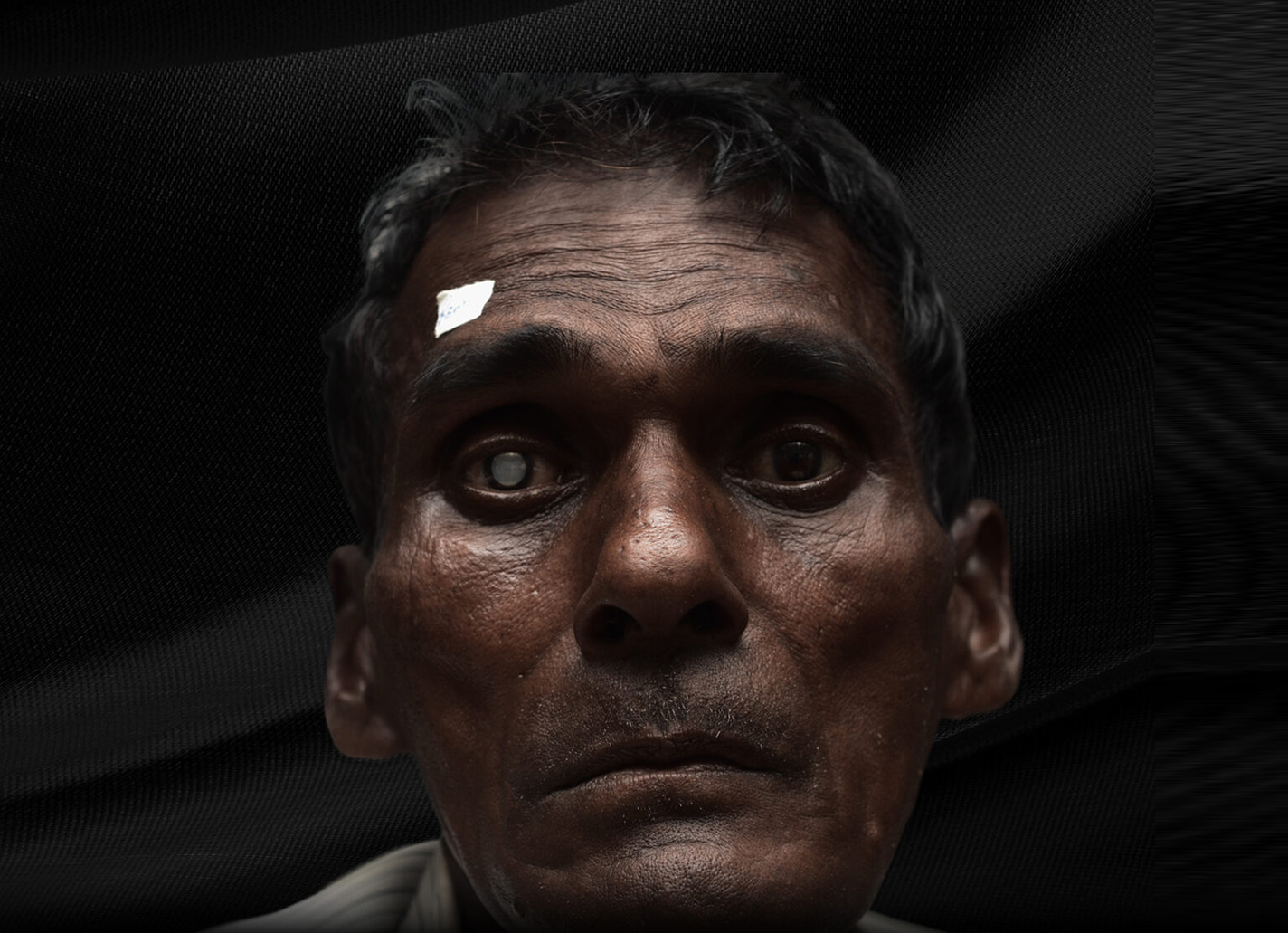
This crisis of cataract blindness is caused by the shortage of cataract surgeons. Funds used to support cataract removal surgeries can treat only a fixed number of people.
Les opérations de cataracte pourraient soulager la grande majorité des cas, mais il n'y a pas assez de chirurgiens compétents. Le nombre de personnes nécessitant une opération de cataracte dépasse celui des chirurgiens disponibles, surtout dans les zones du monde où les taux de perte de vision sont les plus élevés.
We use your donations to fund cutting-edge training of cataract specialists who can be the cure to cataract blindness in their community which will result in many more sight-restoring cataract surgeries. We want to equip the communities and their professionals with tools for addressing the problem of cataract blindness today and tomorrow. It is an issue of scale.
How does simulation-based training actually work, and why is it so important?
HelpMeSee uses advanced simulation technology with our HelpMeSee Eye Surgery Simulator alongside an instructor-led curriculum to train cataract specialists safely and effectively. This method allows trainees to build surgical skill through repetition without ever risking a patient’s eye. It’s a scalable, standardized, and life-saving approach to solving the global cataract blindness crisis.
Is my donation really making a long-term difference?
Yes. When you support a trained cataract specialist, you’re not just giving sight to one person—you’re unlocking a lifetime of cataract surgeries for thousands of people in their community. Your donations build the capacity for permanent, local solutions to cataract blindness.
Comment puis-je obtenir de l'aide pour ma cataracte si je vis aux États-Unis ?
À l'heure actuelle, nous ne pratiquons pas d'opérations de la cataracte aux États-Unis. Notre mission, qui consiste à résoudre la crise mondiale de la cécité due à la cataracte, s'adresse aux personnes souffrant de cataractes graves dans les pays en développement. Les personnes résidant aux États-Unis peuvent contacter Medicare, Medicaid ou les régimes d'assurance médicale privée pour obtenir des informations sur la couverture de l'opération de la cataracte.
En outre, ces organisations fournissent des conseils gratuits ou peuvent proposer des soins chirurgicaux de la cataracte à prix réduit aux États-Unis :
Réseau d'assistance Cornerstone
3500 Noble Avenue
Fort Worth, TX 76111
Phone: 817-632-6000
Fax: 817-632-7001
Lions Clubs International
300 West 22nd Street
Oak Brook, IL 60523
Phone: 630-571-5466
Vision USA
Phone: 800-766-4466
Web: www.aoa.org/visionusa
Mission Cataracte USA
Phone: 559-797-1629
Eye Care America
Phone: 877-887-6327
I live outside the U.S. and cannot see due to cataract—can HelpMeSee help me directly?
HelpMeSee does not currently provide direct surgery to patients, but we support the training of local cataract specialists in countries around the world. You may be able to find help through government hospitals or charitable eye programs in your area. If you’re in a country where we have partners, a trained cataract specialist may be nearby.


 French
  English
  Spanish