

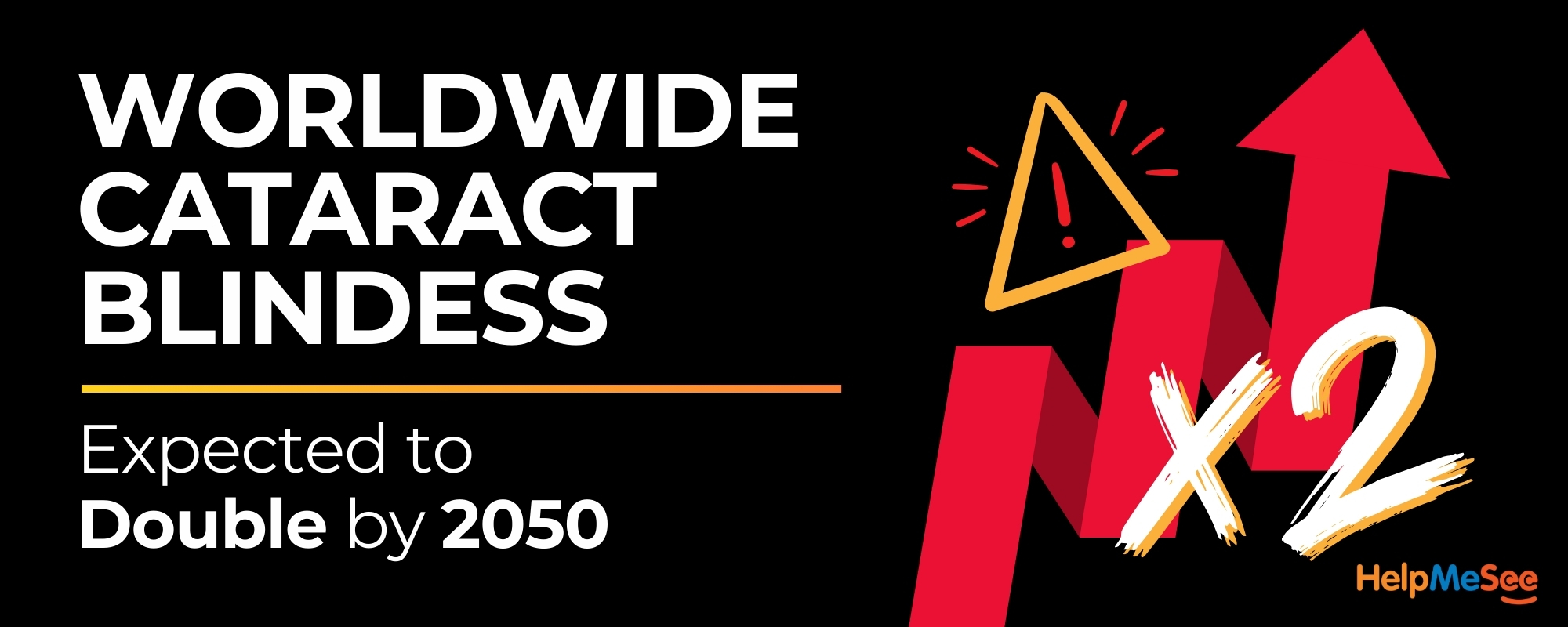
Cataract-related blindness is the leading cause of visual impairment worldwide and the second leading cause of MSVI. By 2050, global cases are expected to rise significantly, especially among aging populations and underserved regions. Yet as the demand for cataract specialists’ climbs, the workforce isn’t keeping pace.
Are we training enough cataract specialists to meet this demand? Worldwide, over 100 million people are blind or have moderate to severe visual impairment from cataract, a treatable condition. We are not meeting the demand of trained cataract specialists.
Cataracts Are Surging, But Specialist Numbers Aren’t
Recent forecasts show cataracts will continue to be the top cause of blindness through 2050, largely due to population aging and poor access to surgical care in low- and middle-income countries (LMICs) [1].
According to the Global Burden of Disease 2021 study, over 90 million people were either blind or visually impaired from cataracts as of 2021. That number could increase by more than 50% by 2050 without expanded access to care.
In the United States, the picture isn’t much better. Workforce projections estimate a 30% shortage of ophthalmologists by 2035 [2]. Even in high-income countries, such a shortfall may limit patients’ access to timely cataract surgery.
We Also Need More Access
Global access to ophthalmology training is uneven. Only 25% of U.S. ophthalmology residency programs publicly list global health experiences on their websites. Most of those are short-term, optional electives for senior residents [3]. This leaves most residents without structured exposure to global eye care or training in resource-limited settings.
Meanwhile, cataract blindness is most prevalent in regions like South Asia and sub-Saharan Africa, where surgical access is severely limited [1]. Some countries have as few as one ophthalmologist for every 250,000 people. Relying on visiting surgeons is not a long-term solution. Building local capacity through hands-on training is essential
Simulation-based surgical training offers a path forward. High-fidelity, instructor-led simulation-based training programs are flexible to implement but it does have dependencies related to costs, space available, available personnel, etc. A single HelpMeSee Eye Surgery Simulator has the potential to train hundreds of cataract specialists on-site, eliminating the costs and logistical barriers of sending trainees abroad.
Bringing simulation-based training to underserved regions helps level the playing field in surgical education. Cataract specialists in remote or rural areas can now receive the same quality of surgical training as those in major academic centers. This is not just an educational win—it’s a public health necessity.
Global expansion of simulation-based training is should not be optional. If we aim to eliminate preventable blindness, we must make these tools widely accessible.
Simulation-based Training Changes the Equation
Traditional apprenticeship models remain valuable, but they are slow and resource intensive. Residents often learn by observing experienced surgeons, gradually performing parts of procedures under supervision. However, consistent hands-on training opportunities are limited. Operating room time is expensive, and patient safety must always take priority [4].
In many programs—especially in LMICs—residents finish training with minimal experience in phacoemulsification or manual small-incision cataract surgery (MSICS). One study found that the learning curve for cataract surgery often exceeds what a residency program can provide [5].
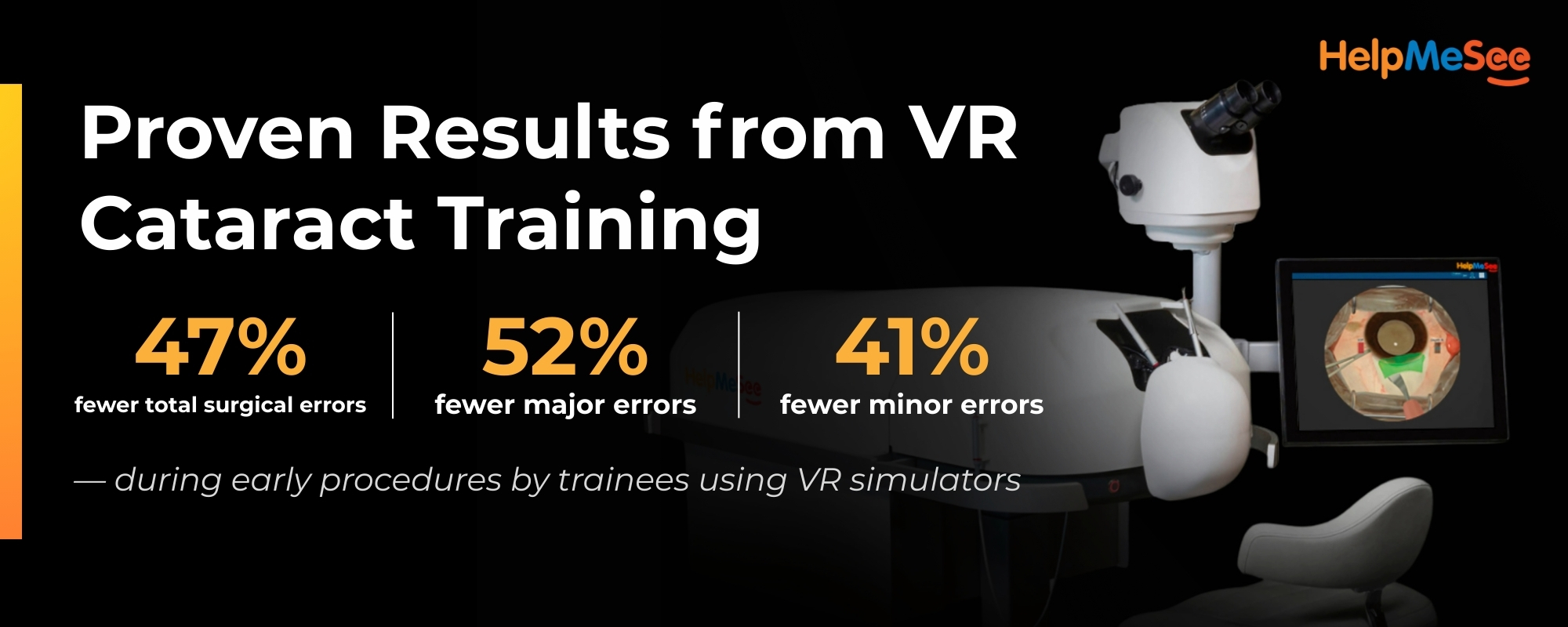
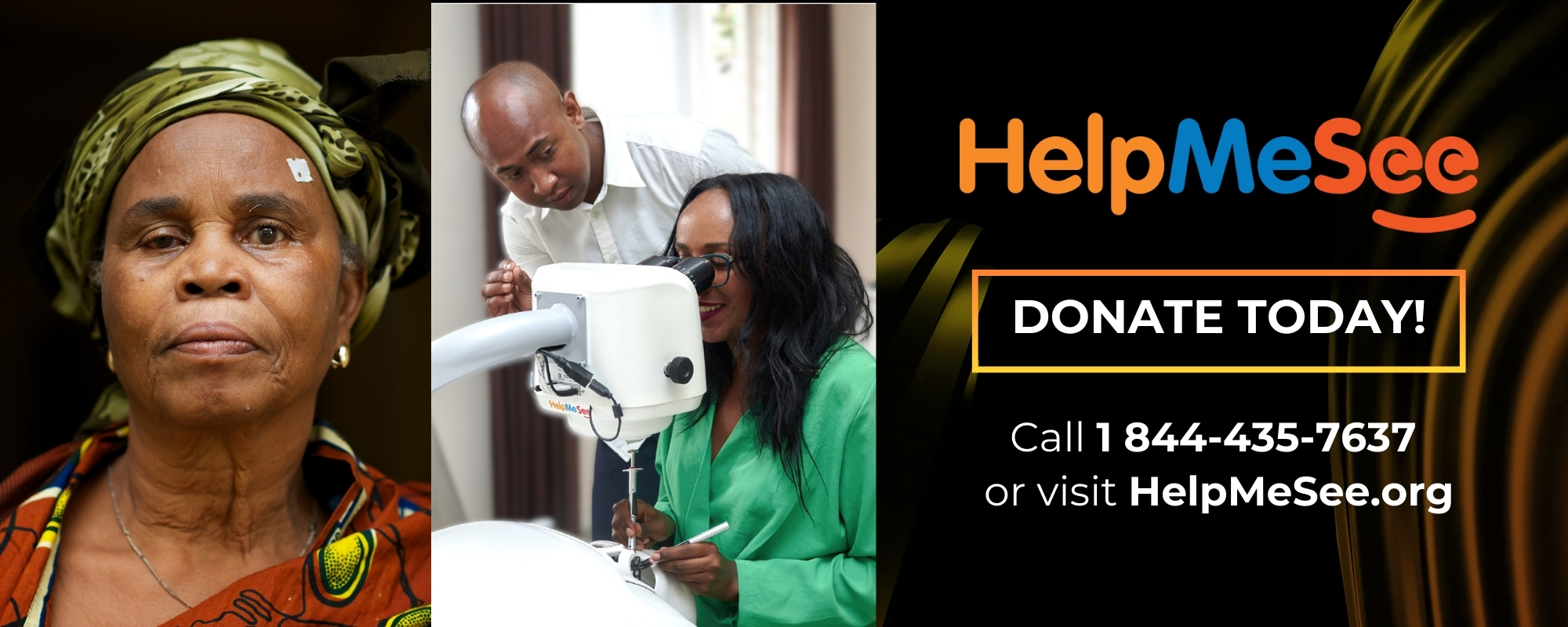
To meet rising demand, cataract training must scale. Simulation offers a proven, scalable solution. When paired with expert instruction, simulation becomes even more powerful. Programs like the HelpMeSee Simulation-based Training Program combine high-fidelity haptic virtual reality with structured, instructor-led guidance. This transforms simulation from a practice tool into a complete learning system.
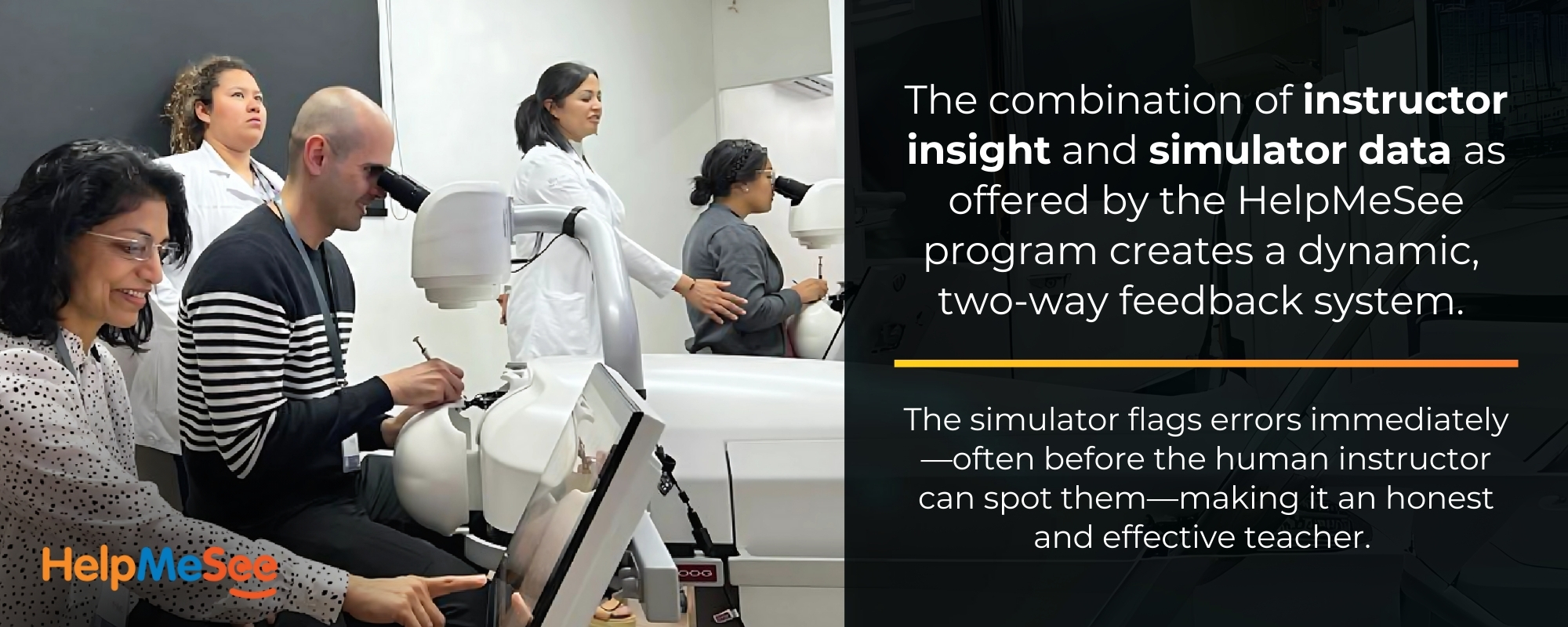
Each cataract specialist receives real-time coaching and feedback from experienced instructors, helping them correct mistakes early, build confidence, and improve performance in a controlled environment. Instructors also personalize the training pace based on the participant’s skill level—something no self-guided simulator can do.
Cataract specialists in the HelpMeSee Simulation-based Training Program typically complete 300 to 500 simulated surgical procedures in just a few days. While the volume of repetition is critical, it’s the expert guidance that truly accelerates learning and surgical readiness.
What Makes Simulation-based Learning Work?
Simulation-based learning works because it provides a safe, standardized environment to build surgical skills. It supports the development of fine motor control, hand-eye coordination, and critical decision-making essential for successful cataract surgery.
A 2025 study confirmed that trainees with better sensory and motor skills perform significantly better in simulation modules that require bimanual coordination [7]. Simulation allows instructors to identify these gaps and adjust training accordingly.
In a randomized controlled trial using the HelpMeSee Eye Surgery Simulator, researchers compared instruction by experienced cataract surgeons and non-ophthalmologist trainers. The result? All participants achieved proficiency, regardless of instructor background, demonstrating the scalability of near-peer teaching models supported by simulation [8].
Time for Program Directors to Act
Simulation isn’t a future innovation—it’s a present solution.
Residency programs that incorporate simulation early give their residents a stronger foundation. Haptic simulators with tactile feedback offer a far more realistic experience than traditional wet labs or screen-based systems. Residents can learn to manage complications, reduce tremor, and improve control—all before touching a real patient [4].
Simulation also provides objective performance feedback and platforms which track every movement, surgical step, and error in real time [6]. This level of feedback is nearly impossible to achieve consistently in the OR.
Cataract Specialists Deserve Better Training
The demand is clear. Cataract rates are rising. Training opportunities are limited, and traditional methods alone can’t scale fast enough.
Simulation-based training offers a solution. It’s scalable, effective, and ready now. Residency programs must act by integrating simulation into core curricula. Countries must invest in local simulation-based training centers and global outreach programs must shift from short-term electives to long-term training capacity.
We have the tools. Now we need leadership to use them.
- Jiang, Xiaohui, et al. “Global Trends in Cataract Burden: A 30-Year Epidemiological Analysis and Prediction of 2050 from the Global Burden of Disease 2021 Study.” British Journal of Ophthalmology, 2025.
- Berkowitz, Steven T., et al. “Ophthalmology Workforce Projections in the United States 2020 to 2035.” Ophthalmology, vol. 131, no. 2, 2024, pp. 133–139.
- S Shah, Shalini, Chris R. Alabiad, and Zubair Ansari. “A Web-based Review of Global Training in United States Ophthalmology Residency Programs.” Journal of Academic Ophthalmology, vol. 13, no. 5, 2025, pp. e183-e191. https://doi.org/10.62199/2475-4757.1305. Accessed 14 Aug. 2025.
- Solyman, Omar, et al. “A Novel Cost-Effective Simulation Model for Continuous Curvilinear Capsulorhexis.” Clinical Ophthalmology, vol. 16, 2022, pp. 2759–2764.
- Lansingh, Van C., et al. “How Many Cataract Surgeries Does It Take to Be a Good Surgeon?” Revista Mexicana de Ophthalmologia (Eng.), 2023.
- Nair, Anuja G., et al. “Assessment of a High-Fidelity Virtual Reality-Based Manual Small-Incision Cataract Surgery Simulator: A Face and Content Validity Study.” Indian Journal of Ophthalmology, vol. 70, no. 11, 2022, pp. 4010–4015.
- Bozkurt Oflaz, Ayse, et al. “Fine Motor and Sensory Proficiency: Implications for Simulator-Based Surgical Assessments.” BMC Medical Education, vol. 25, 2025, article 1184.
- Boberg-Ans, Lars Christian, et al. “Comparing the Impact of Surgical Expert versus Non-Ophthalmologist Instructors on Virtual-Reality Surgical Performance.” Acta Ophthalmologica, vol. 102, 2024, pp. 906–913.


 Spanish
  English
  French