

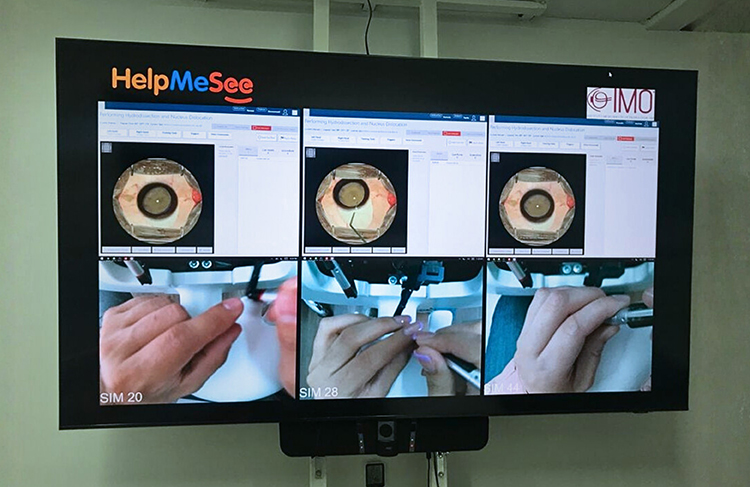
Residency program directors carry a critical responsibility of preparing the ophthalmologists to meet the realities of modern ophthalmic care, especially for cataract surgery. These realities are no longer limited to academic hospitals. Cataract specialists today are working in humanitarian settings, remote clinics, mobile outreach units, and under-equipped surgical centers. This means they must be skilled, adaptable, and confident before their first real patient encounter.
Formation basée sur la simulation should no longer be optional. It’s essential. It provides cataract specialists with the foundational muscle memory, hand-eye coordination, and complication management skills they need to succeed in a wide range of surgical environments, especially those with limited technology.
By incorporating simulation-based training into your residency program now, you help close the global surgical gap and build a workforce equipped for the future of eye care.

Why Simulation-based Training Matters in 2026
Virtual reality (VR) simulators and high-fidelity training tools replicate the steps of cataract surgery in lifelike environments. Residents gain hands-on experience performing critical maneuvers — such as capsulorhexis, tunnel construction, lens delivery, and complication management without putting a single patient at risk.
This allows programs like the Programme de formation par simulation HelpMeSee to deliver consistent, competency-based surgical education regardless of the case volume or complexity available in clinic. (1)
More importantly, simulation-based training ensures:
- Faster proficiency development: Residents gain critical skills earlier in their training, reducing surgical error rates and the steep learning curve often seen in the OR. (2)
- Exposure to low-tech procedures: Cataract specialists trained exclusively on phacoemulsification may not be prepared for low-resource settings. Simulators that teach manual small-incision cataract surgery (MSICS) fill this gap, making residents mission-ready. (3)
- Repetitive skill-building: Cataract specialists can repeat steps hundreds of times from scleral tunnel creation to anterior vitrectomy while building muscle memory and surgical confidence. (4)
- Preparation for complications: Simulation modules on the HelpMeSee Eye Surgery Simulator include difficult case scenarios such as posterior capsule rupture, small pupils, and dense cataract which is training that’s hard to guarantee in some clinic rotations. (5)
These features make simulation an ideal training tool, not just for developing technical skills, but for preparing cataract specialists to operate in any setting, whether at an academic institution or a humanitarian mission camp.
Simulation Helps Meet the Global Demand for Cataract Specialists
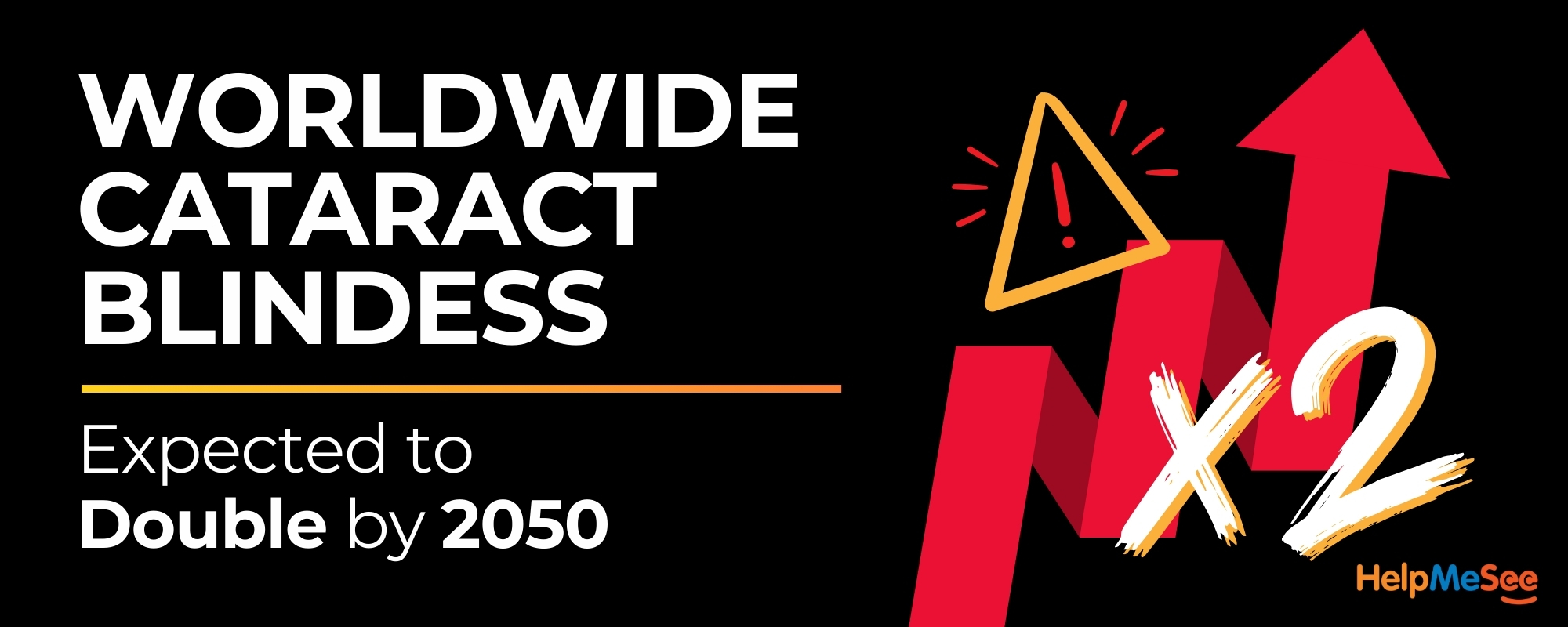
There are not enough cataract specialists to meet global demand. Many patients wait years for surgery, especially in low- and middle-income countries where access to phacoemulsification training is limited or nonexistent. MSICS-trained surgeons can bridge this gap, but they need quality training.
Traditional “see one, do one” models are no longer enough. Case variability, limited time in the OR, and growing surgical backlogs restrict opportunities for residents to gain real-world experience.
Simulation-based training solves this problem.
Simulation Prepares Residents for Outreach and Mission Work
Many of your residents will volunteer in underserved areas or participate in international outreach. These outreach program do not offer phacoemulsification surgery, may lack adequate electrical supply, and have limited staff and supplies. Thus, surgeons may find themselves operating in basic ORs with limited resources and support.
Manual surgical techniques, especially MSICS, are the preferred in these conditions. Simulation-based MSICS training prepares residents for this reality with hands-on experience in instrument handling, wound construction, nucleus removal, and IOL insertion within life-like instruction.
Programs that include simulation training send graduates into the field with confidence. That translates to better patient outcomes, higher surgical volume, and long-term impact on preventable blindness.
Objective Feedback, Safe Learning, and Data-Driven Results
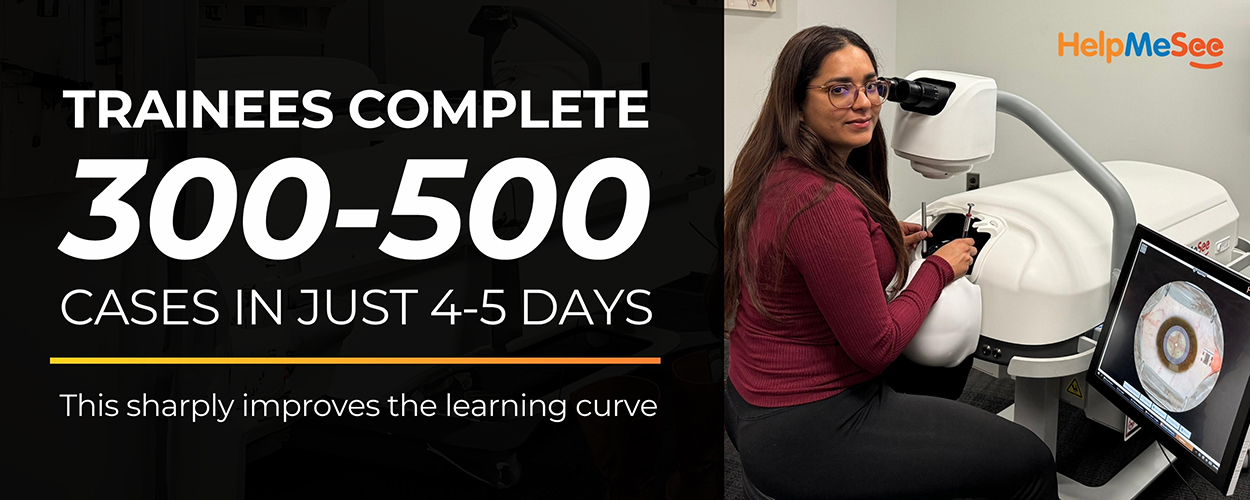
Unlike traditional training, simulators offer built-in assessment tools. Residents receive real-time performance scores based on time and instrument precision, and error tracking especially when paired with guidance in an instructor-led curriculum like in the HelpMeSee Simulation-based Training Program. (6).
Studies have shown that VR-trained residents achieve lower complication rates in early surgeries, and simulation was shown to reduce posterior capsule rupture rates by up to 38% in one cohort study (7).
Moving Ophthalmology Forward — One Program at a Time
Residency programs are under pressure to produce competent ophthalmologists and cataract specialists in cataract surgery faster, safer, and more efficiently. Simulation-based training is the clearest path forward.
By adopting VR simulation now, your program can:
- Improve early surgical outcomes
- Standardize skill acquisition
- Expand global outreach capability
- Stay ahead of international educational standards
Incorporating simulation into your core curriculum advances the entire field. It ensures that cataract specialists trained in 2026 are ready to serve anywhere in the world, on any surgical platform, under any condition.
- Dormegny, Lea, et al. “Virtual Reality Simulation and Real-Life Training Programs for Cataract Surgery: A Scoping Review.” BMC Medical Education, 2024.
- Lin, J. C., et al. “Virtual Reality Training for Cataract Surgery Operating Room Performance.” Acta Ophthalmologica, 2021.
- Ahmed, T. M., et al. “Can simulators be applied to improve cataract surgery in low‑resource settings?” BMJ Open Ophthalmology, 2020.
- Nair, A. G., et al. “Assessment of a high-fidelity, virtual reality-based, manual small-incision cataract surgery simulator.” Indian Journal of Ophthalmology, 2022.
- Singh, A., et al. “High-Fidelity Cataract Surgery Simulation and Third-World Ophthalmology Training.” Journal of Cataract and Refractive Surgery, 2015.
- Bozkurt Oflaz, A., et al. “Fine Motor and Sensory Proficiency: Implications for Simulator-Based Surgical Assessments.” BMC Medical Education, 2025.
- Montrisuksirikun, C., et al. “Effect of Surgical Simulation Training on the Complication Rate in Resident Performed Phacoemulsification.” BMJ Open Ophthalmology, 2022.


 French
  English
  Spanish