

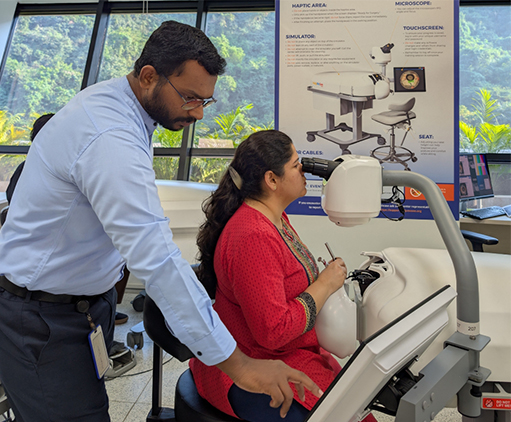
For young ophthalmologists, the question many have early in their career is where can their cataract surgery skills take them? In an era of widening disparities in eye care access, Chirurgie de la cataracte par petite incision manuelle (MSICS) stands out as a low-resource demanding technique that is great to add to their skill set. MSICS is a passport to global impact, enabling cataract surgeons to work across borders, serve underserved populations, and participate in meaningful outreach and humanitarian care. Cataract remains the leading cause of reversible blindness worldwide, disproportionately affecting patients in low- and middle-income countries where access to advanced surgical infrastructure is limited.¹ While phacoemulsification dominates in high-resource settings, it is not always practical in environments with limited access to advanced equipment, unreliable electricity or infrastructure, or a high patient volume with limited surgical workforce. This is where MSICS becomes essential. 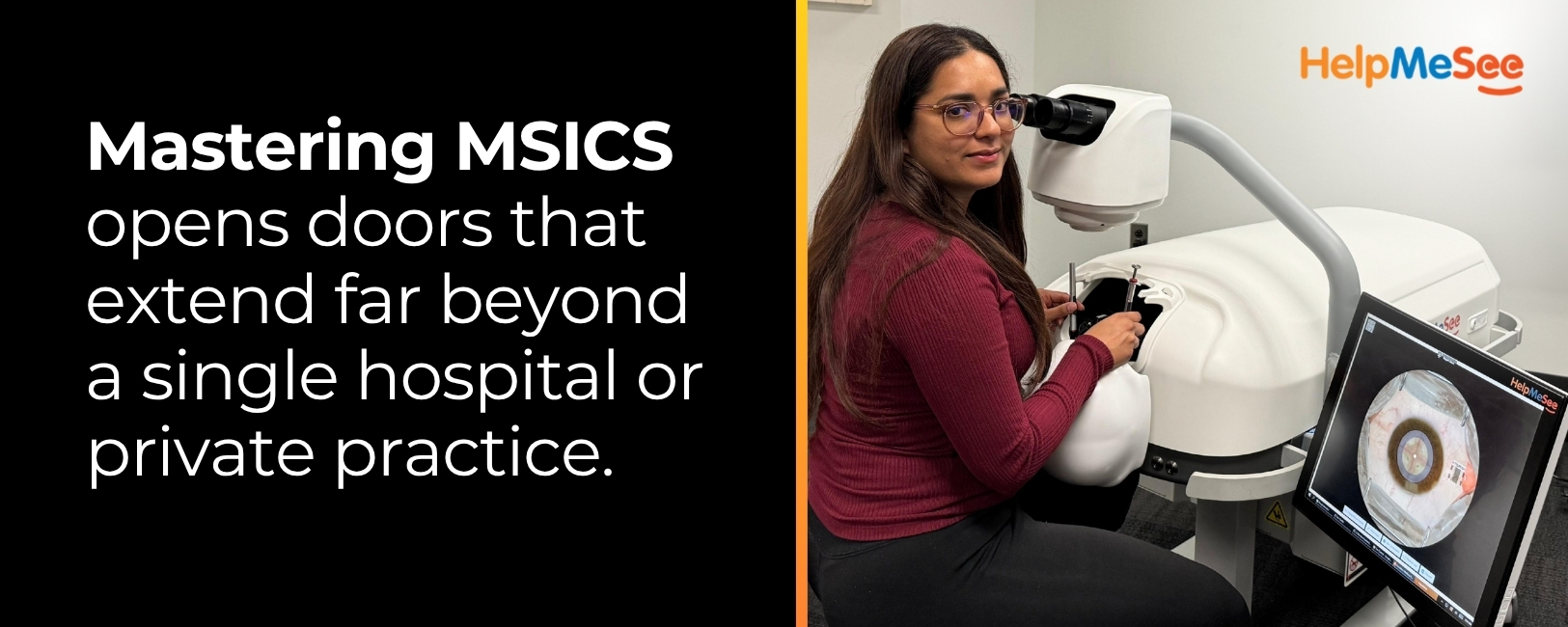
Expanding Your Career Horizons
MSICS delivers high-quality visual outcomes comparable to phacoemulsification while requiring fewer resources, making it the procedure of choice in many global and outreach settings.² For early-career ophthalmologists, learning MSICS is relevant to make an impact and reduce preventable cataract blindness anywhere in the world. Mastering MSICS opens doors that extend far beyond a single hospital or private practice.
- Global Surgery Opportunities
Cataract surgeons trained in MSICS are highly sought after in international eye care initiatives. Whether partnering with Nonprofit Government Organizations (NGOs), academic institutions, or global health organizations, MSICS allows you to:
- Deliver high-volume, sight-restoring surgeries
- Adapt to diverse clinical environments
- Contribute to reducing global cataract backlogs
With millions still awaiting cataract surgery treatment, the demand for surgeons with scalable, efficient surgical skills continues to grow. ²
- Outreach Programs and Surgical Missions
Short-term surgical missions and outreach programs rely on efficiency, consistency, and adaptability. MSICS enables rapid surgical throughput without compromising outcomes, reduced dependence on costly consumables and technology, and a greater flexibility in mobile or temporary surgical setups. For young ophthalmologists, participation in outreach programs offers:
- Accelerated surgical experience
- Exposure to diverse pathology
- A deeper understanding of global health challenges
These experiences not only build clinical competence but also shape professional purpose.
- Rural and Underserved Care
Even within developed countries, access to cataract surgery can be limited in rural or remote areas. MSICS empowers surgeons to:
- Practice in resource-constrained environments
- Serve populations that might otherwise go untreated
- Reduce disparities in care delivery
As healthcare systems increasingly prioritize outreach and accessibility, cataract surgeons with MSICS expertise are uniquely positioned to bridge the gap between urban centers and underserved communities.
- Humanitarian Impact and Career Fulfillment
For many ophthalmologists, career satisfaction is closely tied to meaningful patient impact. Few procedures offer the immediate, life-changing results of cataract surgery. MSICS amplifies this impact by making surgery accessible to patients who might otherwise remain blind. MSICS is a vehicle for long-term global change. Through humanitarian work, MSICS-trained surgeons can:
- Restore vision on a large scale
- Contribute to sustainable eye care systems
- Mentor and train local providers
Learning MSICS is a Strategic Career Decision
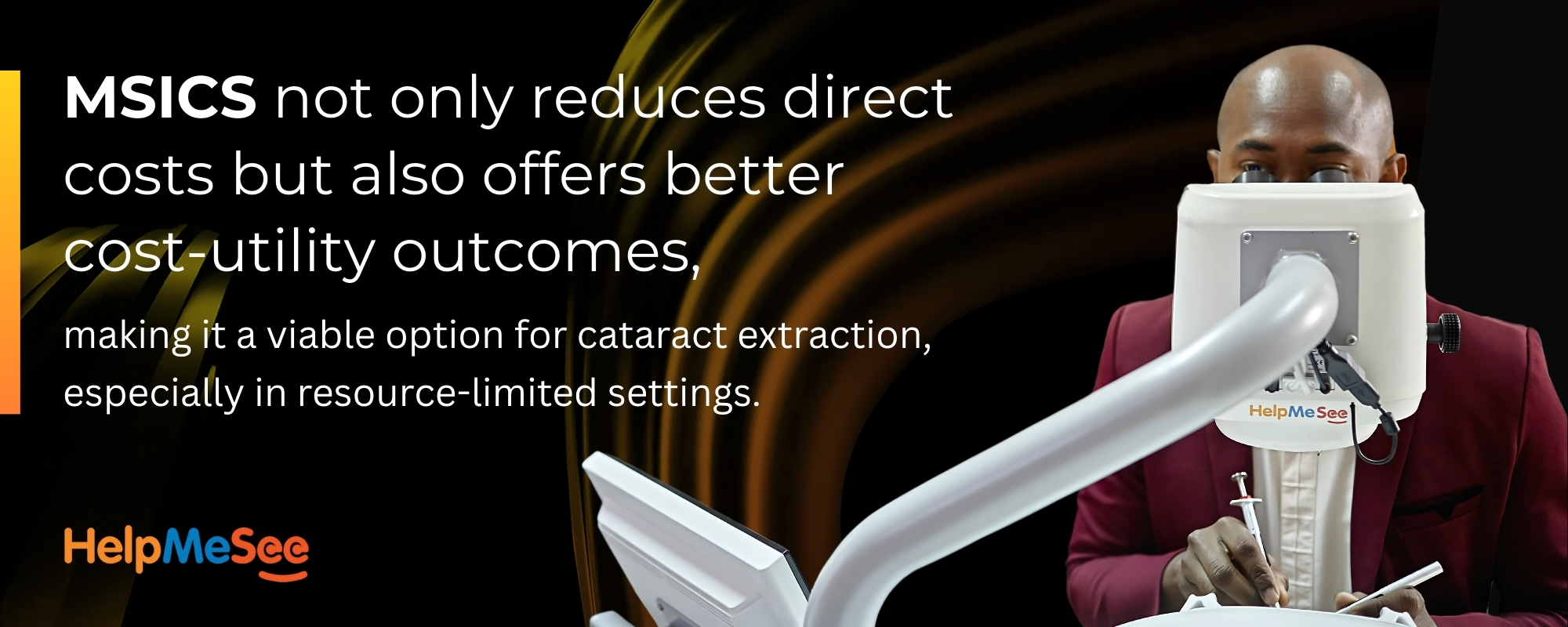
The earlier you develop MSICS surgical proficiency, the more opportunities become available. Traditional surgical training alone may not provide sufficient exposure to high-volume MSICS cases. However, modern educational approaches, including comprehensive simulation-based education and structured curricula, are helping bridge this gap by standardizing skill development, allowing repeated practice before live surgery, and preparing surgeons for diverse real-world scenarios.³ Globally, there is growing recognition that simulation and competency-based training should complement traditional models, especially as surgical education evolves.¹ For residents and early-career surgeons, seeking out programs that emphasize MSICS can be a strategic career decision.
Positioning Yourself for a Global Future
If you are considering a career that includes global work, outreach, or humanitarian service, MSICS should be a core part of your surgical skillset. Ask yourself:
- Do I want to work in diverse healthcare environments?
- Am I interested in global surgery or mission-based care?
- Do I want my surgical skills to have the broadest possible impact?
If the answer is yes, acquiring MSICS training is in your best interest for your career progression, surgical confidence, and improves your career satisfaction. The future of ophthalmology is not confined to advanced operating rooms in major cities. It extends to rural clinics, mobile surgical units, and underserved regions around the world. For young ophthalmologists, learning MSICS equips you to meet that future head-on.
- Pesudovs K, Lansingh VC, Kempen JH, et al. Global estimates on the number of people blind or visually impaired by cataract: a meta-analysis from 2000 to 2020. Eye. 9 March 2024. doi: 10.1038/s41433-024-02961-1.
- Hutter, Daniel E.; Konge, Lars; Thomsen, Ann Sofia S.; Bach-Holm, Daniella; la Cour, Morten; Subhi, Yousif; Saleh, George M. “A Validated Test Developed for Assessment of MSICS Skills Using Virtual Reality Simulation.” Scientific Reports, 2023.
- Shah, Minal Baldota; Farooqui, Javed H.; Balakrishnan, Divya; Ramachandran, S.; Rani, Praveen K.; Raman, R. A systematic review of simulation-based training tools for technical and non-technical skills in ophthalmology. Indian Journal of Ophthalmology. 2020;68(11):2386–2395. https://doi.org/10.4103/ijo.IJO_1344_20
- Dormegny, Léa; Konge, Lars; Thomsen, Ann Sofia Skou; Bach-Holm, Daniella; la Cour, Morten; Subhi, Yousif; Saleh, George M. Global trends and practice patterns in virtual reality simulation training for ophthalmic surgery. Scientific Reports. 2025;15:16227. https://doi.org/10.1038/s41598-025-16227-7


 French
  English
  Spanish