

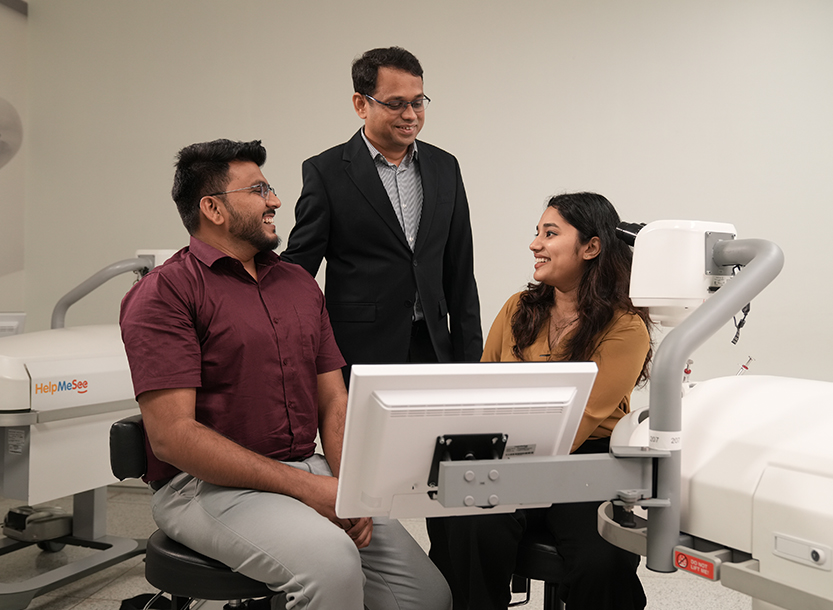
Being a cataract specialist can feel isolating. Cataract surgeons function in a high-pressure environment which demands precision with high expectations on surgical outcomes. Having a support system makes a real difference in helping cataract specialists continue to increase skill, manage challenges, and stay grounded.
Learning and Sharing Together
Cataract surgical training in Chirurgie de la cataracte par petite incision manuelle (MSICS) et Phacoémulsification alone isn’t enough. Learning continues every day on the job—and it happens faster when cataract specialists work together to share experiences, refine techniques, and support each other through complications. This kind of community-based knowledge exchange could reduce errors and improve eye surgery outcomes.
Instructor-led surgical training plays a big role in that process. When cataract specialists train with experienced instructors, they’re not just developing skills—they’re building relationships with mentors and peers. Studies show that real-time feedback from instructors significantly improves performance and builds surgical confidence. (4)
The HelpMeSee Simulation-based Training Program features courses in MSICS and Phacoemulsification with instructor-guided sessions where cataract specialists practice under supervision, review video recordings of their procedures, and ask questions throughout the course. This training philosophy creates a feedback loop that’s not only about correction—it’s about connection. Cataract surgery trainees can learn from each other, talk through their coursework and training, and gain insights through the experienced feedback from instructors.
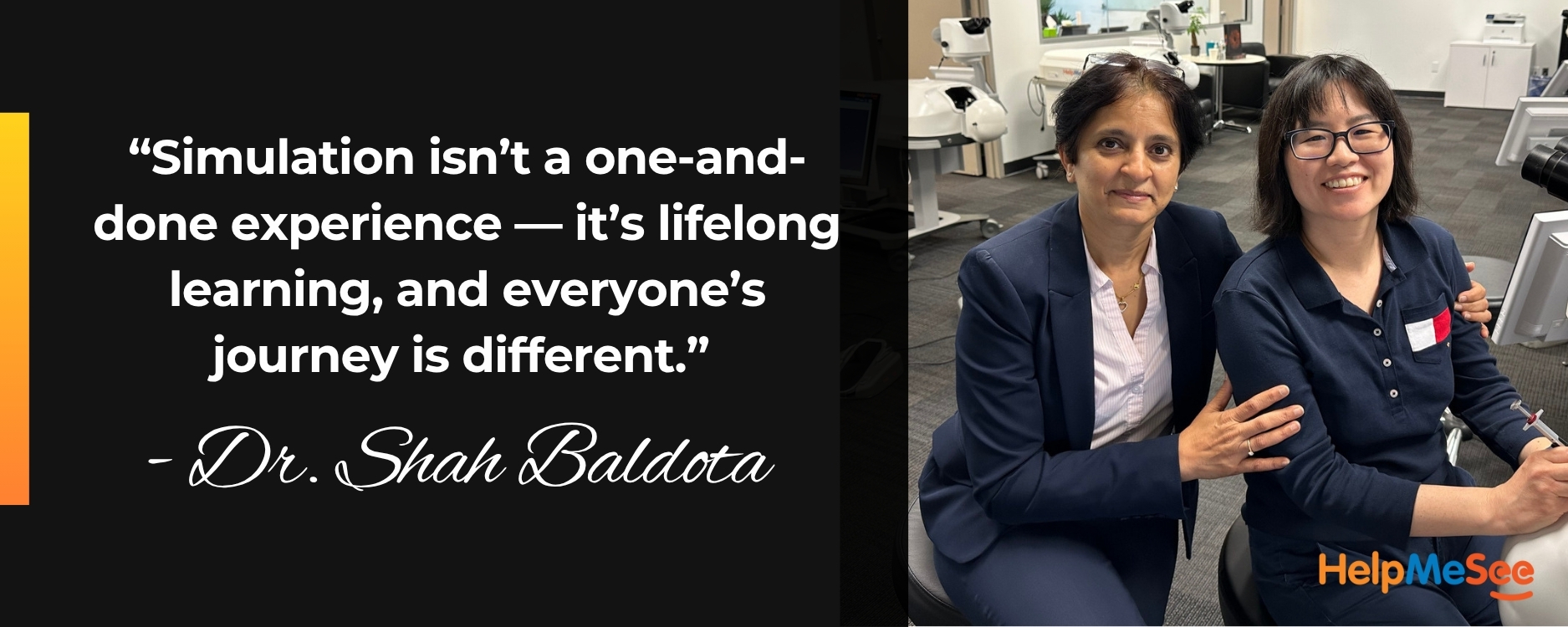
These relationships don’t end when the course is over. Instructors often become long-term mentors, and fellow cataract specialists become trusted colleagues. This network helps cataract specialists stay informed, troubleshoot real-world challenges, build confidence, and feel less isolated in their careers. Especially in regions where peer support is scarce, structured training in a risk-free environment helps foster a lasting sense of professional community.
Support networks go beyond building skills. They also help with stress, burnout, and critical decision-making. In systems where specialists are often overextended, having a circle of peers and mentors to lean on can make a profound difference.
Support That Crosses Borders
Geography shouldn’t limit opportunities, but many cataract specialists work in remote or under-resourced regions where hands-on training and mentorship are difficult to access.
This is where simulation-based programs like the HelpMeSee approach make a difference. The HelpMeSee Simulation-based Training Program is standardized and doesn’t just provide surgical training—it levels the playing field. A cataract specialist in rural Bihar or Antananarivo can receive the same structured, high-quality experience as someone in New York or Paris. HelpMeSee training centers are operational in the U.S., Mexico, France, Madagascar, India, Guatemala, Colombia, and Tanzania, with plans to expand further.
The benefits go far beyond individual skills. Well-trained cataract specialists bring long-term value to their communities. Each successful surgery is more than just a restored eye—it can restore independence, enable a return to work or school, and improve quality of life. In older adults, cataract surgery is linked to reduced fall risk and better mental health. For younger patients, it can mean resuming caregiving roles or continuing their education.
As ophthalmic professionals and residents gain experience, many take on leadership roles. They train new providers, establish clinics, and help build local health systems. Their presence strengthens healthcare infrastructure, making it possible to provide sustainable, community-centered eye care. Over time, this ripple effect can change and reduce the number of cataract blind and visually impaired worldwide—which is a solvable problem.
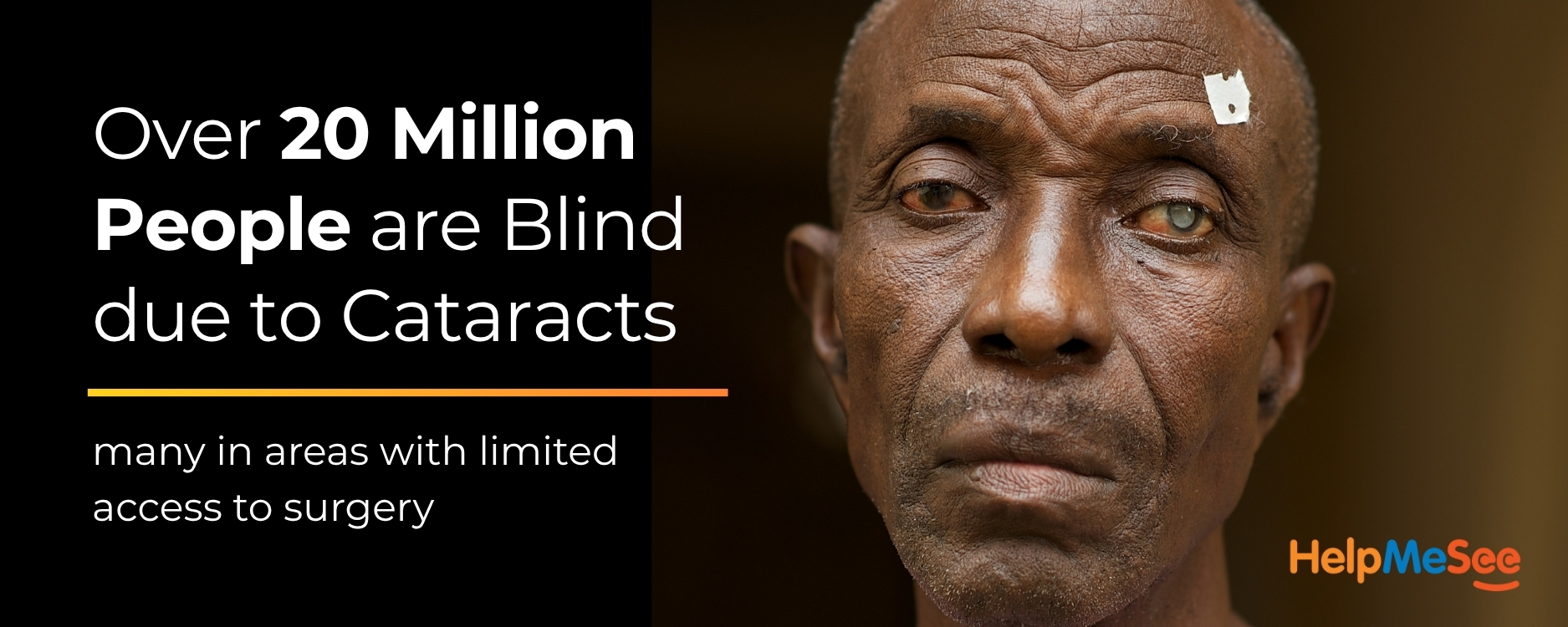
Visual impairment remains the leading cause of avoidable blindness worldwide. Over 20 million people are blind due to cataract, many in areas with limited access to surgery[1]. By equipping more cataract specialists with surgical skills, tools, and support, we aren’t just restoring vision—we’re transforming communities with a lasting impact.
When cataract specialists connect through global training programs, they bring expertise back to their communities. They carry the knowledge and tools needed to improve lives, strengthen systems, and offer sight restoring surgery in areas that lacked access to treatment. That’s what support across borders really means.
Shared Goals and Lower Risks
Most cataract specialists don’t do this for recognition—they do it to restore sight to those living in darkness and the need is immense. There’s a critical shortage of trained specialists in many countries [2].
Cataract surgery training programs that include simulation-based learning and peer support help reduce the learning curve and lower complication rates. In the UK, a study showed that virtual reality training reduced the rate of posterior capsule rupture by 38% among novice surgeons [3]. When cataract specialists have access to the right tools and the right people, outcomes improve—not just for them, but for every patient they serve.
The Bottom Line
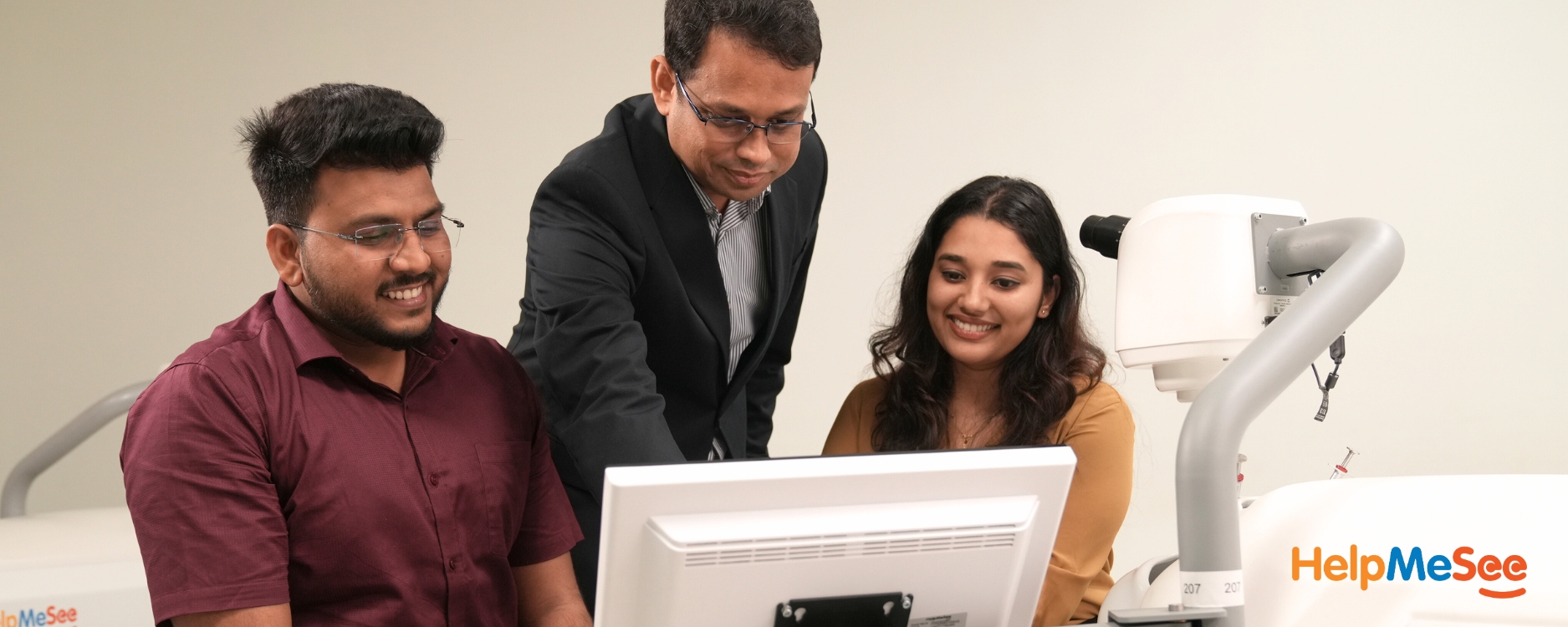
Being a cataract specialist is demanding—but it gets easier when people help each other. Whether through simulation-based training, one-on-one mentoring, or simply sharing experiences, support networks matter. It’s not about being perfect. It’s about getting better, together.
(1) Nair, Akshay Gopinathan, et al. “Assessment of a High-Fidelity, Virtual Reality-Based, Manual Small-Incision Cataract Surgery Simulator: A Face and Content Validity Study.” Indian Journal of Ophthalmology, vol. 70, no. 11, 2022, pp. 4010–4015.
(2) Nair, Akshay Gopinathan, et al. “Cataract Surgical Training among Residents in India: Results from a Survey.” Indian Journal of Ophthalmology, vol. 71, no. 3, 2023, pp. 743–749.
(3) Ferris, J. D., et al. “The Impact of EyeSi Virtual Reality Training on Complication Rates of Cataract Surgery Performed by First and Second Year Trainees.” British Journal of Ophthalmology, vol. 104, 2020, pp. 324–329.
(4) Lansingh, Van Charles, and Akshay Gopinathan Nair. “More Than Simulation: The HelpMeSee Approach to Cataract Surgical Training.” Community Eye Health Journal, vol. 36, no. 120, 2023.


 French
  English
  Spanish