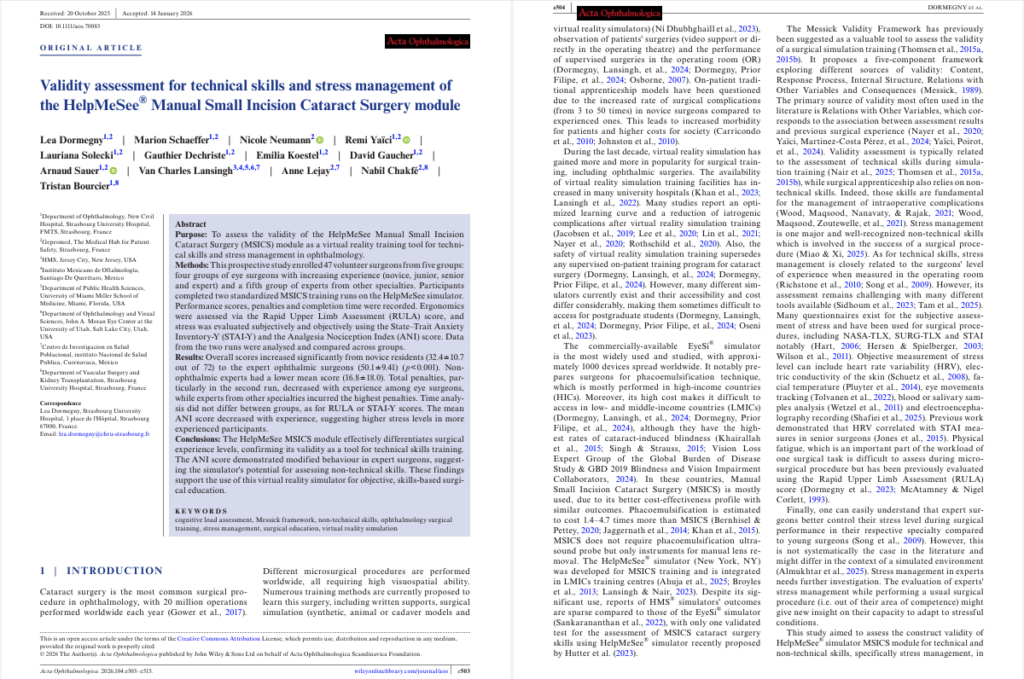
Validity Assessment for Technical Skills and Stress Management of the HelpMeSee Manual Small Incision Cataract Surgery Module
READ PUBLICATION


When someone regains their sight after cataract surgery, the moment often feels miraculous. A grandmother sees her grandchildren clearly for the first time in years. A farmer returns to work.
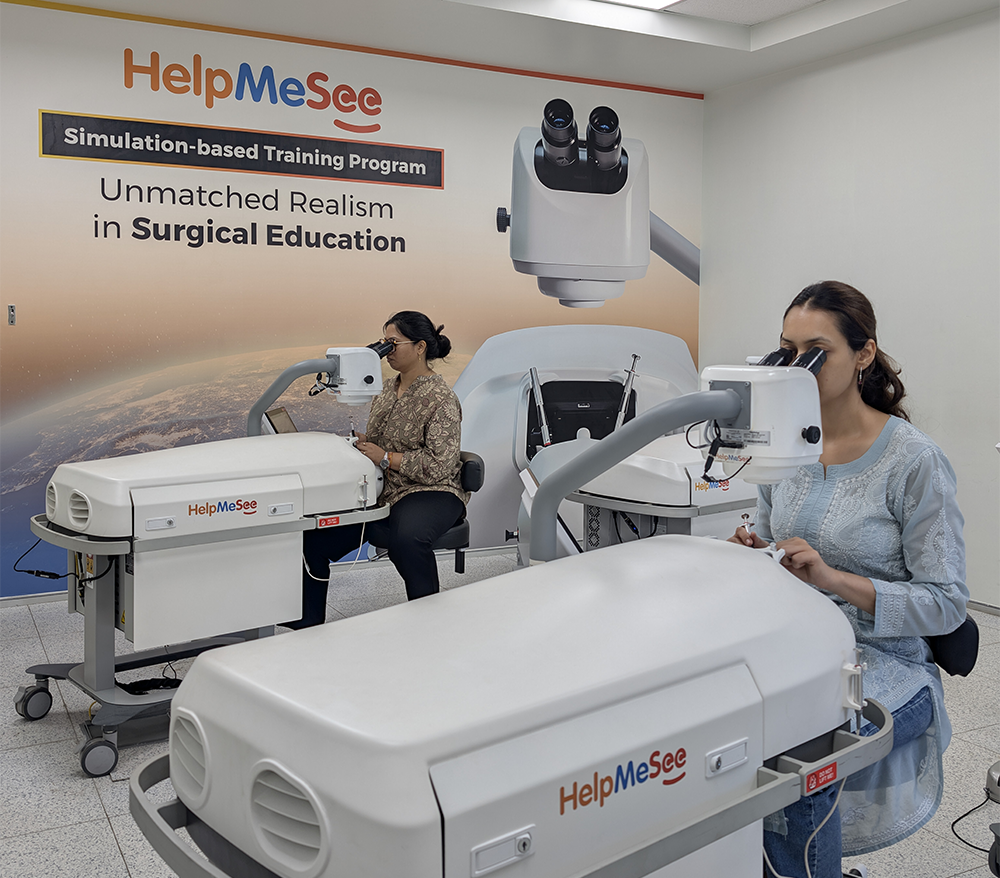
As populations continue to age and demand for cataract surgery grows, healthcare systems around the world face a common challenge: building enough surgical capacity to meet the demand. While expanding
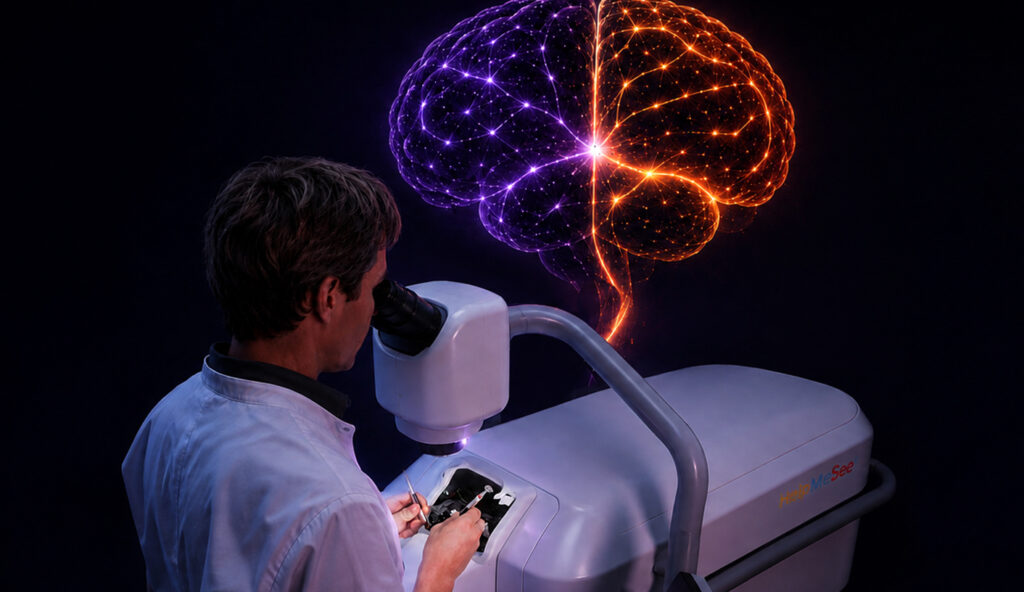
By Laura Straub Picture the first time you created a clear corneal incision, a capsulorrhexis, or inserted an IOL into the anterior chamber. Your hands weren’t steady. Your movements weren’t
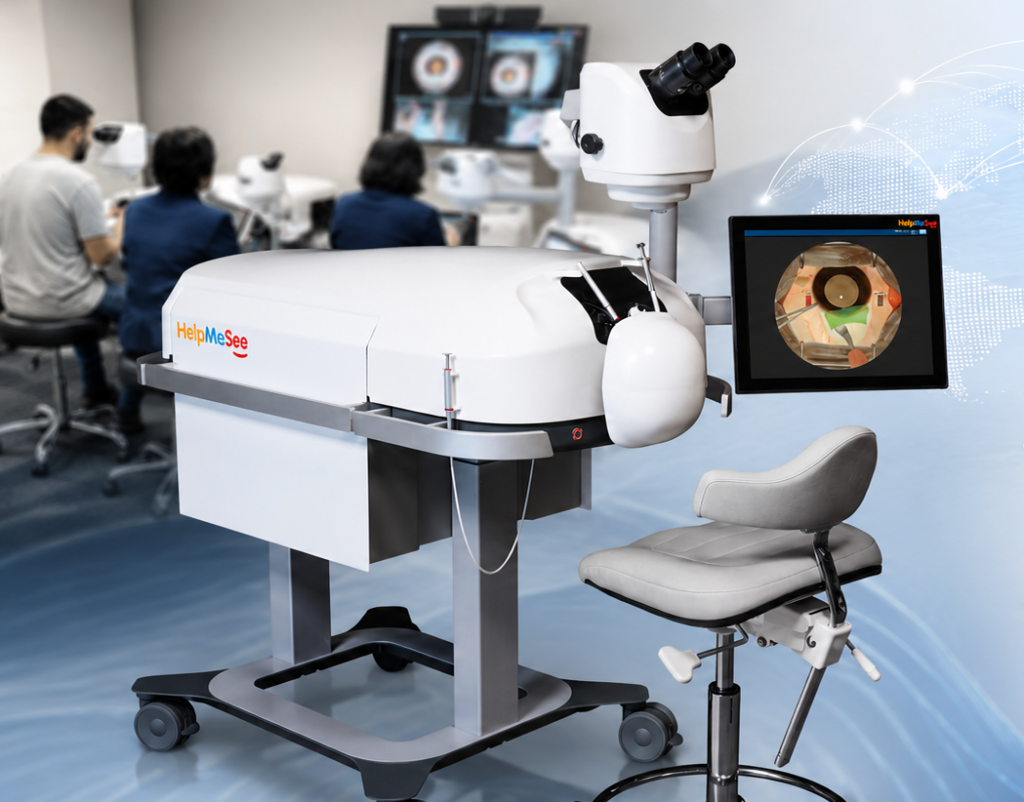
For generations, cataract surgery education followed a familiar model: observe experienced surgeons, practice under supervision, and gradually gain confidence through live patient cases. While this apprenticeship model has produced skilled
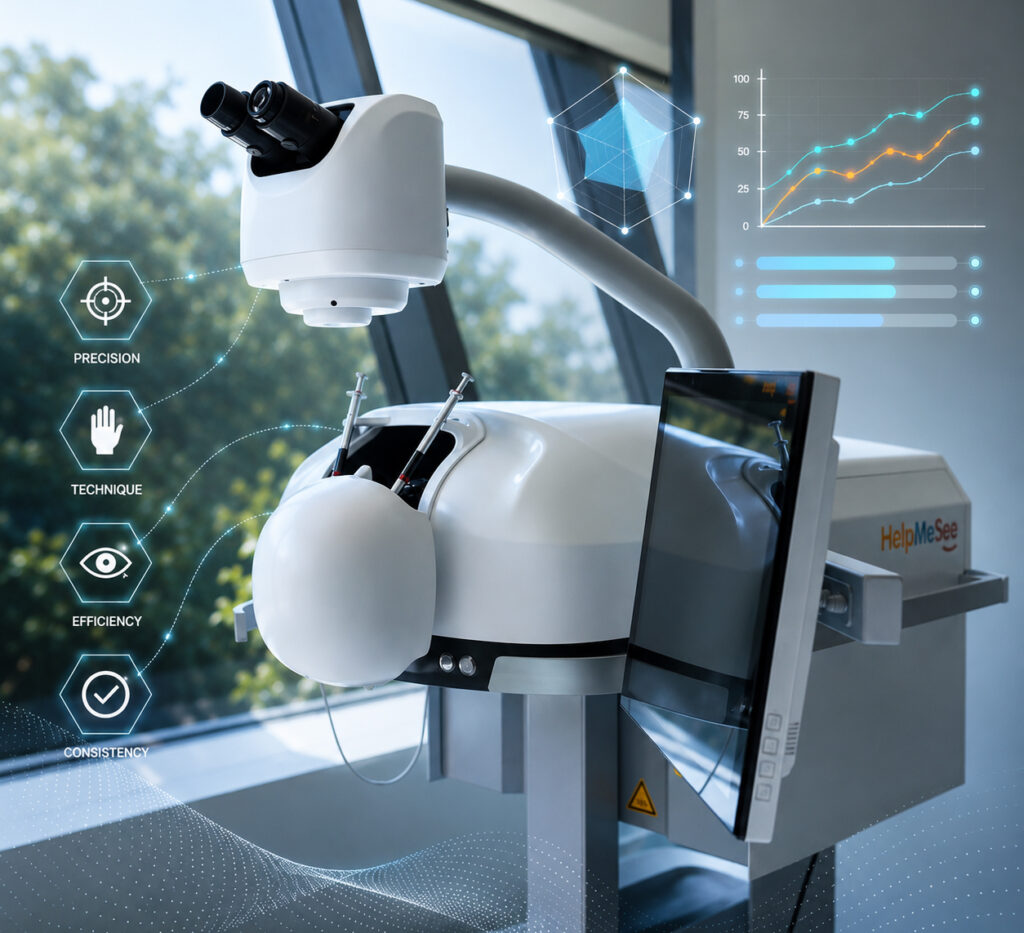
How simulation, objective performance assessment, and deliberate practice are redefining how cataract surgeons learn. Imagine evaluating a pilot solely by whether an airplane landed safely. The outcome matters, but it
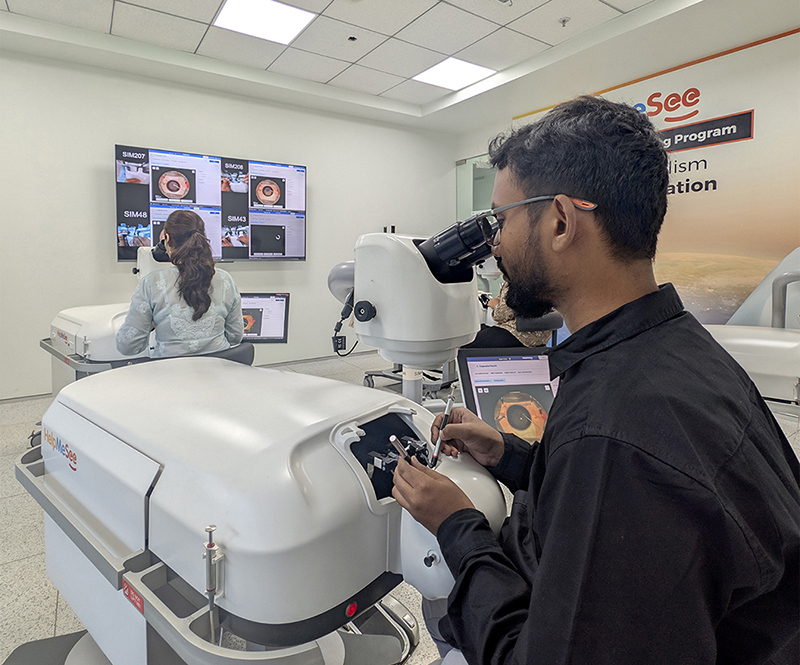
Today, about 45% of all global blindness is due to cataract. (1) After more than a decade of training surgeons across India, Madagascar, China, Mexico, and beyond, HelpMeSee has learned
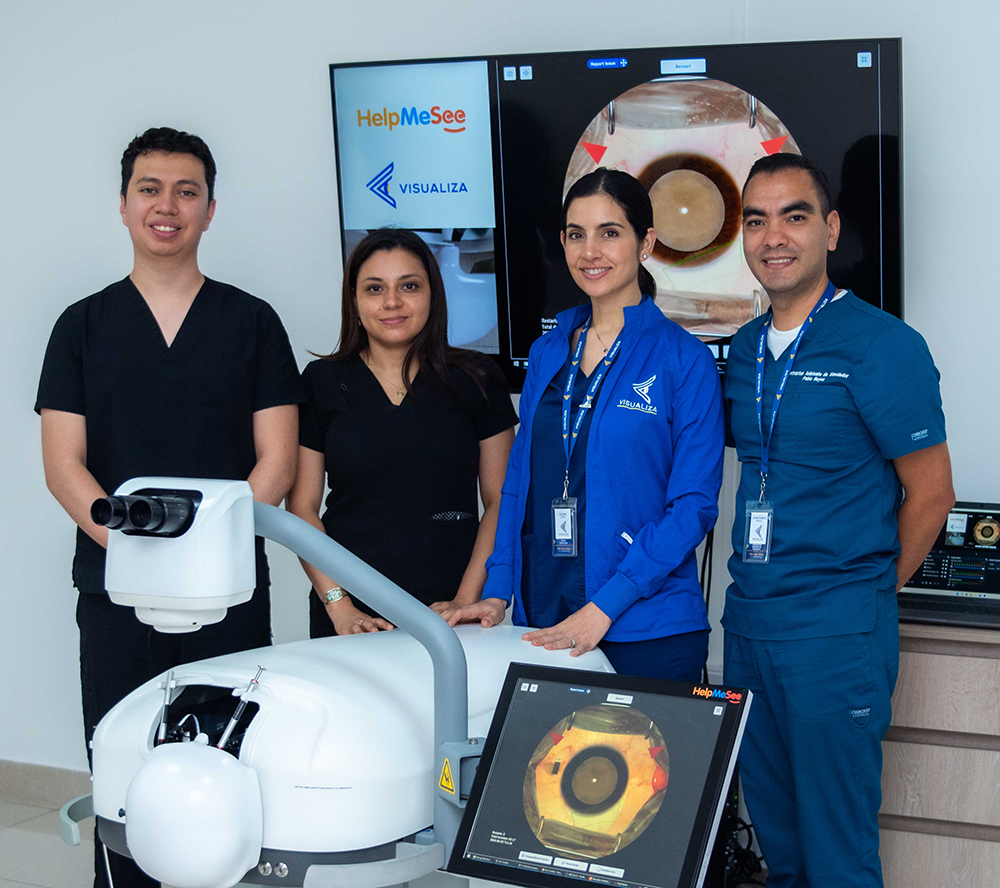
Cataract remains the leading cause of reversible blindness worldwide, and the demand for cataract surgery is expected to rise dramatically as populations age and life expectancy increases. For ophthalmologists working
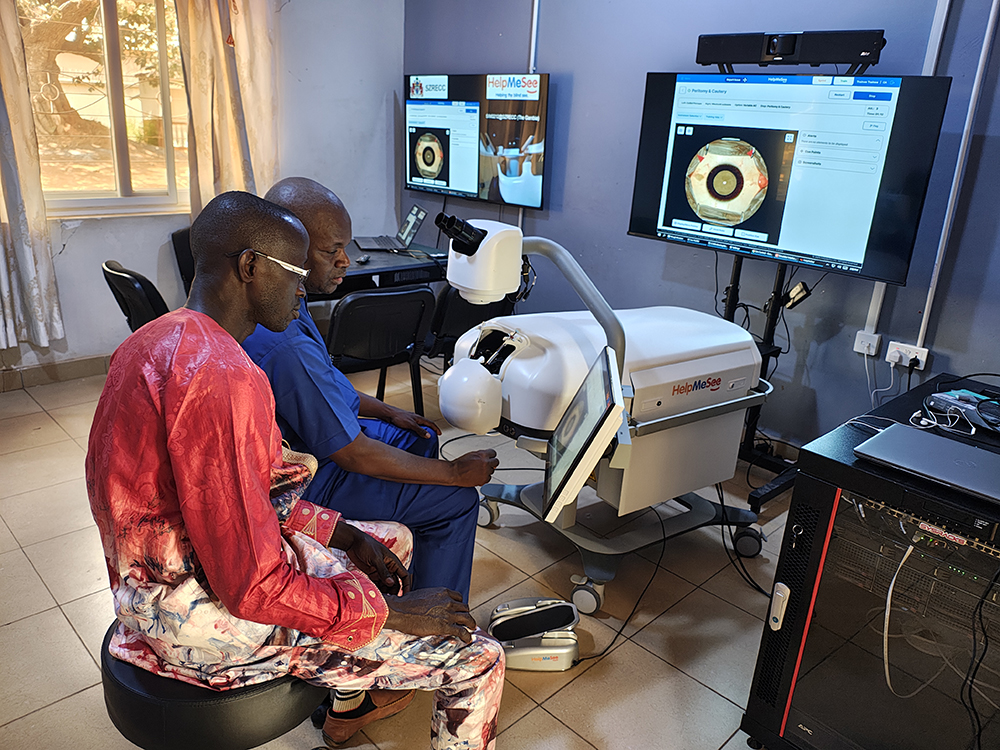
Digital innovation is reshaping global health, and nowhere is this more apparent than in the fight against preventable blindness. In ophthalmology, new technologies like virtual reality (VR), haptics, and simulation-based

By Laura Straub Imagine an elderly woman in Nigeria who can’t recognize the faces of her grandchildren. A farmer in Ghana who can no longer navigate his own fields. A


 French
  English
  Spanish