

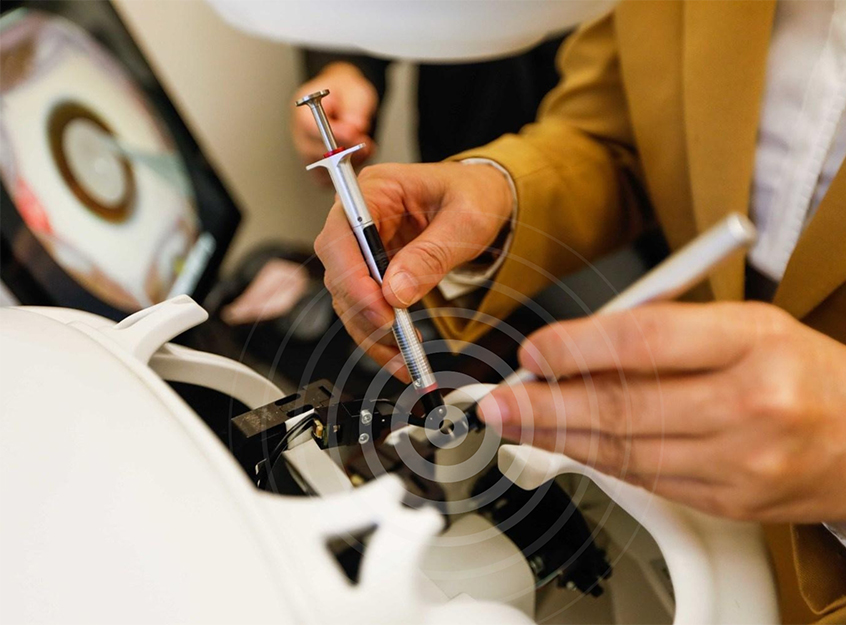
In cataract surgery, success is measured in microns and the difference between a smooth capsulotomy and a complication often comes down to something difficult to teach and even harder to describe—feel.
For decades, surgical training has centered on visualization such as watching cases, assisting senior cataract surgeons, and gradually performing steps in the operating room. But vision alone is only part of the equation.
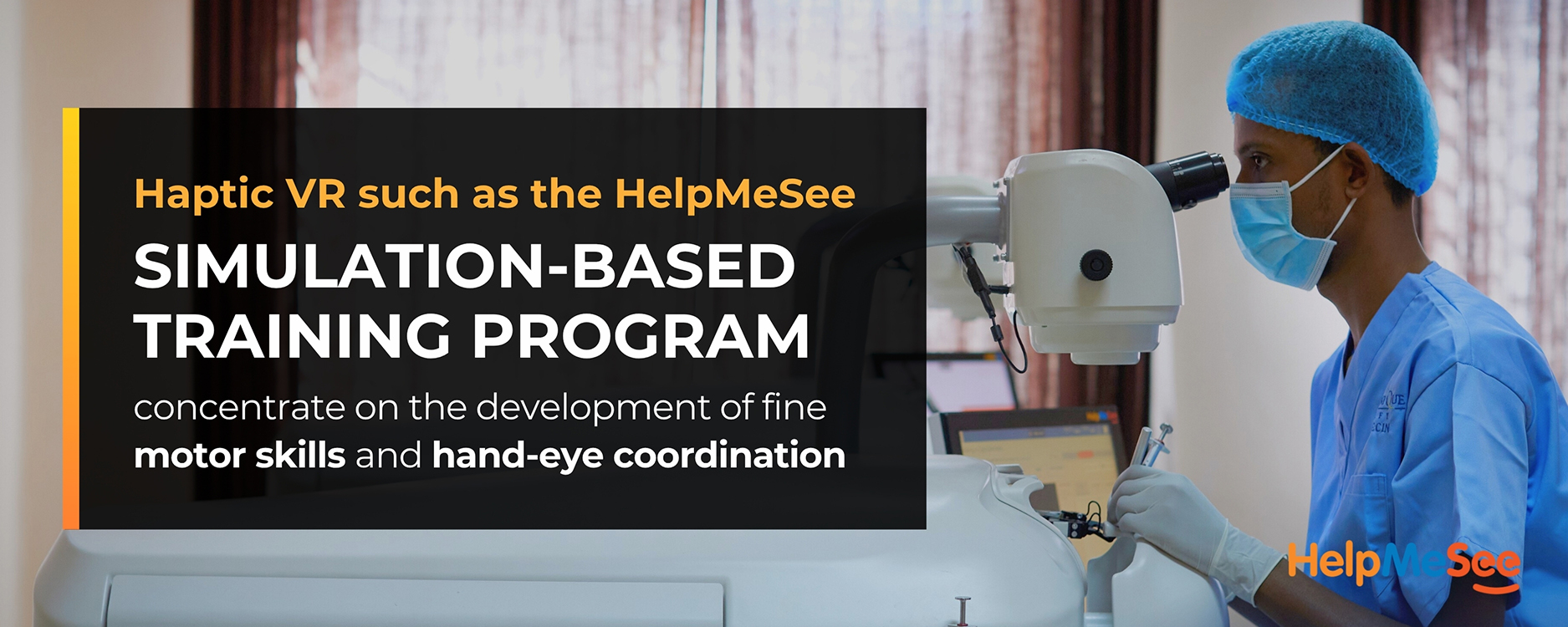
The most skilled cataract surgeons rely on a refined sense of tactile feedback, interpreting how tissue responds to every movement. Today, advances in simulation-based education, particularly haptic virtual reality simulators like the HelpMeSee Eye Surgery Simulator, are transforming how essential surgical skills are practiced and learned.
What is Tactile Realism – and Why Does It Matter?
Tactile realism refers to how accurately a simulation-based training program replicates the physical sensations of surgery. In cataract procedures, surgeons constantly make micro-adjustments based on resistance, pressure, and subtle shifts in tissue behavior. These cues guide decision-making in real time, often before anything is visibly apparent under the microscope.
Traditional training tools offer limited consistency in this regard. Wet labs and synthetic models can approximate anatomy, but they don’t readily provide the dynamic feedback needed to fully understand tissue interactions in the human eye. By contrast, haptic simulation provides force-based feedback that mirrors real surgical conditions, allowing trainees to experience what it should feel like.
This shift is significant because surgical skill is rooted in the brain’s ability to integrate sensation and movement. Knowing how it will feel will boost a cataract surgeon’s confidence and proficiency before performing live surgery.
The Science Behind Skill Development
Cataract surgery is a classic example of a sensorimotor skill, requiring seamless coordination between visual input, hand movement, and sensory feedback. As ophthalmic trainees repeat surgical steps, the brain begins to encode these actions into muscle memory, enabling faster, more precise, and more consistent performance.
Formation basée sur la simulation streamlines this process. A systematic review of ophthalmic education demonstrated that simulation significantly improves technical skill acquisition while enhancing patient safety outcomes [1]. The key mechanism is repetition combined with feedback, which strengthens neural pathways responsible for fine motor control.
Haptic simulation-based training enhances this further by restoring the missing sensory component. Instead of relying solely on visual cues, ophthalmic trainees learn to calibrate their movements based on how the tissue “pushes back.” This is particularly important in cataract surgery, where excessive force or subtle misjudgment can lead to complications.
As highlighted in recent literature, haptic virtual reality creates an immersive learning environment that improves skill acquisition and shortens the learning curve by engaging both cognitive and sensory pathways.

Evidence Supporting Tactile Simulation
The value of tactile realism is supported by a growing body of research. A validated study on the HelpMeSee Eye Surgery Simulator showed that performance metrics could reliably distinguish between novice and experienced MSICS cataract surgeons, reinforcing its role in competency-based training [2]. This ability to objectively measure progress is essential for ensuring that skills are practiced and mastered.
Additional studies in ophthalmology have demonstrated that virtual reality training improves real-world surgical performance and reduces complication rates in cataract surgery [3]. These findings are echoed globally, where simulation-based education is increasingly being integrated into training programs as a prerequisite before operating on patients [4].
Taken together, the evidence supports a clear conclusion: structured, feedback-driven simulation is one of the most effective ways to develop surgical proficiency.
From Repetition to Mastery
To understand how tactile realism translates into better cataract surgeons, it helps to think of training as a continuous feedback loop. Each time a cataract surgeon performs a maneuver, the brain sends signals to the hand, receives feedback from the environment, and adjusts accordingly. Over time, this loop becomes faster and more refined, eventually operating with minimal conscious effort.
Without tactile input, this loop is incomplete. Movements may be technically correct but lack the subtle control that defines expert performance. Haptic simulation-based training fills this gap by providing immediate, realistic feedback that reinforces proper technique and corrects errors in real time.
As a result, cataract surgeons develop smoother instrument handling, improved force control, and greater confidence. More importantly, they begin to internalize the procedure to the point where surgical steps feel intuitive rather than deliberate.
Implications for Modern Surgical Training
The limitations of traditional apprenticeship models are becoming increasingly clear. Variability in case exposure, time constraints, and patient safety considerations all restrict opportunities for hands-on learning. Simulation-based education addresses these challenges by offering a standardized, repeatable, and risk-free training environment.
Despite strong evidence supporting its effectiveness, many ophthalmology programs have yet to fully integrate simulation into their curricula [1]. However, global trends indicate a shift toward competency-based models, where cataract surgeons must demonstrate proficiency before progressing to live surgery [4].
In this context, tactile realism is an enhancement and is a critical component of effective surgical education.
As ophthalmology continues to evolve, so too must the methods used to train the next generation of cataract surgeons. The future of cataract surgery training will rely less on passive observation and more on active, data-driven skill development.
Tactile realism technology represents a major step forward in this evolution. By bridging the gap between theory and practice, it ensures that cataract surgeons enter the operating room with knowledge and true technical readiness.
Final Thoughts
Cataract surgery demands a level of precision that cannot be achieved through observation alone. It requires the ability to interpret and respond to the physical realities of surgery in real time.
Tactile realism brings that experience into the training environment, allowing cataract surgeons to develop the “feel” of surgery before ever touching a patient. In a discipline where every movement matters, that preparation can make all the difference.
- ShahBaldota, Minal, et al. Examen systématique de la formation par simulation axée sur les compétences en chirurgie ophtalmologique dans le cadre du programme d'études
- Hutter, Daniel E., et al. “A Validated Test Developed for Assessment of MSICS Skills Using Virtual Reality Simulation.” Scientific Reports, 2023.
- Ahuja, Abhimanyu S., et al. “The Utility of Virtual Reality in Ophthalmology: A Review.” Clinical Ophthalmology, 2025.
- Dormegny, Lea, et al. “Global Trends and Practice Patterns in Virtual Reality Simulation Training for Ophthalmic Surgery.” Scientific Reports, 2025.


 French
  English
  Spanish