

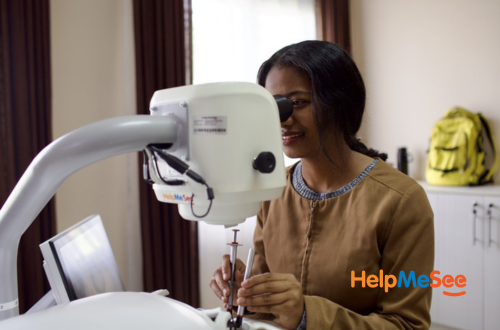
Manual Small Incision Cataract Surgery (MSICS) is one of the most useful cataract surgery techniques in global ophthalmology. Unlike phacoemulsification, which depends on expensive and delicate equipment, MSICS can be performed with fewer high-tech resources while offering outcomes comparable to higher cost approaches. The benefits of MSICS means it is well suited in low and middle-income countries (LMICs) where cataract burden is highest and resources are scarce. (1) However, despite MSICS’s proven benefits, learning the technique poses significant challenges for cataract surgeons, especially where formal educational opportunities are limited.

Common Struggles in Learning MSICS
Limited Surgical Exposure and Mentorship
One of the main hurdles in learning MSICS, especially in areas with limited resources, is getting enough hands-on experience and guidance. The way ophthalmology residents typically learn by gradually working with a senior surgeon in operating rooms, often doesn’t provide adequate opportunities for consistent, focused practice. Surgical training varied greatly and often lacked consistent methods for assessing results and ensuring patient safety and access to virtual reality (VR) simulators which offer a structured and safe training environment, are often too expensive and hard to find, particularly in LMICs.
Fear of Mistakes and Performance Anxiety
The prospect of surgical complications during live surgery can be a significant concern for early learners. MSICS requires meticulous techniques, such as precise scleral tunnel construction and manual nucleus delivery. Even small errors during these steps can result in complications. Given this steep initial learning curve, ophthalmic residents may develop poor technique that could negatively affect their future performance if they lack safe environments to practice and refine their skills.
Inconsistent Training Curricula
Worldwide, ophthalmology training varies in structure. Many residency programs in LMICs lack easy accessibility to thorough MSICS training. Ophthalmic residents often must depend on the occasional wet lab or learning as they go with different cases, which might not give them all the skills they need to be fully competent on their own. This lack of consistent training leads to varied results and makes it harder to increase the number of skilled cataract surgeons globally.

How Simulation-based Learning Enhances MSICS Training
The incorporation of virtual reality (VR) simulation into ophthalmic education represents a major technological advancement, allowing trainees to immerse themselves in lifelike surgical scenarios that mimic the tactile and visual demands of operating on real tissue.
Simulation platforms offer several key benefits:
- Deliberate, Safe Practice Without Patient Risk
Simulation-based training offers ophthalmology residents a valuable opportunity to repeatedly hone surgical skills, such as creating scleral tunnels and constructing wounds, in a controlled, low-pressure setting. This focused practice helps develop muscle memory, lessens pre-operative anxiety, and reinforces correct techniques before residents operate on actual patients. Research indicates that novice cataract surgeons who train using simulation make notably fewer errors during scleral tunnel creation compared to those who learn through conventional training methods (2). - Objective Performance Feedback and Skill Assessment
Simulators offer a departure from traditional apprenticeship by providing educators with objective, data-driven feedback. Several VR platforms including the HelpMeSee Eye Surgery Simulator track metrics such as precision and error rates, allowing instructors to pinpoint areas where residents and ophthalmologists need improvement. By blending technology and instructor-led curriculum, quantitative feedback is paired with expert interpretation and mentorship, which accelerates proficiency. - Structured Learning with Instructor Oversight
Simulation by itself is valuable, but its impact is magnified when paired with a structured, instructor-led curriculum and objective feedback. In a well-designed curriculum like the HelpMeSee Simulation-based Training Program, ophthalmic residents and cataract surgeons engage with theoretical knowledge and instructor demonstrations before translating those concepts into simulated practice. Instructors provide guidance on surgical principles and equip participants with cognitive tools, teaching troubleshooting, decision-making, and advanced techniques, in addition to developing motor skills. This hybrid approach supports a mastery learning model where competence is demonstrated before cataract surgeons transition to real-world surgical environments (3). - Global Trends in Simulation Adoption
While simulation-based training offers clear advantages, its adoption in ophthalmology isn’t consistent globally. According to a 2025 international survey focusing on virtual reality simulation, only about 63% of the surveyed countries reported having access to this type of training. In some regions, cataract surgeons and ophthalmology residents face considerable logistical challenges, sometimes needing to travel hundreds of kilometers to reach simulation centers. It’s worth noting that junior cataract surgeons seem to find simulation-based training more beneficial than their senior counterparts, which underscores the importance of introducing this training early in their careers (4).

Simulation-based Training Impact on Education
Looking beyond individual studies, broader analyses of ophthalmic training programs confirm that simulation enhances learning outcomes and surgical safety. A comprehensive review of randomized trials revealed that virtual reality simulator training leads to improved surgical performance and a reduction in intraoperative complications when compared to traditional patient-based training alone (5).
Furthermore, simulation-based learning is in line with the move toward individualized, data-driven instruction in medical education. Considering the global shortage of cataract surgeons, particularly in low- and middle-income countries, simulation-based training offers a scalable solution for efficiently and safely training the next generation of cataract surgeons (6).
A Path Toward Expanded Training Equity
With the global demand for cataract surgery steadily increasing due to aging populations and a rising number of cases, it’s crucial from a public health perspective to broaden access to effective MSICS training. Evidence suggests that simulation-based training, combined with insightful instruction from experienced mentors, is a solid way to standardize training results, speed up the learning process, and boost patient safety.
By strategically using technology and expert guidance, ophthalmic education programs can better equip up-and-coming cataract surgeons to provide excellent MSICS care. This ensures that everyone, no matter where they are or their access to resources, can benefit from cataract surgery.
- Dormegny, L., Lansingh, V.C., Lejay, A. et al. Virtual reality simulation and real-life training programs for cataract surgery: a scoping review of the literature. BMC Med Educ 24, 1245 (2024). https://doi.org/10.1186/s12909-024-06245-w
- Nair, Akshay Gopinathan, et al. “Effectiveness of Simulation-Based Training for Manual Small Incision Cataract Surgery Among Novice Surgeons: A Randomized Controlled Trial.” Scientific Reports, vol. 11, 2021, Article no. 11090. https://doi.org/10.1038/s41598-021-90410-4.
- Dormegny, Léa, et al. “Virtual Reality Simulation and Real-Life Training Programs for Cataract Surgery: A Scoping Review of the Literature.” BMC Medical Education, vol. 25, no. 1, 2025, Article no. 1184. https://doi.org/10.1186/s12909-025-07783-7.
- Dormegny, Léa, et al. “Global Trends and Practice Patterns in Virtual Reality Simulation Training for Ophthalmic Surgery: An International Survey.” Scientific Reports, vol. 14, 2024, Article no. 1330. https://doi.org/10.1038/s41598-024-76405-x.
- Ferris, James D., et al. “Simulation Training for Cataract Surgery: Randomized Controlled Trial.” Eye, vol. 33, 2019, pp. 107-115. https://doi.org/10.1038/s41433-018-0204-8.]
- Steinmetz, Jacob D., et al. “Causes of Blindness and Vision Impairment in 2020 and Trends over 30 Years.” The Lancet Global Health, vol. 9, no. 2, 2021, pp. e144-e160. https://doi.org/10.1016/S2214-109X(20)30489-7.


 French
  English
  Spanish