

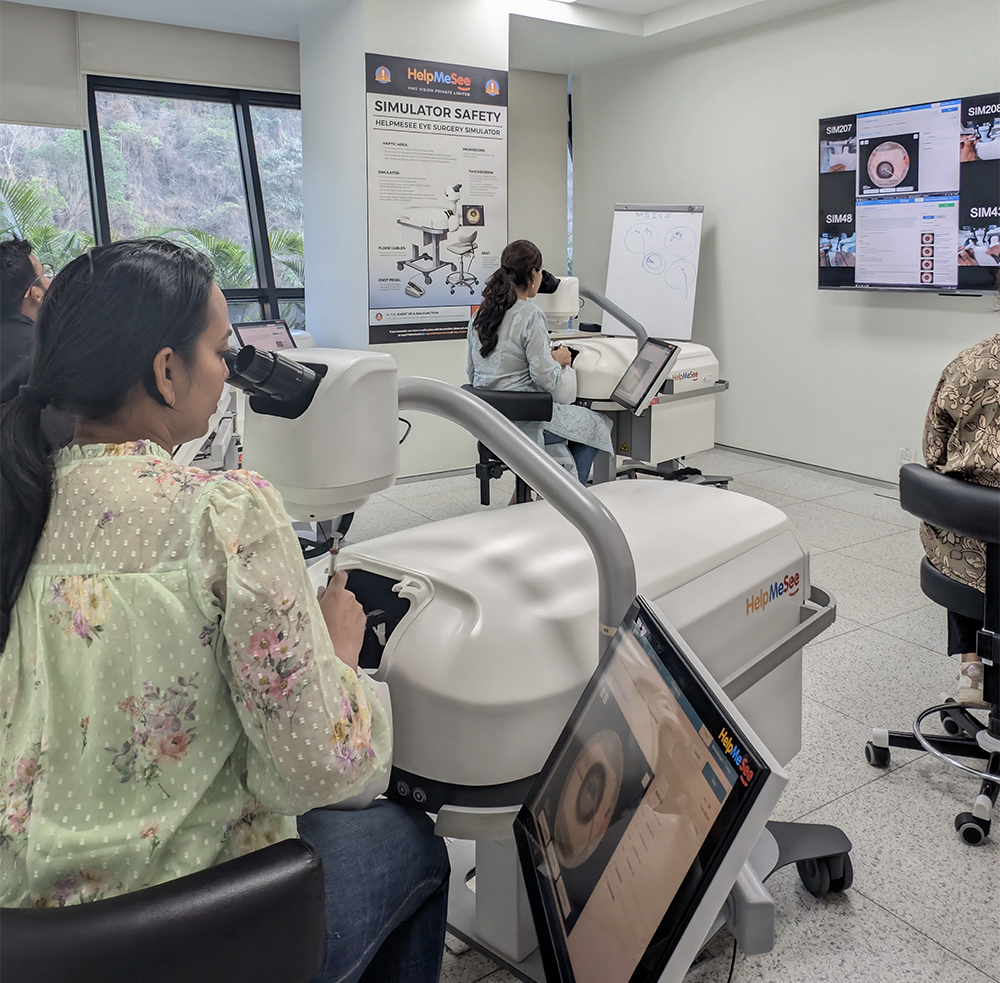
Manual Small Incision Cataract Surgery (MSICS) is taught in ophthalmology residency programs because it remains an important surgical approach globally, particularly where cost, infrastructure or the characteristics of advanced cataracts make manual surgery appropriate.
An international consensus on modern cataract surgery concluded that manual procedures continue to have a significant role in settings requiring low-cost, high-volume surgery.[1] For residency programs, that makes MSICS represent an opportunity to broaden surgical preparation while using simulation-based learning to fundamentally change how residents refine, practice and demonstrate surgical skills before operating on patients.
Moving Practice Earlier in the Learning Curve
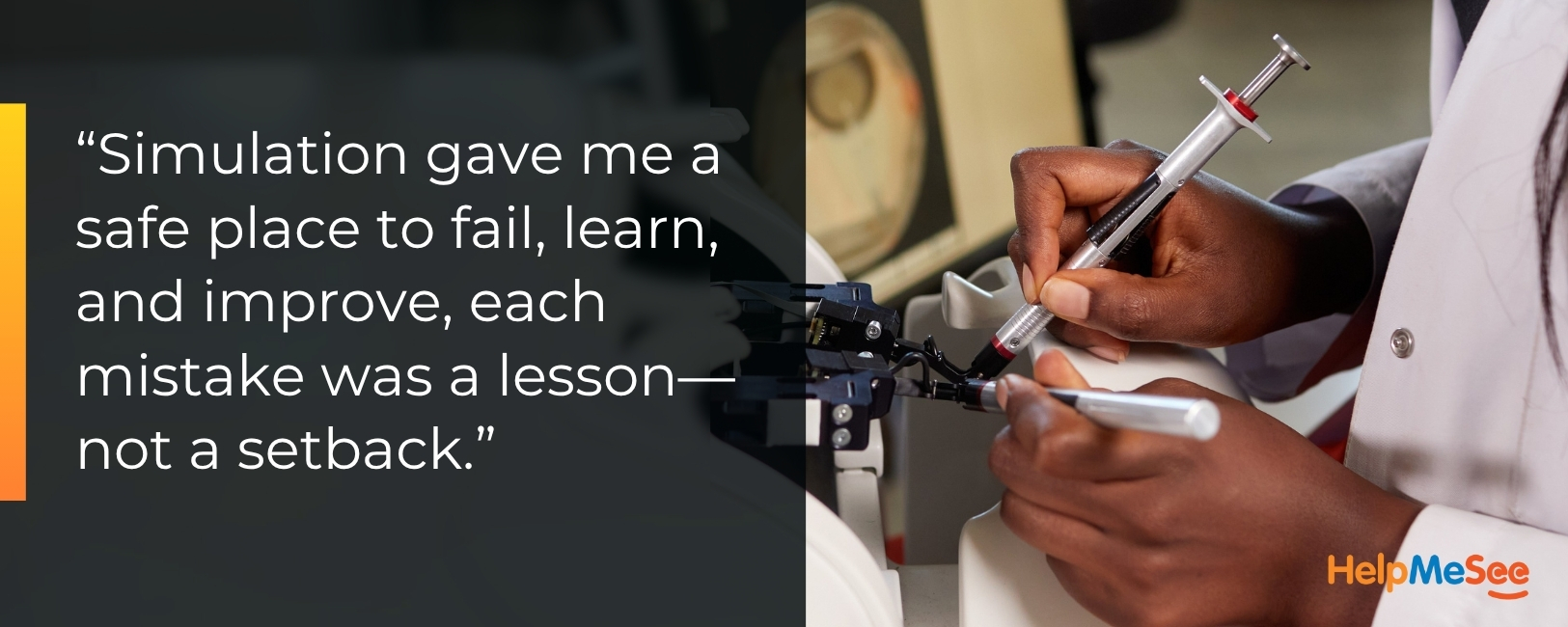
One of simulation’s greatest advantages is straightforward: residents can make mistakes in a risk-free environment, repeat difficult steps and learn from surgical complications without placing a patient at risk prior to live surgical cases.
A study of residents at Bascom Palmer Eye Institute found that introducing mandatory virtual-reality cataract simulation before residents began their first cataract rotation was associated with an overall complication rate of 2.4%, compared with 5.1% among residents trained before simulation was introduced. Posterior capsule tears and vitreous prolapse were also significantly lower in the simulator-trained group.[2]
Earlier research at Harbor-UCLA Medical Center reached a similar conclusion. After residents completed an intensive virtual-reality capsulorhexis curriculum, investigators found improved operating-room performance in one of cataract surgery’s most technically demanding steps.[3]
These studies focused largely on phacoemulsification, but the educational principle translates directly to MSICS: simulation allows residents to practice a complex microsurgical procedure deliberately rather than relying primarily on the availability and variability of live surgical cases.
Building MSICS Skills Through Structured Repetition and Competency-Based Medical Education
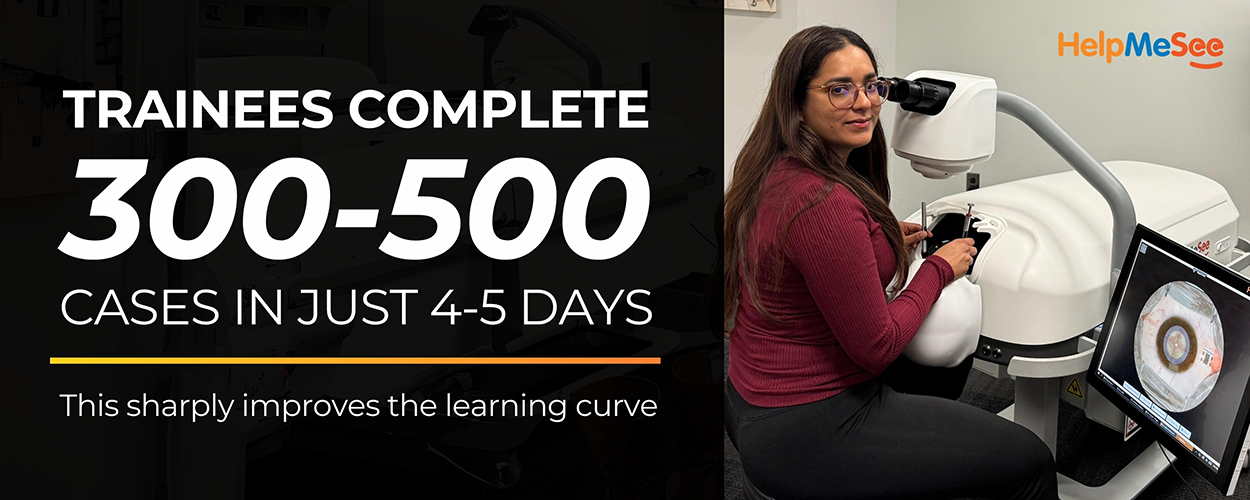
MSICS is becoming increasingly important as residency programs move toward competency-based medical education (CBME). Rather than defining proficiency primarily by duration of training and number of observed or completed procedures, CBME emphasizes whether a learner can demonstrate the knowledge, technical skills and judgment required to perform the procedure safely and effectively.
A randomized controlled trial involving novice surgeons at three academic institutions in India compared a structured MSICS simulation training curriculum with conventional training. Residents in the experimental training group receiving simulation-based training practiced scleral tunnel construction through a program combining self-study, instructor-led teaching, dry-lab activities, high-fidelity simulation and transition to live surgery. During their first 20 surgical attempts, the simulation-trained group committed fewer total and major errors than the conventionally trained group.[4]
A 2024 randomized controlled study of MSICS virtual-reality training demonstrates how that principle can be applied in practice. Ophthalmology program participants in third and fourth year fellowships completed a structured curriculum in which the MSICS procedure was divided into 12 modules, supported by progressive training, haptic feedback, real-time performance tracking and a proficiency-based assessment.
Following training, participants in both instructor groups improved significantly, and every participant passed the proficiency-based test. Residents with less than six months of ophthalmology experience showed particularly substantial improvement and ultimately reached the same simulator proficiency level as more experienced ophthalmologists.[5]
For residency programs, this is where simulation and CBME become especially powerful together. Simulation creates a controlled environment in which competency can be gained, observed, measured, and reassessed. It also gives educators a more structured way to identify where a resident is struggling, target instruction to a specific surgical step, and require additional practice before advancing.

A Global Change in Ophthalmic Education
A 2025 international survey examining virtual-reality simulation in ophthalmic surgery documented its use across training environments around the world, while also identifying significant differences in access, curriclum structure and implementation.[6]
Other programs are incorporating proficiency thresholds directly into training. At Dow University of Health Sciences in Karachi, for example, postgraduate ophthalmology trainees practiced cataract surgery tasks on a simulator until they achieved a score of at least 70% three consecutive times before progressing to the next step. Investigators observed improvement over the training period, illustrating how simulation can support repeated practice rather than a single exposure to a surgical task.[7]
The broader evidence is also expanding. A 2026 systematic review and meta-analysis encompassing 32 studies and 1,572 trainees found that extended-reality ophthalmic simulation was associated with improved surgical performance, shorter operative time and reductions in overall intraoperative complications, posterior capsule rupture and complications related to continuous curvilinear capsulorhexis.[8]
Together, these findings reinforce a larger educational principle: simulation-based training can help residency programs move from exposure-based learning toward measurable, proficiency-oriented learning.
Why MSICS Belongs in the Residency Simulation-based Training Conversation
For programs outside the United States, the case for MSICS training is closely connected to the realities of cataract care. This technique can expand the surgical options available to cataract surgeons who will practice in environments where phacoemulsification equipment, maintenance and consumables may not always be readily available.
Simulation-based training makes that exposure more practical because programs do not need to wait for the ideal clinical case to introduce each surgical step. The future of ophthalmic simulation, however, should not be measured simply by how many institutions adopt simulators. The more meaningful question is how simulation-based learning is incorporated into the educational pathway.
A simulator can provide repetition. A simulation-based, instructor-led curriculum can provide repetition with objectives, progressive difficulty, instructor feedback, assessment, and clearly defined standards for advancement.
That distinction may ultimately be what makes MSICS simulation-based learning transformative for residency programs. Whether the learner is training in Miami, Los Angeles, Copenhagen, Karachi or Hyderabad, the objective will be the same: develop surgical skills systematically, demonstrate competency and enter supervised live surgery better prepared for the responsibilities of patient care.
References
- Srinivas, Sanjeev P., et al. “Controversies, Consensuses and Guidelines on Modern Cataract Surgery by the Academy of Asia-Pacific Professors of Ophthalmology (AAPPO).” Asia-Pacific Journal of Ophthalmology, 2025, article 100224. https://doi.org/10.1016/j.apjo.2025.100224.
- Staropoli, Patrick C., et al. “Surgical Simulation Training Reduces Intraoperative Cataract Surgery Complications Among Residents.” Simulation in Healthcare, vol. 13, no. 1, 2018, pp. 11–15. https://doi.org/10.1097/SIH.0000000000000255. PubMed
- McCannel, Colin A., David C. Reed, and Darin R. Goldman. “Ophthalmic Surgery Simulator Training Improves Resident Performance of Capsulorhexis in the Operating Room.” Ophthalmology, vol. 120, no. 12, 2013, pp. 2456–61. https://doi.org/10.1016/j.ophtha.2013.05.003. PubMed
- Nair, Akshay Gopinathan, et al. “Effectiveness of Simulation-Based Training for Manual Small Incision Cataract Surgery among Novice Surgeons: A Randomized Controlled Trial.” Scientific Reports, vol. 11, 2021, article 10945. https://doi.org/10.1038/s41598-021-90410-4. Nature
- Boberg-Ans, Lars Christian, et al. “Comparing the Impact of Surgical Expert versus Non-Ophthalmologist Instructors on Virtual-Reality Surgical Performance: A Randomized Controlled Trial.” Acta Ophthalmologica, vol. 102, 2024, pp. 906–913. https://doi.org/10.1111/aos.16719.
- Dormegny, Lea, Remi Yaïci, Tristan Bourcier, et al. “Global Trends and Practice Patterns in Virtual Reality Simulation Training for Ophthalmic Surgery: An International Survey Use of Virtual Reality Simulation Training around the World.” Scientific Reports, vol. 15, 2025, article 30886. Nature
- Ashraf, Nargis Nizam, and Tarique Saleem. “Simulation Cataract Surgery, an Analysis on Its Impact on the Training of Post Graduate Trainees.” Medical Forum, vol. 37, no. 3, 2026, pp. 29–32. https://doi.org/10.60110/medforum.370306.
- Jiang, Yuxi, Shengfang Ge, and Bilian Ke. “Impact of Extended Reality (XR) Simulation on Ophthalmology Training Outcomes: An Updated Systematic Review and Meta-Analysis.” Frontiers in Medicine, vol. 13, 2026, article 1823359. https://doi.org/10.3389/fmed.2026.1823359. PubMed Central (PMC)


 English
 Spanish
 French