

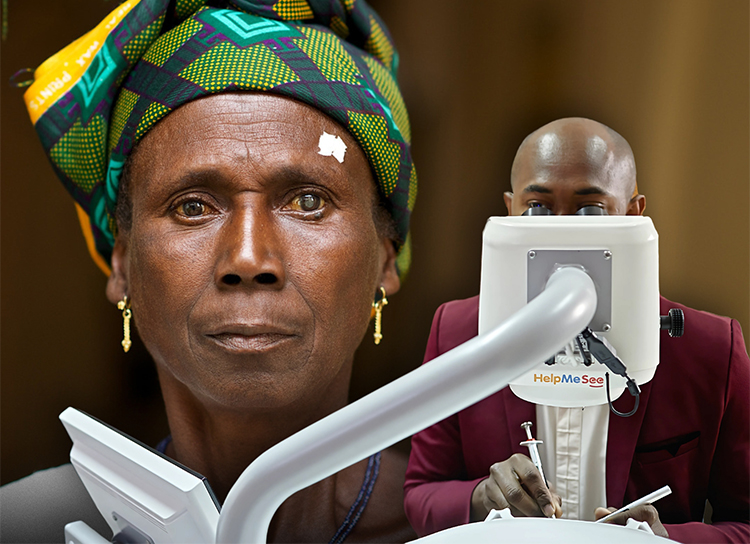
Every June, Cataract Awareness Month draws attention to the leading cause of blindness worldwide—cataract—and the life-changing power of timely surgical intervention. Cataract affects more than 20 million people globally, with the highest burden falling on low and middle-income countries where access to trained cataract specialists is severely limited. This month serves as a critical call to action, emphasizing the urgent need for innovative solutions to train more cataract specialists and expand access to vision-saving care.
The Urgent Need for Cataract Specialists
Across the world, there is a substantial shortage of ophthalmologists capable of performing cataract surgery procedures like Manual Small Incision Cataract Surgery (MSICS). In low-income countries, there are only 3.7 ophthalmologists per million people, compared to 76.2 per million in high-income countries (1). This disparity leaves millions of individuals blind from a condition that is successfully treated with surgery.

Simulation-based Training: Bridging the Surgical Skills Gap
Simulation-based learning is revolutionizing how cataract surgery is taught, helping to overcome training limitations in both high- and low-resource settings. High-fidelity virtual reality (VR) simulators—such as the HelpMeSee Eye Surgery Simulator—provide an immersive, hands-on experience that closely replicates live surgery. These platforms allow trainees to develop critical surgical skills in a safe, controlled environment, improving both confidence and competency before entering the operating room.
Studies have shown that simulation-based training significantly improves performance. Cataract surgery trainees using VR simulators have demonstrated a 47% reduction in total surgical errors, a 52% reduction in major errors, and a 41% reduction in minor errors during their early surgical attempts (2). These improvements translate into safer surgeries and better patient outcomes.

Impact Beyond the Classroom
The benefits of simulation extend well beyond training labs. Cataract specialists who undergo simulation-based training experience fewer complications and deliver better surgical outcomes than those trained solely through traditional methods. In one study, simulation-trained surgeons demonstrated a 50% reduction in live cataract surgery errors (3).
Programs like the HelpMeSee Simulation-based Training Program are leading the way in addressing the global cataract surgery backlog by training more cataract specialists in MSICS. This comprehensive curriculum includes pre-course e-learning, instructor-led simulation, and rigorous performance assessments. Trainees typically complete 300 to 500 simulated attempts in just four to five days, gaining extensive, practical experience before operating on real patients.
Why Cataract Awareness Month Matters
Cataract Awareness Month is more than a public health campaign—it’s an opportunity to spotlight a solvable crisis. The initiative educates the public about the global prevalence of cataract blindness, encourages early detection, and advocates for increased access to surgical treatment. Organizations like the American Academy of Ophthalmology and Prevent Blindness lead awareness efforts and provide valuable resources to those affected (4, 5).

How You Can Help
By supporting organizations like HelpMeSee, you can play a vital role in restoring sight and transforming lives. Donations directly fund simulation-based training for cataract specialists, support underserved communities, and help eliminate preventable blindness. Your contribution empowers individuals to regain independence and improves the quality of life for thousands worldwide.
(1) Fang, Rui et al. “Global, regional, national burden and gender disparity of cataract: findings from the global burden of disease study 2019.” BMC public health vol. 22,1 2068. 12 Nov. 2022, doi:10.1186/s12889-022-14491-0
(2) Siu, Kurt, et al. “Improving Cataract Surgical Performance through Simulation Training.” Scientific Reports, vol. 11, 2021, doi:10.1038/s41598-021-90410-4
(3) Sankarananthan, R., et al. “An Objective Evaluation of Simulated Surgical Outcomes among Surgical Trainees Using Manual Small-Incision Cataract Surgery Virtual Reality Simulator.” Indian Journal of Ophthalmology, vol. 70, no. 11, 2022, pp. 4018–4025.
(4) “Cataract Awareness Month.” American Academy of Ophthalmology, 1 June 2024, www.aao.org/newsroom/news-releases/detail/cataract-awareness-month. Accessed 6 June 2025.
(5) Prevent Blindness. “Prevent Blindness Declares June as Cataract Awareness Month.” Prevent Blindness, 3 June 2024, preventblindness.org/2024-cataract-awareness-month. Accessed 6 June 2025.


 English
  Spanish
  French