

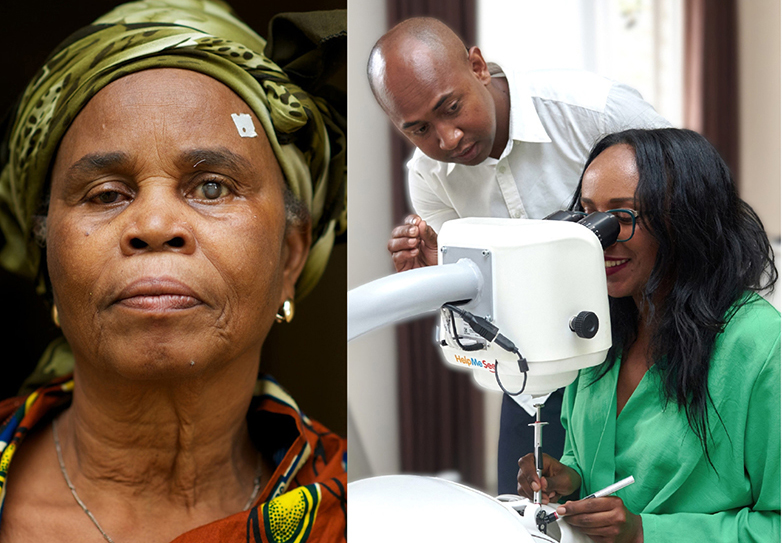
Across Sub-Saharan Africa, the burden of cataract blindness remains high. Cataract is the leading cause of blindness in the region, yet the number of trained cataract specialists falls far short of what is needed. In rural and underserved areas, access to cataract surgery is limited, not by technology alone, but by the lack of trained human resources. Simulation-based learning is beginning to change that—offering a safe, scalable way to train specialists faster and more effectively.
The Cataract Challenge in Sub-Saharan Africa
Sub-Saharan Africa has a massive need for more cataract specialists. Here’s why the region needs more trained professionals—and why simulation-based training can make a real difference.
- High blindness rates: About 17% of the world’s population lives in Sub-Saharan Africa, yet the region accounts for roughly 15% of global blindness. Cataract causes between 21% and 67% of adult blindness depending on the country—and studies show cataract prevalence among older adults ranges up to 62.5% in some areas. [1][2].
- Huge surgical gaps: The WHO recommends at least 2,000–3,000 cataract surgeries per million people per year. Yet, many countries in the region fall well below this mark. Tanzania needs approximately 2,200 surgeries per million, while Mali needs over 4,500—but actual rates remain significantly lower [3][4].
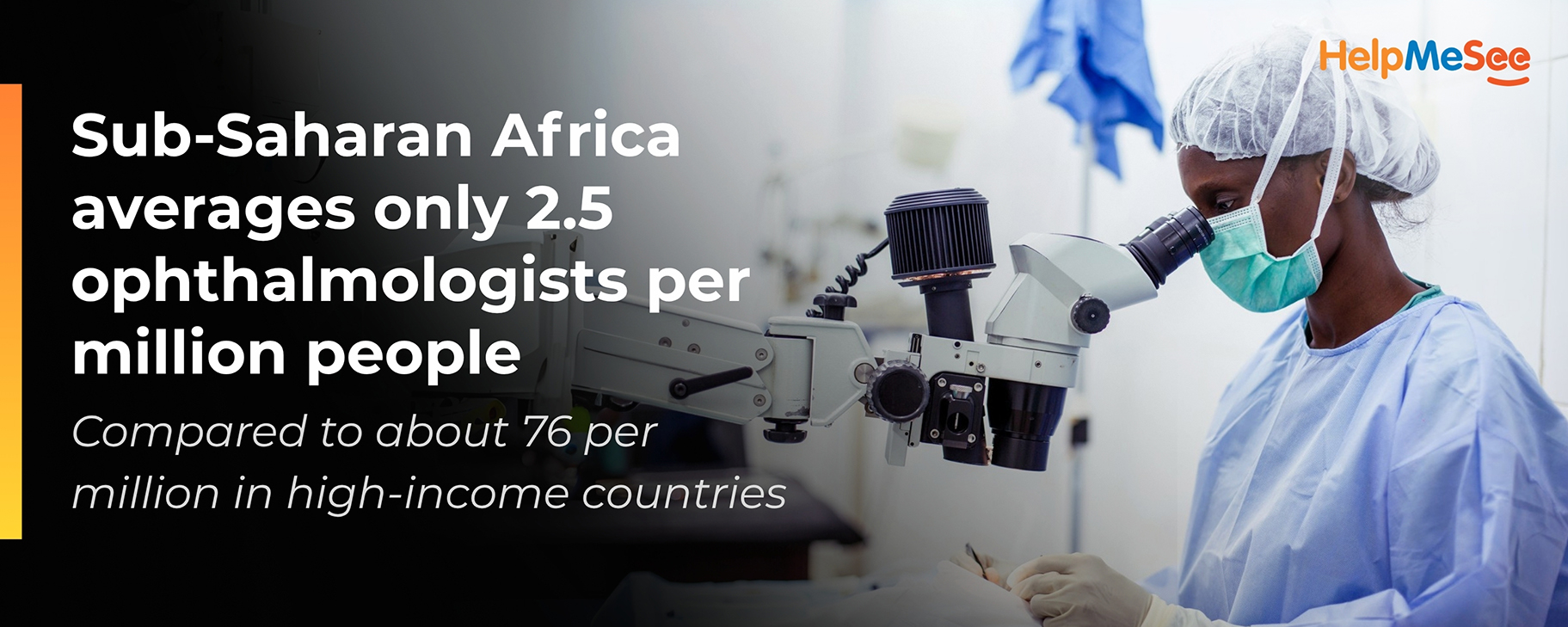
- Too few cataract specialists: Sub-Saharan Africa averages only 2.5 ophthalmologists per million people, compared to about 76 per million in high-income countries [1][5]. This forces the existing workforce to take on unmanageable volumes—requiring each specialist to perform hundreds more surgeries per year than global norms recommend [6]
- Unequal access: Surgical coverage is uneven. Rwanda performs close to 1,800 cataract surgeries per million people, while countries like Ghana have coverage rates below 50% among older adults [3][4]. Rural and remote communities are especially underserved due to limited infrastructure and workforce shortages.
- Economic impact: Untreated cataract leads to lost productivity, reduced independence, and higher healthcare costs. Cataract surgery is one of the most cost-effective health interventions—returning at least $4 for every $1 invested through restored sight and productivity [7]
Why Simulation-based Training Fills an Education Gap
Countries within the Sub-Saharan Africa region often lack access to phacoemulsification machines and other high-tech equipment. Manual Small Incision Cataract Surgery (MSICS) is a proven, low-cost alternative that’s well-suited for such environments—but it requires advanced training. Traditional training is hard to scale due to limitations in surgical theater time, access to experienced mentors, and patient safety concerns [8].
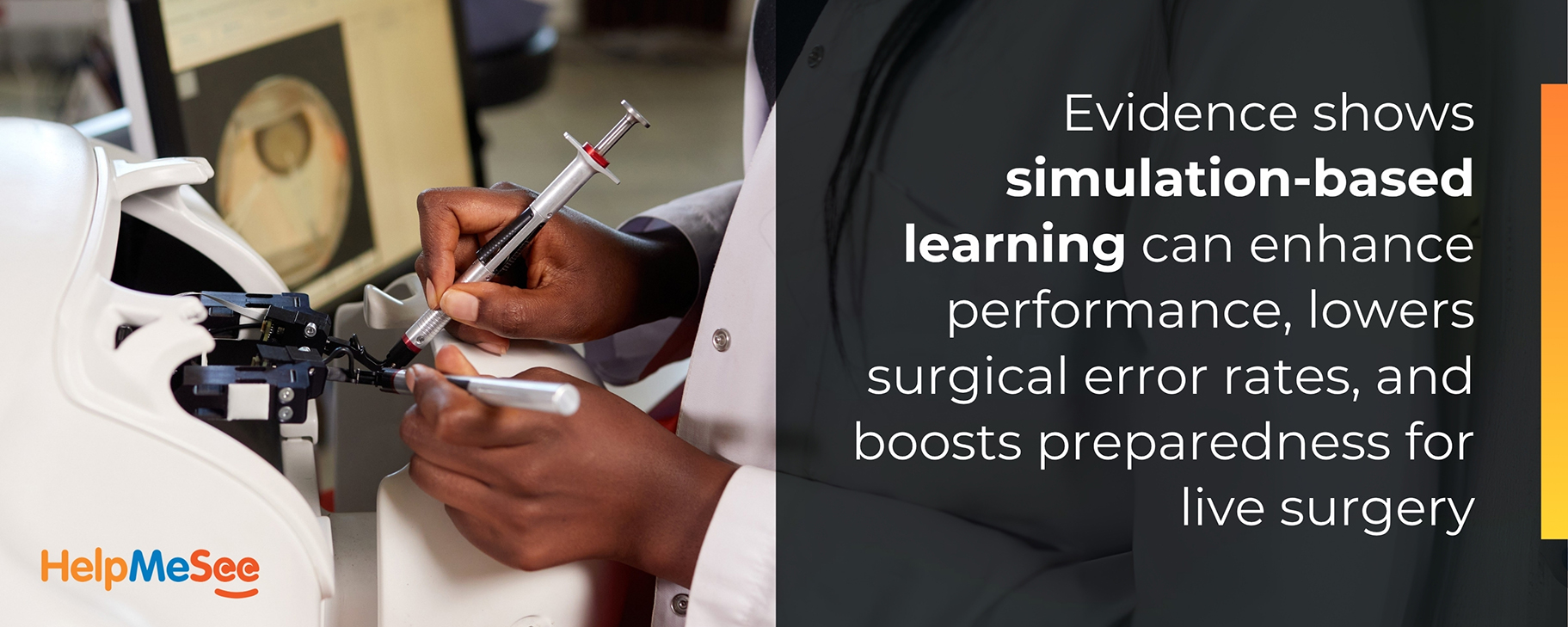
Simulation-based training addresses these barriers. Using high-fidelity virtual reality (VR) simulators, cataract specialists are able to practice every surgical step in a risk-free environment multiple times. Evidence shows simulation-based learning can enhance performance, lowers surgical error rates, and boosts preparedness for live surgery [9].
But the benefits go beyond technique. Increased access to simulation-based training builds confidence and teaches cataract specialists how to manage cataract surgery complications before they face real patients. It also allows for consistent exposure to rare scenarios—something not guaranteed in traditional rotations.
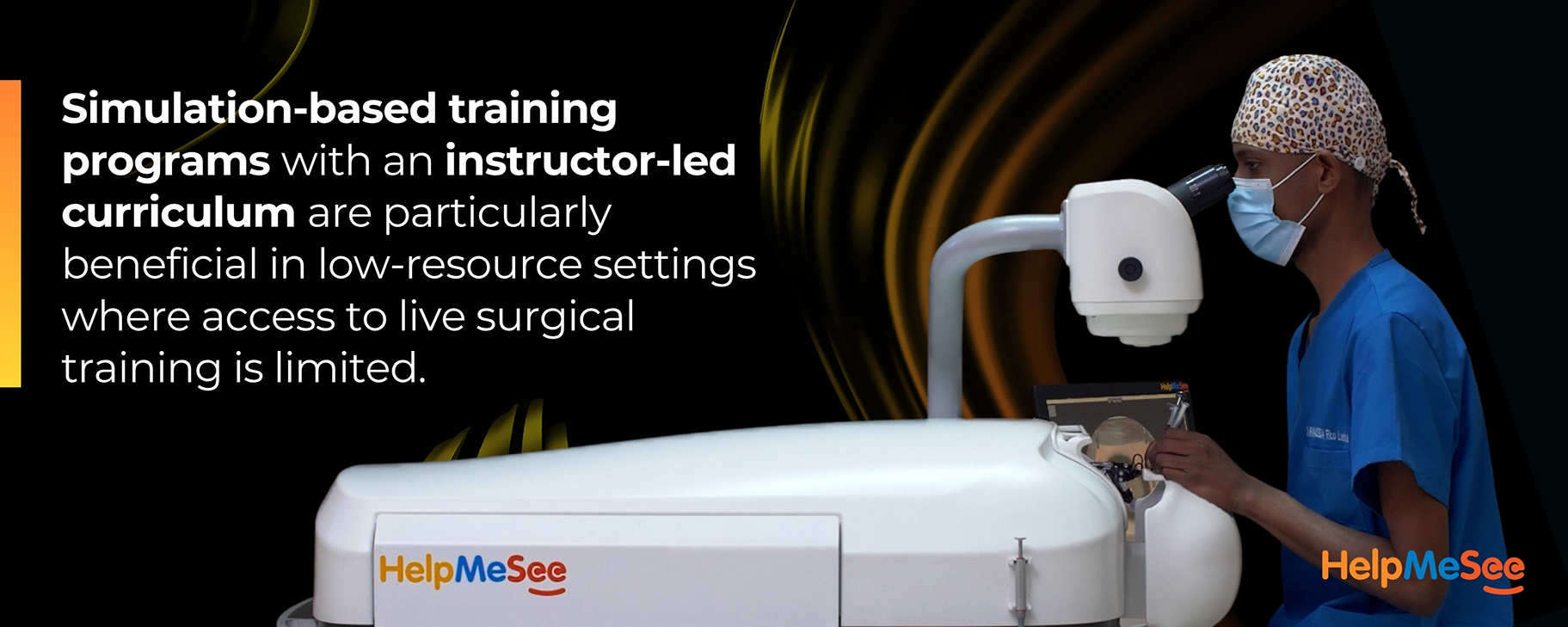
In regions where patient volumes are high, but mentorship is limited, simulation-based training paired with an instructor-led curriculum helps standardize education. In a well-rounded education paired with simulation-based learning methods, participants complete structured modules and are assessed objectively, ensuring they’re ready before moving into live surgery settings.
Building Skills Before the Operating Room
Recent advancements in surgical simulation have made training more effective and realistic than ever before. The HelpMeSee Eye Surgery Simulator is a prime example. It combines high-resolution visual environments with precise haptic (touch-based) feedback that mimics the resistance, depth, and tactile feel of real tissue.
The HelpMeSee Eye Surgery Simulator allows cataract specialists to practice each step of MSICS including scleral groove creation, capsulorhexis, nucleus delivery, and IOL insertion in a repeatable and controlled setting. It also provides real-time error tracking, performance metrics, and visual feedback to help specialists refine technique. These innovations ensure that learners not only understand the procedure but can build confidence through realistic practice before performing surgery on actual patients.
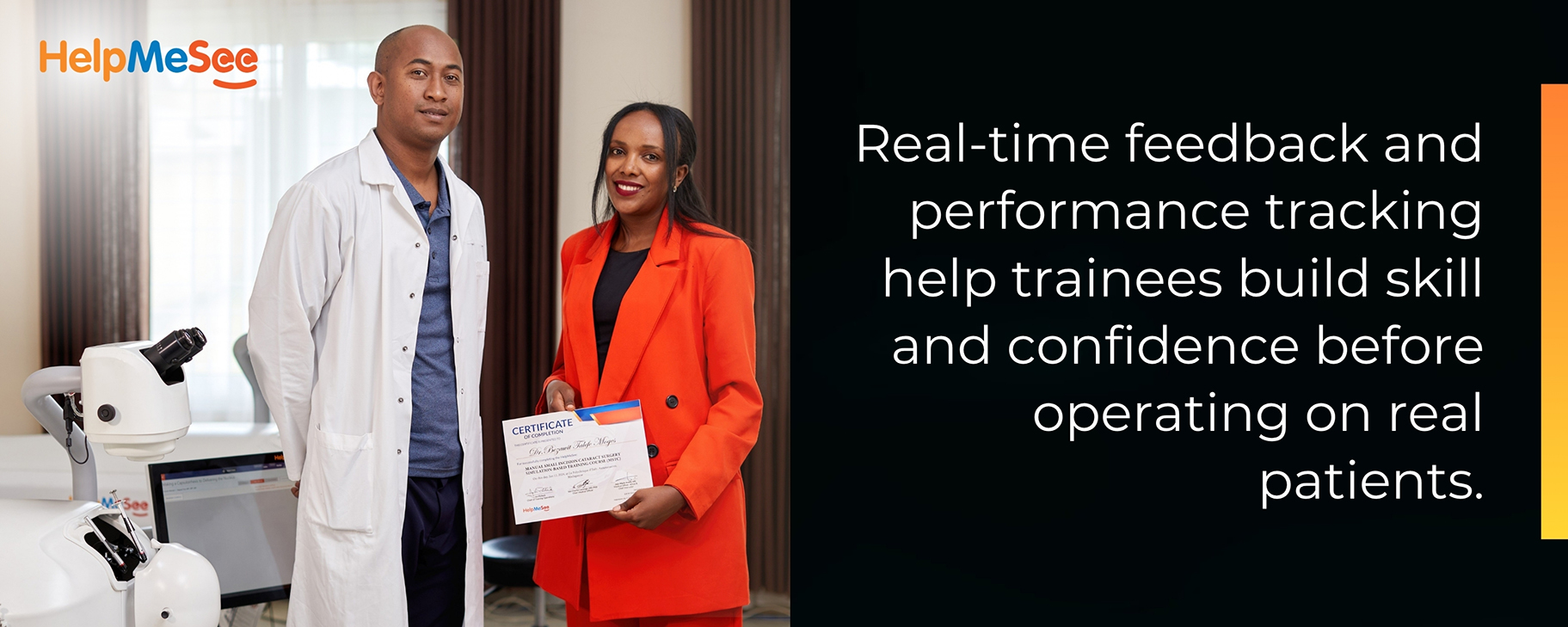
The HelpMeSee Simulation-Based Training Program is already delivering results across Sub-Saharan Africa. On-the-ground feedback from Cameroon, Nigeria, and Madagascar shows how local cataract specialists benefit. Dr. Sylvain from Cameroon said simulation helped him better understand hand positioning and tunnel depth—skills he couldn’t grasp through observation alone. In Nigeria, Dr. Nkem shared that after just three days of simulation training, her confidence in performing MSICS had “increased significantly” [10].
Another cataract specialist put it simply: “The simulator gave me a clear idea of how tissue responds. It’s not something you can fully understand from books or videos” [10].
Expanding Access Across the Region
Simulation-based training is no longer a bonus—it’s a necessity. In regions facing equipment shortages, limited mentorship, and rising demand, simulation-based learning ensures that training is standardized and safe.
HelpMeSee and our partners are investing in regional cataract surgery simulation-based training centers, multilingual course materials, and subsidized access to simulation-based instruction. These efforts are helping Sub-Saharan Africa grow a new generation of well-prepared cataract specialists.
With the right tools and training systems in place, the region can meet the rising demand for surgery and restore sight to millions.
- World Health Organization. World Report on Vision. Geneva: World Health Organization, 2019. https://www.who.int/publications/i/item/9789241516570
- Burton, Matthew J., et al. “The Lancet Global Health Commission on Global Eye Health: Vision Beyond 2020.” The Lancet Global Health, vol. 9, no. 4, 2021, pp. e489–e551. https://doi.org/10.1016/S2214-109X(20)30488-5
- International Agency for the Prevention of Blindness (IAPB). “Cataract Surgical Coverage and Outcomes.” IAPB Vision Atlas, 2023. https://www.iapb.org/learn/vision-atlas
- Courtright, Paul, et al. “Reaching Rural Africans: Outcomes from a Cataract Surgery Outreach Program in Tanzania.” British Journal of Ophthalmology, vol. 92, no. 11, 2008, pp. 1430–1434. https://bjo.bmj.com/content/92/11/1430
- Palmer, Jennifer J., et al. “Mapping Human Resources for Eye Health in 21 Sub-Saharan African Countries.” Human Resources for Health, vol. 12, 2014, article 44. https://doi.org/10.1186/1478-4491-12-44
- Resnikoff, Serge, et al. “Global Magnitude of Visual Impairment Caused by Uncorrected Refractive Errors in 2004.” Bulletin of the World Health Organization, vol. 86, no. 1, 2008, pp. 63–70. https://www.who.int/bulletin/volumes/86/1/07-041210/en/
- Frick, Kevin D., et al. “Cost-effectiveness of Cataract Surgery in a Public Health Eye Care Program in Nepal.” Bulletin of the World Health Organization, vol. 77, no. 2, 1999, pp. 167–172. https://www.ncbi.nlm.nih.gov/pmc/articles/PMC2557587/
- Nair, Akshay G., et al. “Cataract Surgical Training Among Residents in India: Results from a Survey.” Indian Journal of Ophthalmology, vol. 71, 2023, pp. 743–749. https://doi.org/10.4103/ijo.IJO_1935_22
- Ahuja, Abhimanyu S., et al. “The Utility of Virtual Reality in Ophthalmology: A Review.” Clinical Ophthalmology, vol. 19, 2025, pp. 1683–1692.
- “Support Africa.” https://resources.helpmesee.org/supportafrica/. Accessed 27 June 2025.


 English
  Spanish
  French