

By Laura Straub
Key Takeaways
New research published in The Lancet Global Health underscores the fact that training more cataract surgeons is paramount. If we are going to achieve universal eye health coverage for all, including meeting the WHO targets for effective cataract surgical coverage, we need to train more cataract surgeons globally.
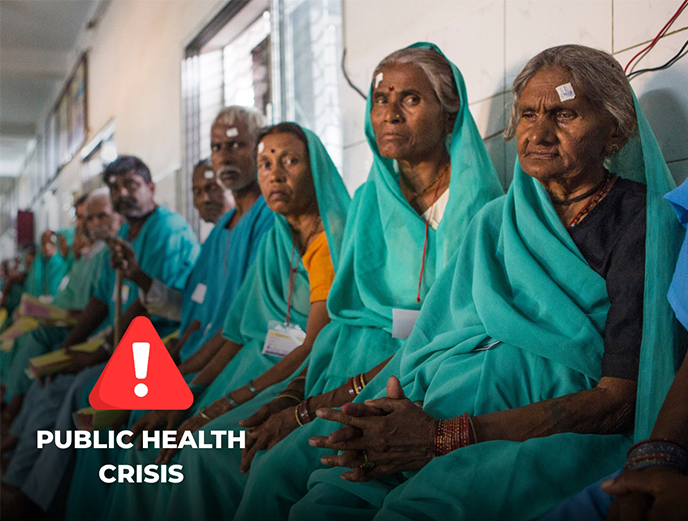
Cataract is the leading cause of blindness worldwide. Although treatable with Manual Small Incision Cataract Surgery (MSICS), the condition continues to rob tens of millions of people worldwide of their sight largely because too few eye care specialists are trained to perform it. A major study by McCormick et al [1] published in The Lancet Global Health earlier this year depicts a drastic treatment gap, making a clear case for exactly the kind of solution HelpMeSee has been building for more than a decade.
A Global Target At Risk
In 2021, member states at the 74th World Health Assembly of the World Health Organization endorsed the ambitious goal of a 30% global increase in effective cataract surgical coverage (eCSC) by 2030. Unlike crude surgical volume, eCSC is a quality-adjusted metric measuring the proportion of people who received cataract surgery and achieved a good visual outcome as a share of all those who have had or still need surgery. In essence, eCSC is a measure of whether cataract care is working.
The latest study in Lancet Global Health [1] considered a secondary analysis of 233 population-based surveys across 68 countries from 2003 to 2024. Researchers found the world is far from on track to meet the goal. In fact, country-level eCSC estimates ranged from just 2.1% in Burundi to 77.7% in Qatar. Globally in 2025, eCSC was estimated at 48.2%.
Sobering Realities
Results of the study underscore that more than half of people who need cataract surgery do not receive care that restores good vision. The study’s modeled projections suggest global eCSC will increase by only 8.4% by 2030, falling dramatically short of the target.
The regional picture is particularly troubling in Africa, where eCSC was projected at 23.6% in 2025 and is expected to rise by only 4% in the next 4 years. The study also found women face significantly lower eCSC than men.
These numbers do more than reveal a statistical shortfall. They represent hundreds of millions of people living with preventable blindness or visual impairment.
Quality Maters as Much as Access
The study also analyzed data from 120 surveys to determine several drivers of poor outcomes in people who undergo cataract surgery. One crucial driver found by researchers is that intraoperative complications accounted for 20.2% of suboptimal outcomes across all regions.
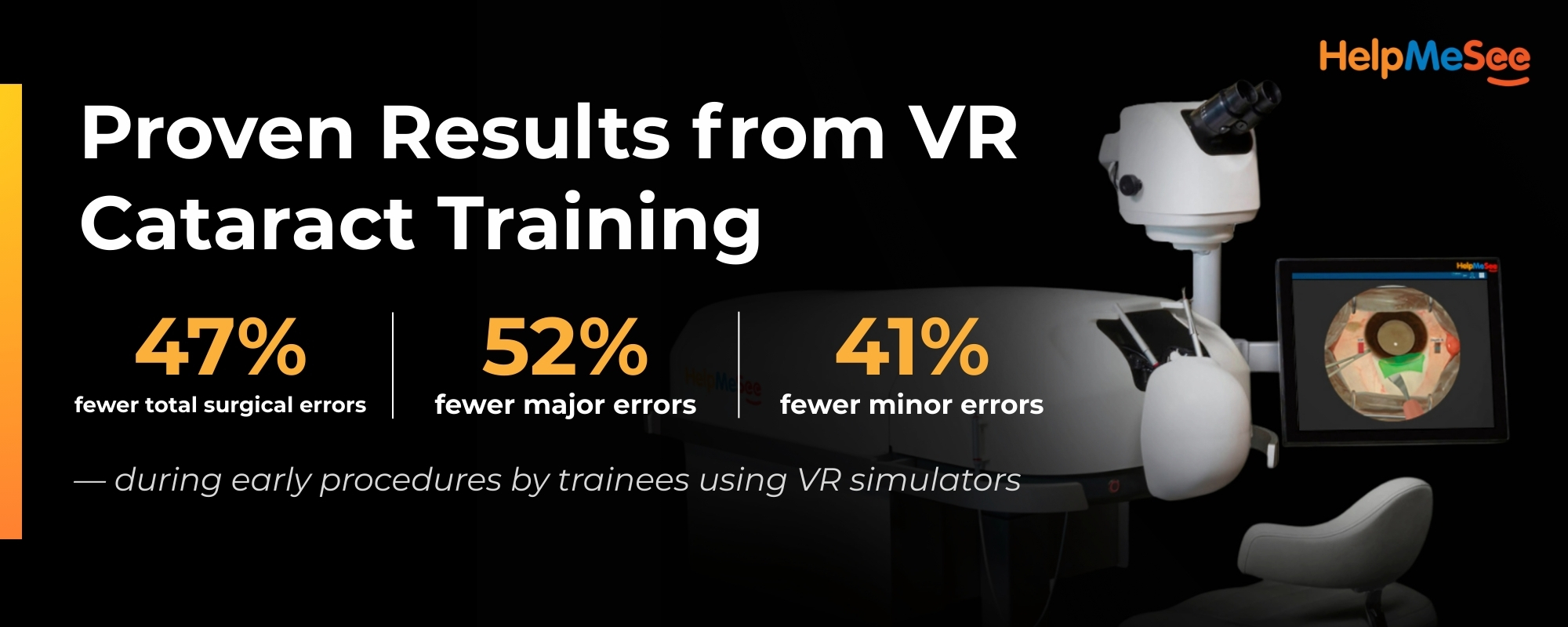
The implication is dire: A substantial portion of the global quality gap in cataract outcomes may be attributed to complications that arise during surgery. Better surgical training may likely translate to fewer intraoperative errors. A multicenter, investigator-masked randomized controlled trial found novice surgeons who trained with a HelpMeSee Eye Surgery Simulator made significantly fewer errors during their first 20 live manual small incision cataract surgery procedures compared with surgeons who received conventional training alone. [2]
A parallel, randomized, controlled, multicenter trial across five university hospitals in four countries found that participants who underwent virtual reality simulation training scored 16.6 points higher at 3 months than participants in the control group and performed a mean of 21.5 cataract surgical procedures in the year after training, compared to 8.5 in the control group. Posterior capsule rupture rates were also lower for the training group (7.8% vs 26.6%). [3]
Bridging the Training Gap
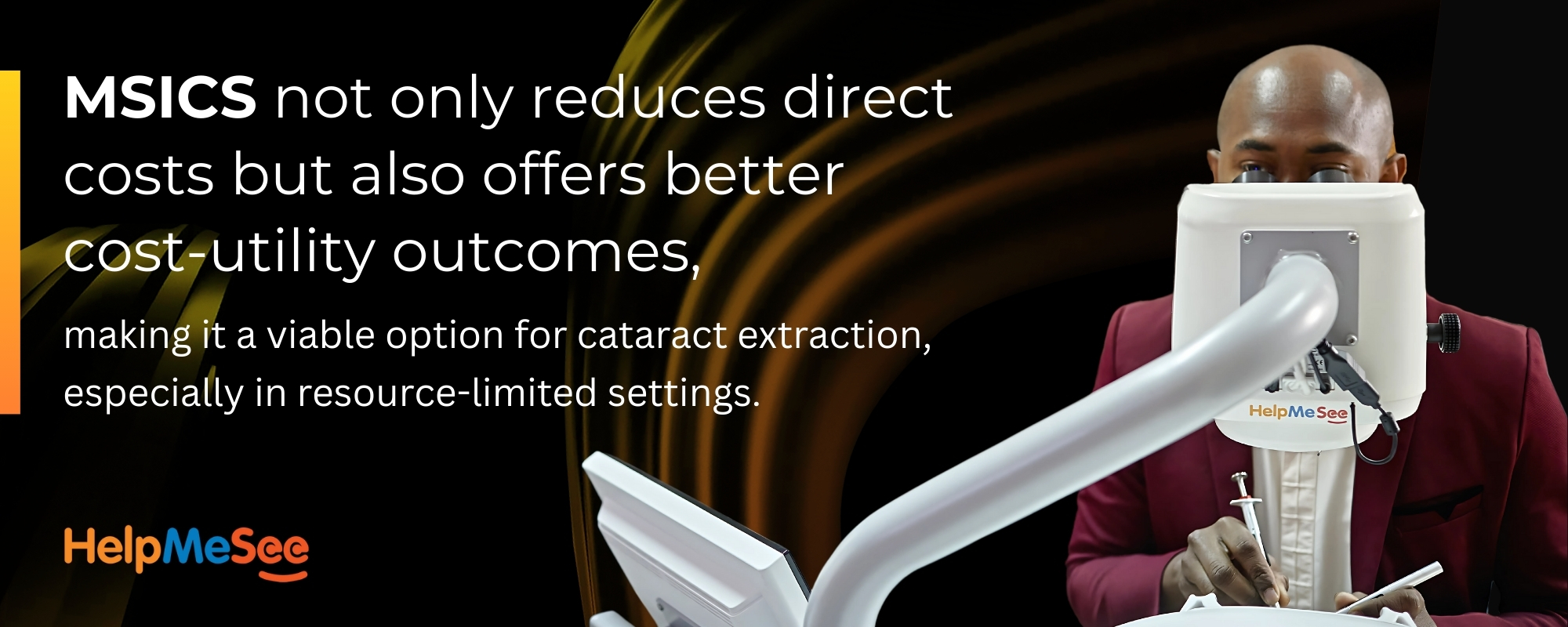
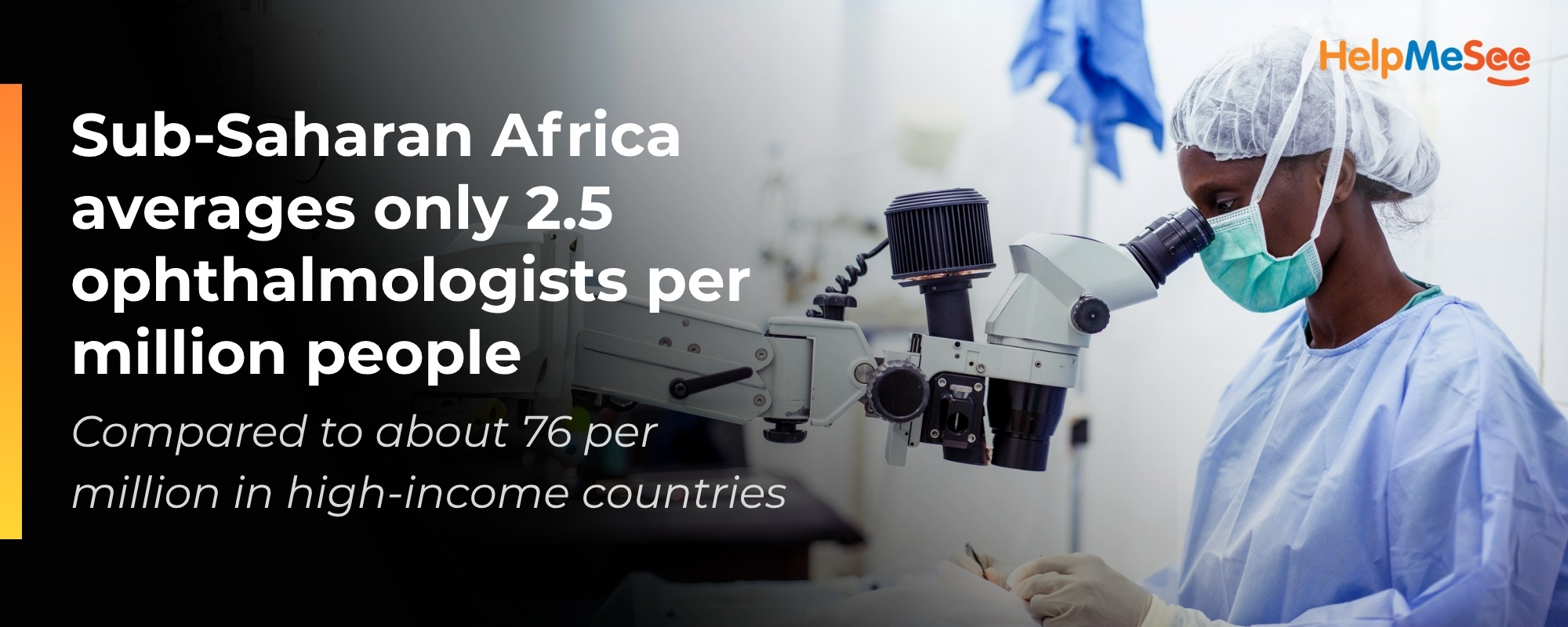
The shortage of skilled cataract surgeons, particularly in low- and middle-income countries, is an obstacle toward progress. HelpMeSee has a global mission to eradicate cataract blindness by increasing training in MSICS, a safe, reliable procedure that delivers successful outcomes at low cost. MSICS is the surgical technique best suited for high-volume, resource-efficient cataract care in exactly the settings where the McCormick et al study identifies the greatest unmet need.
The validity and reliability of the HelpMeSee Eye Surgery Simulator have also been established in independent research. A study showed most (94.3%) experienced MSICS surgeons felt the simulator would be useful in developing hand-eye coordination and would recommend cataract surgical training on the device. [4] A separate study confirmed the simulator’s ability to reliably differentiate between novice and experienced surgeons. [5]
Most recently, a prospective study confirmed the HelpMeSee MSICS module effectively differentiates surgical experience levels ranging from novice residents to experts, further supporting its use for objective, skills-based surgical education. [6] Ophthalmic trainees who practiced cataract surgery techniques on the simulator demonstrated significant improvements in both surgical skills and confidence levels compared to peers without simulator training.
A Scalable Training Model
The Lancet Global Health study explicitly asserts that better surgical outcomes and a dramatically increased volume of surgery, particularly in Africa, Southeast Asia, and the Eastern Mediterranean, are needed to achieve a 30% global increase in eCSC by 2030. HelpMeSee subsidizes MSICS training in an expanding geography including countries like India, China, Madagascar, and Ghana as well as the latest addition of Nigeria, in February 2026.7 With more than 40 surgical simulator units and 15 training centers worldwide, the nonprofit organization partners with governments, universities, and innovators to fight the global cataract blindness crisis and contribute to closing the gap in cataract surgery volume outlined in the current study.
Further, HelpMeSee is currently rolling out a competency-based MSICS curriculum focusing on the comprehensive care of patients including, pre-operative, peri-operative and post-operative care. This system represents an integrated, quality-focused approach recommended by the Lancet study. [1]
The Path Forward
The Lancet Global Health study concludes that without “immediate and substantial investment in cataract services,” the 2030 target will not be met. [1]
Effective cataract surgical coverage cannot improve without better trained cataract surgeons at scale, and cannot be trained without simulation-based training systems that are validated, effective, and accessible. This is the work HelpMeSee does every day.
Laura Straub is a medical communications strategist and writer. Reach her at [email protected].
- McCormick I, Ouchtar Y, Macleod D, et al; the eCSC Study Group. Effective cataract surgical coverage in adults aged 50 years and older: empirical estimates from population-based surveys in 68 countries and modelled estimates for 2000–30. Lancet Glob Health. 2026;14:e367-77.
- Nair AG, Ahiwalay C, Bacchav AE, et al. Effectiveness of simulation-based training for manual small incision cataract surgery among novice surgeons: a randomized controlled trial. Sci Rep. 2021;11:10945.
- Dean WH, Gichuhi S, Buchan JC, et al. Intense simulation-based surgical education for manual small-incision cataract surgery: the Ophthalmic Learning and Improvement Initiative in Cataract Surgery randomized clinical trial in Kenya, Tanzania, Uganda, and Zimbabwe. JAMA Ophthalmol. 2021;139(1):9-15.
- Nair AG, Ahiwalay C, Bacchav AE, et al. Assessment of a high-fidelity, virtual reality-based, manual small-incision cataract surgery simulator: a face and content validity study. In J Ophthalmol. 2022;70(11):4010-4015.
- Hutter DE, Wingstead L, Cejvanovic S, et al. A validated test has been developed for assessment of manual small incision cataract surgery skills using virtual reality simulation. Sci Rep. 2023;13:10655.
- Dormegny L, Schaeffer M, Neumann N, et al. Validity assessment for technical skills and stress management of the HelpMeSee Manual Small Incision Cataract Surgery module. Acta Ophthalmologica. 2026. Online ahead of print.
- HelpMeSee launches new simulation-based training center in Ghana to advance cataract surgery education in West Africa. HelpMeSee. February 11, 2026. Accessed April 7, 2026. https://www.prnewswire.com/news-releases/helpmesee-launches-new-simulation-based-training-center-in-ghana-to-advance-cataract-surgery-education-in-west-africa-302684506.html


 English
  Spanish
  French