

Cataract remains the leading cause of reversible blindness worldwide, and the demand for cataract surgery is expected to rise dramatically as populations age and life expectancy increases. For ophthalmologists working in both high-resource and resource-constrained settings,more cataract surgeons are needed to have the greatest impact on global eye health.
Over the next decade, Manual Small Incision Cataract Surgery (MSICS) is positioned to become one of the most important surgical competencies in ophthalmology. Its versatility, efficiency, cost-effectiveness, and resilience in challenging environments make it uniquely suited to address the growing global burden of cataract blindness. Equally important, advances in simulation-based education are making it possible to train surgeons in MSICS more effectively, safely, and consistently than ever before.
A Procedure Designed for Global Impact
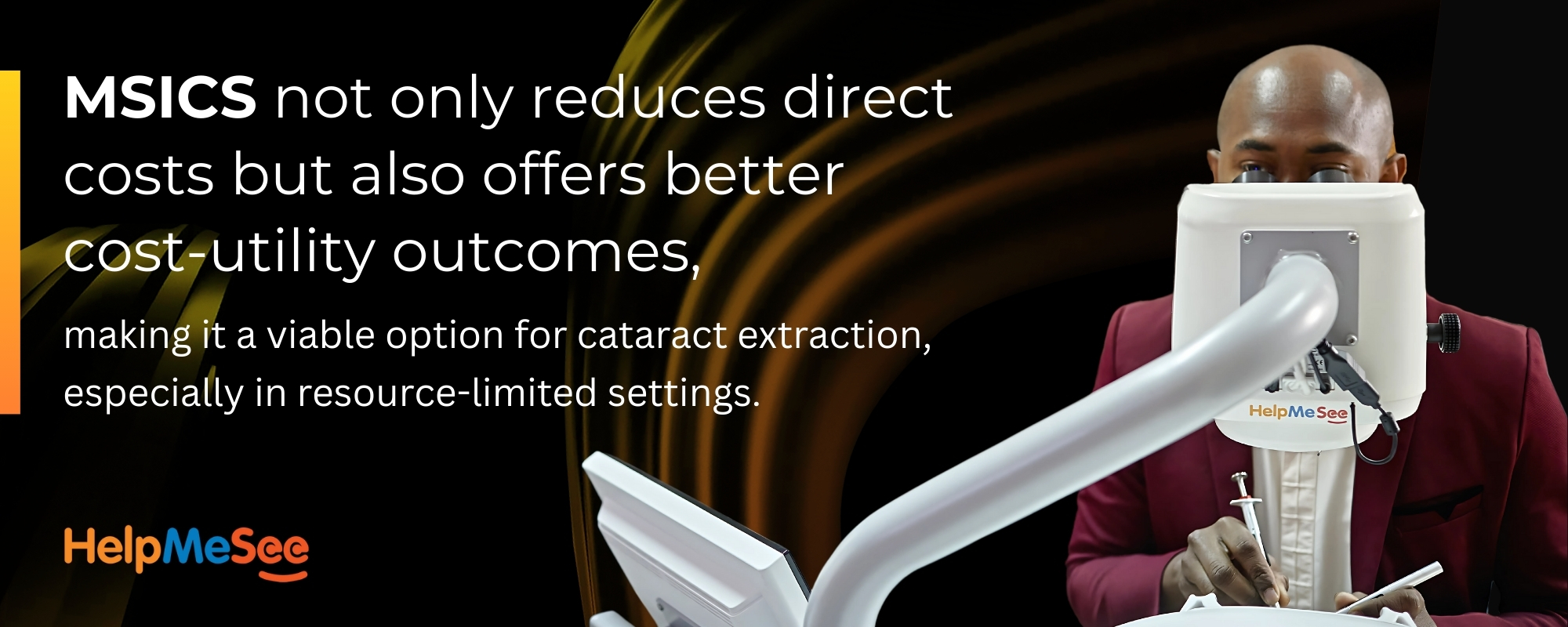
MSICS occupies a unique place in modern cataract surgery. While phacoemulsification remains the dominant technique in many developed healthcare systems, MSICS offers distinct advantages that align with the realities of global eye care delivery. Unlike phacoemulsification, MSICS can be performed with minimal dependence on advanced technology and expensive consumables. This makes it particularly valuable in regions where access to sophisticated equipment, maintenance services, or reliable supply chains may be limited.[1]
More importantly, MSICS enables high surgical throughput. In settings where cataract backlogs are substantial, surgeons can restore sight to large numbers of patients efficiently without sacrificing visual outcomes.[2] As healthcare systems around the world confront growing cataract demand, the ability to perform high-volume, high-quality surgery will become increasingly critical.
For many communities, MSICS is the most practical pathway to eliminating avoidable blindness.
Building Resilient Cataract Care Systems
Even several years later, the COVID-19 pandemic, geopolitical instability, and global supply-chain disruptions highlighted a vulnerability that many healthcare systems had overlooked: dependence on technology and equipment can limit access to care during periods of crisis.
MSICS offers an important safeguard against these disruptions because the procedure requires less reliance on complex machinery and consumables. Surgeons trained in MSICS can continue providing cataract care even when equipment failures, shortages, or logistical challenges occur.
This capability extends beyond individual surgeons. Developing MSICS expertise within a workforce strengthens long-term system resilience, allowing hospitals, outreach programs, and national eye-care initiatives to maintain surgical services under a wide range of circumstances.
As countries seek sustainable approaches to reducing blindness, surgical versatility will become increasingly valuable. MSICS equips ophthalmologists with a skill set that remains effective regardless of local infrastructure constraints.[3]
Why Simulation-Based Training Matters More Than Ever
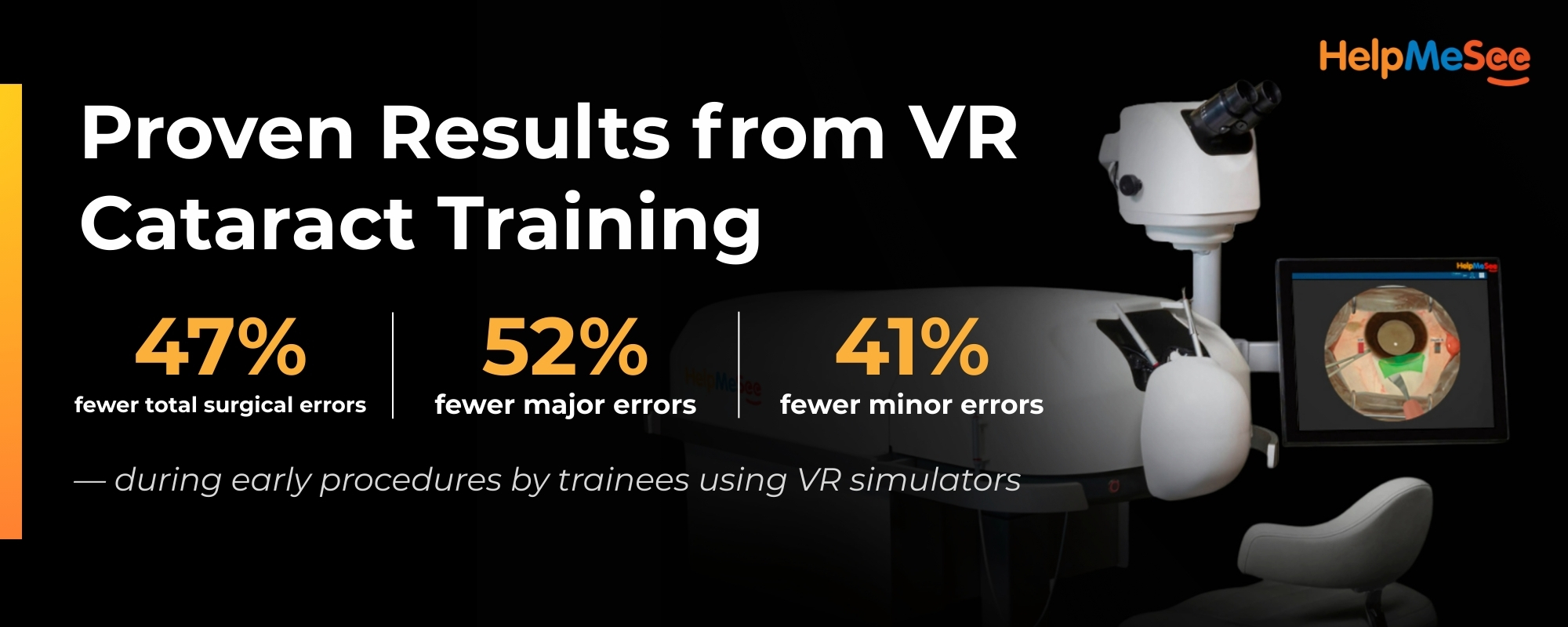
Cataract surgery volumes continue to increase, patient safety expectations are higher than ever, and opportunities for repetitive practice in live surgical settings are limited.[4] Simulation-based education addresses these challenges by providing a structured, risk-free environment where cataract surgery trainees can repeatedly practice critical surgical skills before operating on patients.
Research consistently demonstrates the value of simulation training in ophthalmology. A 2026 systematic review and meta-analysis encompassing 32 studies and 1,572 trainees found that extended reality (XR) simulation significantly improved surgical performance, reduced intraoperative complications, shortened operative times, and increased trainee confidence.[5]
Simulation also supports the principles of deliberate practice. Cataract surgery trainees can repeat difficult steps, receive objective feedback, and refine techniques without exposing patients to unnecessary risk. This repeated practice is particularly important for MSICS, where mastery of wound construction, tunnel architecture, capsulotomy, nucleus delivery, and complication management requires extensive experience.
Beyond Technical Skills: Training the Complete Surgeon
Modern cataract surgery requires more than technical proficiency alone. Studies increasingly emphasize the importance of non-technical skills such as decision-making, communication, leadership, situational awareness, and stress management.[6] These competencies become especially important in high-volume surgical environments where efficiency and patient safety must coexist.
Recent research evaluating virtual reality cataract surgery simulation demonstrated significant improvements in non-technical skills following structured simulation-based training and debriefing.[7] Investigators found that simulation environments can effectively develop competencies that are difficult to teach through conventional surgical observation alone.
For MSICS surgeons working in outreach programs, community hospitals, and high-volume surgical centers, these skills can be just as important as technical execution. Efficient patient flow, complication recognition, team communication, and sound intraoperative judgment directly influence outcomes.
Simulation provides a controlled environment where both technical and non-technical skills can be practiced simultaneously.
High-Fidelity Learning for a High-Demand Procedure
One of the greatest strengths of simulation-based education is its ability to replicate real-world challenges without real-world consequences.
Research evaluating cataract surgery performed within a simulated operating-room environment found that participants experienced physiologic responses that more closely resembled real surgery while maintaining technical performance.[8] Such findings suggest that immersive simulation can help bridge the gap between laboratory learning and actual surgical practice.
This is particularly relevant for MSICS training. Because many surgeons may encounter their first independent cases in high-demand environments, exposure to realistic procedural scenarios before entering the operating room can accelerate readiness and confidence.
Simulation also standardizes training. Every trainee can encounter the same challenges, practice the same surgical steps, and receive objective assessments based on measurable performance metrics. This consistency is especially valuable when scaling training programs across multiple institutions or countries.
Preparing for the Next Decade
The future of global cataract care will require more than technological innovation. It will require practical, scalable solutions capable of restoring vision to millions of patients.
MSICS provides efficiency and low equipment dependency which makes it ideal for high-volume surgical settings. Its adaptability supports continuity of care during equipment shortages and supply-chain disruptions. Its accessibility allows surgeons to provide sight-restoring surgery in communities where advanced technology may not be readily available.
At the same time, advances in simulation-based education are transforming how surgeons learn these skills. Evidence shows that simulation improves technical performance, reduces complications, enhances confidence, and develops the non-technical competencies essential for surgical excellence.[5,7]
As ophthalmology looks toward the next decade, the combination of MSICS expertise and simulation-based training may prove to be one of the most powerful strategies for addressing the global cataract burden. For surgeons seeking a skill that delivers both immediate patient impact and long-term healthcare resilience, MSICS is a global surgery skill for the future.
REFERENCES:
- Dean, William H., et al. “Intense Simulation-Based Surgical Education for Manual Small-Incision Cataract Surgery: The Ophthalmic Learning and Improvement Initiative in Cataract Surgery Randomized Clinical Trial in Kenya, Tanzania, Uganda, and Zimbabwe.” JAMA Ophthalmology, vol. 138, no. 1, 2020, pp. 9–15.
- Lansingh, Van C., et al. “How Many Cataract Surgeries Does It Take to Be a Good Surgeon?” Revista Mexicana de Oftalmología, 2023.
- Hutter, Daniel E., et al. “A Validated Test Has Been Developed for Assessment of Manual Small Incision Cataract Surgery Skills Using Virtual Reality Simulation.” Scientific Reports, vol. 13, 2023, article 10655.
- Ahuja, Abhimanyu S., et al. “Virtual Reality in Ophthalmic Surgical Education: Current Innovations and Future Perspectives.” Clinical Ophthalmology, vol. 20, 2026, pp. 1–8.
- Jiang, Yuxi, Shengfang Ge, and Bilian Ke. “Impact of Extended Reality (XR) Simulation on Ophthalmology Training Outcomes: An Updated Systematic Review and Meta-Analysis.” Frontiers in Medicine, vol. 13, 2026, article 1823359.
- Lee, Richard, et al. “A Systematic Review of Simulation-Based Training Tools for Technical and Non-Technical Skills in Ophthalmology.” Eye, vol. 34, no. 10, 2020, pp. 1737–1759.
- Solecki, Lauriana, et al. “Virtual Reality Simulator-Based Assessment of Non-Technical Skills in Eye Surgery: Managing Complex Cataract Surgery.” BMC Medical Education, 2026.


 English
  Spanish
  French